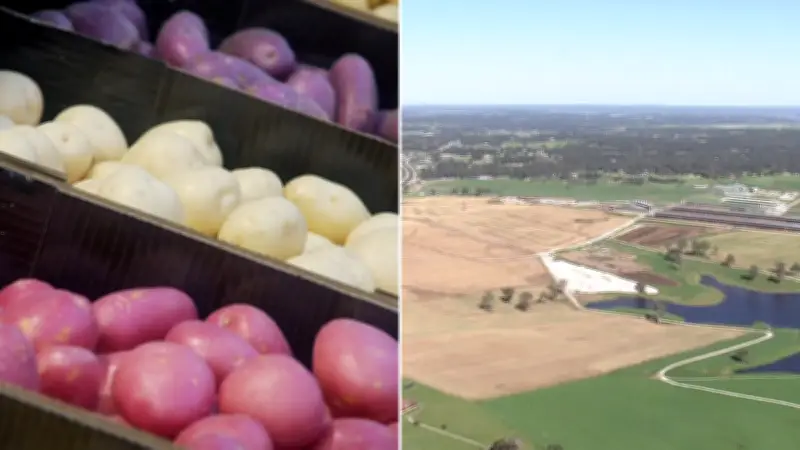
New laws are being considered to protect Australia's fertile farmland from being consumed by suburban sprawl, amid mounting concerns over the nation's long-term food security. Independent federal MP Andrew Gee is drafting legislation to safeguard world-class agricultural land that is increasingly being converted into housing developments and parking lots.
Current State of Australian Agriculture
Currently, 57 percent of Australian land is used for farming, producing enough food to feed the nation's population three times over. However, 70 percent of that produce is exported overseas to countries including China, Korea, Japan, the United States and Indonesia. The agricultural industry is worth more than $100 billion to the Australian economy, with fresh fruit and vegetables delivered daily to markets forming part of the nation's economic lifeblood.
“This is the land that feeds and nourishes us, yet we’re building houses and parking lots on top of it,” Gee said. “We have a responsibility to provide affordable food for all the countries around us,” added National Farmers Federation President Hamish McIntyre.

Pressures on the Sector
The sector is already under pressure from extreme weather events, global trade challenges, and fuel and fertiliser supply issues. The loss of prime farmland to urban development threatens to drive up food costs for Australian consumers. Some scientists believe the solution lies not just in protecting existing farmland, but in changing what Australians eat and how food is produced.
Alternative Solutions
Biophysicist Professor Johannes Le Coutre suggests that as the global population heads towards 9 billion people by 2050, more meat will need to come from laboratories rather than livestock. “It might be one element, and we might be exploring and seeing more as we go along,” Le Coutre said. These alternative food production methods could help reduce the pressure on agricultural land while ensuring food security for future generations.