Fremantle Seaweed has secured a 1331-square-metre waterfront site to establish Western Australia's first commercial-scale Asparagopsis hatchery and processing facility, marking a pivotal advancement in scaling its methane-reducing livestock feed business.
The site at 20 Mews Road was acquired for $3.825 million, nearly three years after the company was among 40 applicants awarded a $4 million WA Government Investment Attraction Fund grant. The grant was structured as matched funding: Fremantle Seaweed received an initial $180,000 upfront and was required to raise equivalent private capital before the remaining funds were released.
The company achieved this goal through two equity crowdfunding rounds, angel investment, and debt financing from local private credit firm Ironstate Capital Partners.

Critical Matched Funding
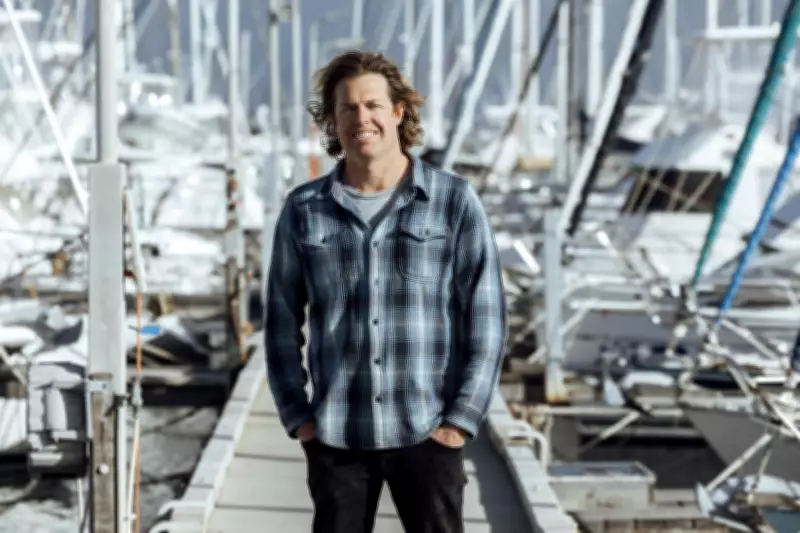
Fremantle Seaweed co-founder and managing director Chris De Cuyper said the matched funding was critical in enabling the business to scale. “If we were a software startup, you could build an app with a small amount of capital, but this is boats, aquaculture equipment, hatcheries and processing facilities,” he said. “Without the matched support for our seed funding, we would not have been able to proceed with this scale of infrastructure.”
Fremantle Seaweed’s earlier OnMarket equity crowdfunding raised $2.18 million and attracted more than 1,600 shareholders. The largest investor earned naming rights for the company’s seaweed harvesting vessel, calling it the Ralph Douglas in honour of their father. A further investment from Sydney’s Third Hemisphere pushed total funds to just shy of $2.3 million.
Current Operations and Future Plans
Fremantle Seaweed currently operates a 32-hectare offshore aquaculture lease in Cockburn Sound, using longline systems to grow Asparagopsis at scale. A further 160-hectare marine lease is planned for future development. At full capacity, the sites are expected to produce about 576 tonnes per year of Reef4Beef, Fremantle Seaweed’s feed supplement.
Mr De Cuyper said the new Mews Road facility in Fremantle is designed to remove production bottlenecks by enabling biomass to be propagated, seeded, and scaled into consistent commercial volumes. “This facility establishes that capability within Western Australia, giving producers access to a dependable supply,” he said.
Construction is expected to take around nine months, with the facility forecast to support 15 to 20 jobs once operational.
Feedlot Trials and Adoption Drivers
Early feedlot trials of Reef4Beef will be undertaken in partnership with Pardoo Wagyu, a premium beef producer in WA’s Pilbara that runs 10,000 purebred Wagyu cattle across 800,000 hectares, supplying high marble score beef to domestic and international markets.
Mr De Cuyper said he anticipates rising feed prices will be a key driver for Reef4Beef adoption, as cows require up to 7 per cent less feed, resulting in significant cost savings for farmers.
Pardoo Wagyu chief executive Grant Rockman said Fremantle Seaweed’s approach gave him confidence as it is “grounded in science and designed with farmers in mind.” “We’re excited to see how this supplement performs in a commercial setting, and whether the productivity gains stack up,” he said.
Fremantle Seaweed estimates Reef4Beef production could support methane reduction across about 25,000 head of cattle annually, delivering around 56,000 tonnes of annual CO2-equivalent abatement, depending on uptake.
Industry Context and Competitive Advantage
Mr De Cuyper did not view Tasmanian producer Sea Forest—which listed on the ASX in November last year with a market capitalisation of about $112 million and has celebrity investors including Zoë Foster Blake, Adam Gilchrist, and Mick Fanning—as a direct competitor. “It’s good for all of us as an industry that it has listed and performed well,” he said.
He said WA’s ocean conditions gave the company an advantage over Sea Forest. “We call WA the Goldilocks zone because it’s not too hot, not too cold. It’s just the perfect conditions to grow Asparagopsis,” he said. “Our conditions enable year-round ocean cultivation, which gives us a strong defensible position, whereas Sea Forest’s tank-based systems can constrain scale.”

Blue Economy Hub Vision
The Mews Road site will be partially subleased to marine and ocean-based businesses as part of Mr De Cuyper’s vision to establish an “emerging blue economy hub” on Fremantle’s waterfront.
Empire Property director Harley Van Der Wielen, who brokered the sale, said the site attracted strong local and international interest due to its waterfront access, industrial capability, and rare jetty licence. “We saw significant interest throughout the campaign, driven by marine-focused businesses,” he said.
Mr Van Der Wielen said incoming tenants were still awaiting Department of Transport approvals, but agreements were already in place.
Norfolk Commercial managing director Sonia Fairhead said a second site directly in front of Fremantle Seaweed’s acquisition has been sold by Norfolk to maritime-related business Saferight.