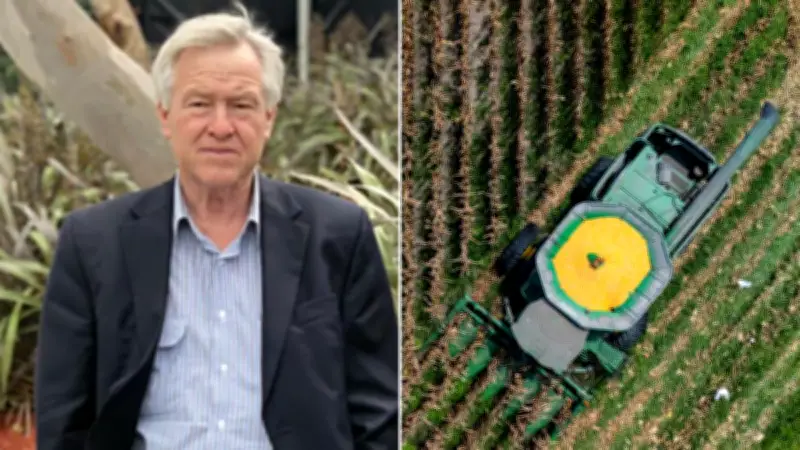
One of Australia's leading farmers, Xavier Martin, has issued a stark warning that the nation could face food shortages unless it becomes more self-reliant for key inputs such as fuel and fertiliser. Martin, who grows durum wheat and mung beans on the Liverpool Plains, is concluding his four-year term as President of the NSW Farmers Association.
Decisions reducing production
Speaking to the 7NEWS Podcast The Issue, Martin explained that Australian farmers are making decisions that will ultimately reduce food and nutrition production. “What we do, and how we do it, impacts the dinner plate in Sydney and right across the nation,” he said. “Imagine if we were short on food, that’s the way we’re heading.”
Triple threat facing producers
Producers are grappling with a triple threat: fertiliser shortages, high diesel prices, and forecasts of a “Super El Nino” that would bring drier and hotter conditions. Additionally, the collapse of the ceasefire between the USA and Iran, along with uncertainty around the Strait of Hormuz, is fueling uncertainty for those on the land.

The NSW Farmers Association’s latest Farm Sentiment Survey from May reveals that 35 per cent of respondents plan to change the variety of crops or stock they use, and there is a forecast 33 per cent reduction in the intensity or areas of production.
Grim economic outlook
The federal government’s latest Agricultural Commodities Report from June paints a similarly bleak picture. It forecasts the gross value of agricultural production nationally to fall by 5 per cent to $98.3 billion in 2026–27, and export values to drop by 9 per cent to $74.8 billion, driven by lower livestock product and crop exports.
Martin highlighted the tough economic reality for farmers. “That means that many farmers will have to make a tough choice between cutting back on the needs of themselves and their families, or taking on more debt, running down their capital, or in a worst case scenario even winding up their business,” he said. “On our farm what we’re doing is really cutting back on our fertiliser. We’re minimising the planting of any crops that are hungry for nutrients.”
Calls for a national plan
The Issue Podcast also featured retired Australian Army Colonel Neil Greet, who served in Iraq and Timor-Leste and responded to the deadly 2009 Black Saturday bushfires. Greet, now a member of the Australian Security Leaders Climate Group, argues that food security should be considered on par with national security.
“We understand on one level how food, water and energy comes together, but we don’t bring those Departments together to look at these problems,” he told The Issue. “We certainly don’t bring them into defence or national security planning. So the system is disjointed. If we could get our food security right, then we could actually be a benefit to our neighbours (such as Indonesia and Pacific nations).”
Biofuels and government action
Greet also called for greater production of biofuels from crops such as sugar cane. “It won’t be the answer by itself but it will be a huge help and it will actually develop really smart solutions for Australians,” he said. “We can be smart, we can do good stuff and get ourselves through this crisis.”
This week, the Prime Minister toured Volvo’s plant west of Brisbane, where the company is manufacturing electric trucks with financing assistance from the Government’s Clean Energy Finance Corporation. The Australian Government has committed $3.5 million to develop Feeding Australia: A National Food Security Strategy, which will be created with farmers, fishers, industry, and the community. Those on the land say it can’t come soon enough.