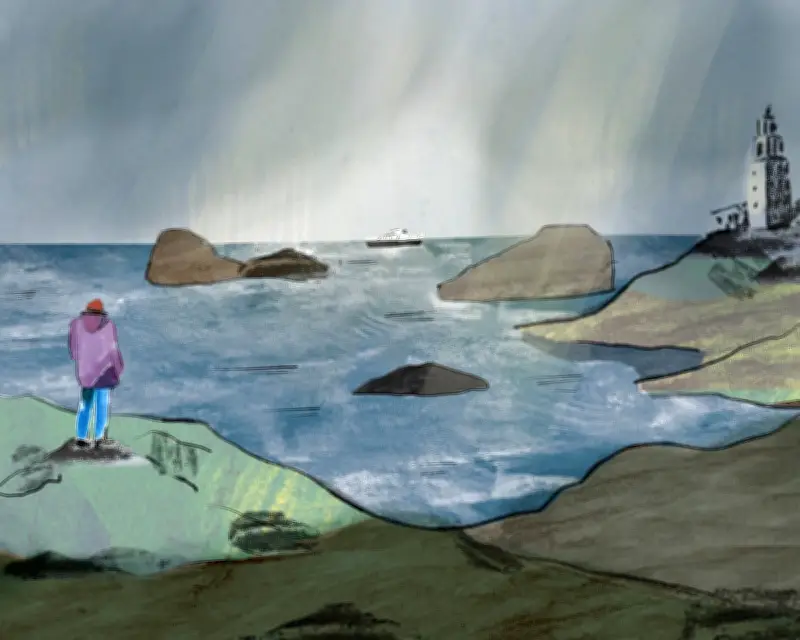
After the death of both my parents, I found myself drawn to the remote Hebridean island of Harris. The rugged landscape and unyielding solitude offered a strange comfort in my grief.
A Landscape of Loss
The island's harsh beauty mirrored my internal turmoil. The windswept beaches and jagged hills seemed to echo the void left by my parents' absence. Yet, in that emptiness, I began to find a sense of peace.
Solitude as a Healer
Solitude on Harris is not loneliness—it is a presence. The quiet allowed me to process my grief without distraction. I walked for hours, letting the sound of waves and the cry of seabirds fill the silence.

I remembered my parents' love for this place. They had brought me here as a child, teaching me to appreciate the wildness and resilience of the island. Now, their memory was woven into every stone and stream.
Embracing the Elements
The weather on Harris is unpredictable, much like grief. One moment, the sun breaks through the clouds; the next, a storm rages. I learned to accept both, finding that the storms eventually pass, leaving behind a clearer sky.
I spent days reading by the peat fire, evenings watching the sunset over the Atlantic. The simplicity of island life stripped away all that was unnecessary, leaving only the essential: breath, memory, and the slow work of healing.
A New Perspective
In the months that followed, I came to understand that grief is not something to be overcome but something to be integrated. The island taught me that loss, like the tides, is a constant presence—but so is renewal.
I left Harris with a deeper appreciation for solitude and a renewed sense of connection to my parents. The island had given me the space to mourn, and in doing so, to begin living again.