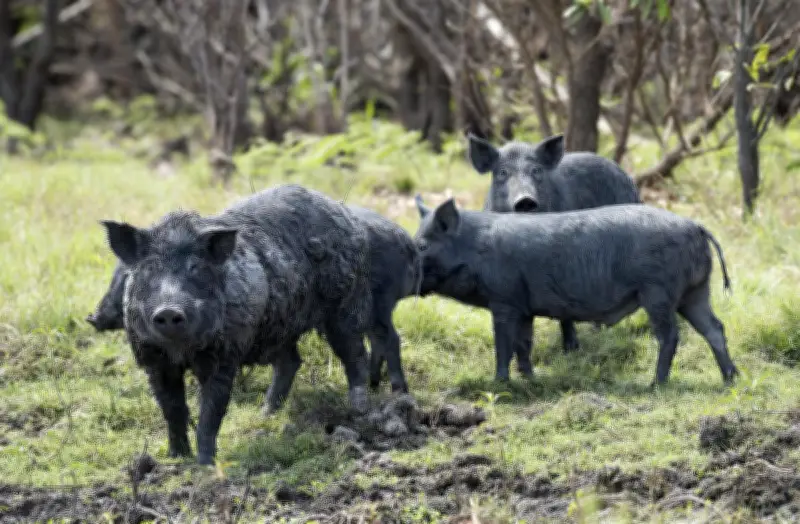
The federal government has been heavily criticized for neglecting the rapidly increasing feral pig population in regional Australia, as numbers continue to grow amid favorable weather conditions across multiple states. James Sutton, a recreational pig hunter from NSW and owner of Out West Dogging, reported seeing feral pig populations surge in his local area of Dubbo. "We're seeing huge numbers, especially in the cropping areas around Coonamble, Walgett, also around the Nyngan areas—the numbers are just flying out of proportion," he said. "Obviously the farmers hate them. They get in there and trample all their crops, down the fences ... it's unbelievable."
The NSW Government Feral Pig and Pest Program reported eliminating approximately 223,000 to 250,000 feral pigs over a recent three-year period through extensive aerial shooting, trapping, and baiting programs. However, hunters like Sutton argue that this is insufficient and that more incentives are needed to encourage greater participation in controlling the population boom. "I think if the government goes down the line of doing this $20 tail bounty, that's going to help a lot of people go out and do a bit more hunting," he said.
In some states, regional councils operate pest bounty programs that offer rewards for every feral animal tail, scalp, or snout collected. Sutton noted, "It'll certainly help get the numbers down. But they need to be careful of that as well, because then you'll just get every numpty, bloody going out trying to catch pigs and trespassing on properties. The government's got to come at the problem from different angles, not just rely on shooting and poison."

Sutton also pointed out that part of the problem stems from fewer hunters targeting pigs, as game meat processing facilities, known as chillers, are no longer purchasing pig meat. "They're not buying pigs anymore at the chillers. That's the biggest problem. So the roo shooters, they're not touching (pigs) because they don't need to shoot them—they can't get any money for them," he explained.
Pigs were introduced to Australia from Europe by the First Fleet in 1788 as livestock, but those that escaped established wild populations that have since expanded. A single sow can produce up to two litters of 10 piglets each year, with populations spiking after wet weather when food is abundant. In 2021, Queensland was estimated to have up to 2.3 million feral pigs, and current estimates suggest there are upwards of 26 million feral pigs across the country.
Beyond physical damage to farmland and crops, feral pigs carry diseases that can spread to pets and humans. Sutton reported seeing many pigs with tuberculosis, which is rampant in some western areas. "They're more likely to give it to other animals on farms, and people have lost dogs through this tuberculosis. I had a good friend of mine lose a dog and then he had to go and get blood tests every two weeks for around six weeks to make sure they hadn't caught it as well. So that's pretty scary sometimes," he said.
Last week, Queensland Senator Susan McDonald criticized the Albanese Government, stating that feral pigs continue to devastate farms, waterways, and wetlands, causing millions of dollars in damage. She said Canberra cannot ignore the "growing crisis" facing regional Australia and that stronger federal involvement is urgently needed to protect Australia's food security, biosecurity reputation, and regional economies. "Australia's feral pig crisis is spiraling out of control. Every day government delays meaningful action, the infestation grows and the damage compounds," McDonald said. "Across Australia, producers are watching crops destroyed overnight, fencing ripped apart, water systems contaminated and native habitats obliterated."

McDonald cited experts who estimate that around 70% of the feral pig population must be removed to reduce numbers, requiring as many as 15 million pigs to be culled annually just to keep the population stable. "These pests breed rapidly, spread disease and cause untold devastation to agriculture and the environment, yet regional Australians are being left to fight this battle largely on their own. The Environment Department's blame game simply doesn't stack up. They spend billions on the reef and impose strict regulations on farmers to reduce sediment run-off, yet when it comes to this issue they suddenly claim it's 'not an environmental problem' and tell producers to take it up with the Agriculture Department," she said.
In January, the Queensland Government announced that aerial shooters had been engaged to reduce feral pig numbers during flood recovery. When floodwaters are high, feral pigs are trapped on higher ground or move slowly through boggy terrain, creating ideal conditions for aerial control. Federal Emergency Management Minister Kristy McBain noted that the amount of fencing damaged during recent floods has allowed feral pigs to roam more widely, potentially causing major issues and further losses if not addressed.
In 2023, the Australian Bureau of Agriculture and Resource Economics and Sciences (ABARES) estimated that feral pigs cost the national economy $156 million annually, with $95 million attributed to production losses and direct control costs in Queensland. McDonald concluded, "If the federal government is serious about biosecurity, then it must get serious about feral pests. That means proper long-term funding, coordinated control programs and real support for the producers and communities on the frontline."