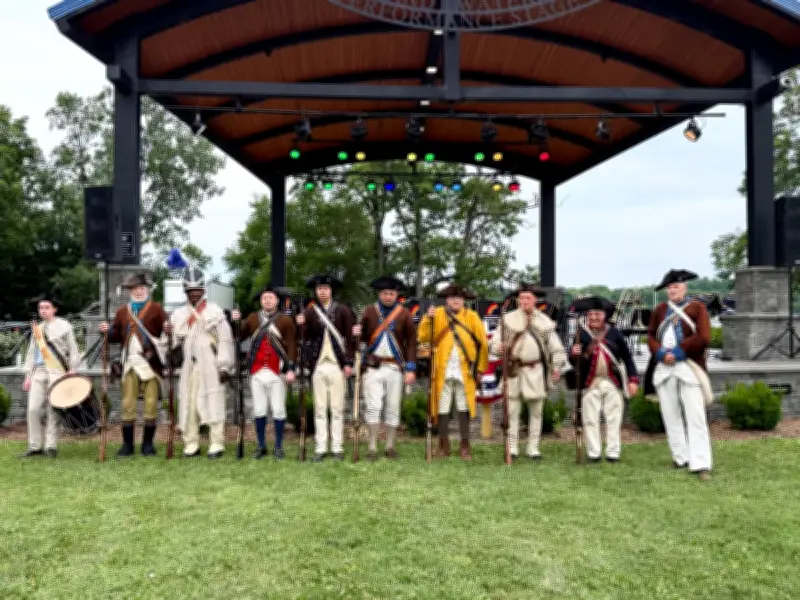
Muskets in hand, historical re-enactors are stepping back into the spotlight as the United States prepares to celebrate its 250th birthday this week. These 'living historians'—interpreters who wear period clothing, demonstrate historic trades, and use authentic tools—are finding themselves in high demand for community events and educational programs.
A Teacher's Question Sparked a Lifelong Mission
In 1972, Joe Ryan was teaching middle school in northern Westchester about the American Revolution when a student asked, 'Mr Ryan, were our ancestors stupid?' The student couldn't understand how soldiers in rigid, shoulder-to-shoulder formations could fight effectively. Inspired by his mentor, Dr. Ernie Coons, Ryan took the lesson outside. Days later, a dozen students stood in the school parking lot with muskets made by the school's shop and home economics departments, re-creating the formation from their textbook.
Now 80, Ryan is president of the Living History Education Foundation and a board member of the fifth New York regiment. He has spent over 50 years bringing history to life. 'The celebration of the 250 is going to be local,' he said. 'They can talk all they want in Washington, but from our point of view, the cavalry is not coming.'

Living Historians: Always in Demand
Sherry Emershaw, president of the 24th Connecticut militia regiment, echoed Ryan's sentiment. 'We don't need a special anniversary to celebrate and educate people about the revolutionary war. Every single day, we do this.' She noted that the semiquincentennial has increased demand: 'Every weekend we're doing something, and frankly, I have to be turning people away.'
Emershaw, a recently retired financial adviser, started re-enacting 16 years ago. When she joined, women were just gaining acceptance; now, it's the norm. While many women play camp followers, they are also welcome to portray male soldiers in battle.
Geographic Spread and Small Numbers
Most Revolutionary War re-enactment groups are concentrated along the east and mid-Atlantic, but interest exists nationwide. The Spirit of 76 Living History Association in Washington state portrays broader 18th-century life rather than specific battles. Membership coordinator Elsie Criswell said, 'We live where we live and our interests are our interests. It's a small but very unique offering.'
Kenneth Gavin, commanding officer of Spencer's Additional Continental Regiment, noted the challenge of meeting demand. 'There aren't a whole lot of us. There's probably a few thousand, and we're on the eastern seaboard, but definitely not enough to do all the things we're being asked to do.'
Political Divisions and Differing Views
The semiquincentennial falls at a precarious time. According to a Pew Research Center poll, over half of US adults believe that by 2050 the country will be less important globally, more politically divided, and its government will work worse than today. Re-enactors have mixed reactions. Emershaw said, 'I think it's a disgrace personally. I love my country. Politicians don't define what this country is about.' Gavin, however, understands the disillusionment: 'Looking back with 21st century eyes, we see so much imperfection. Are we really extending freedoms and liberties to all people? Of course, we're not.'