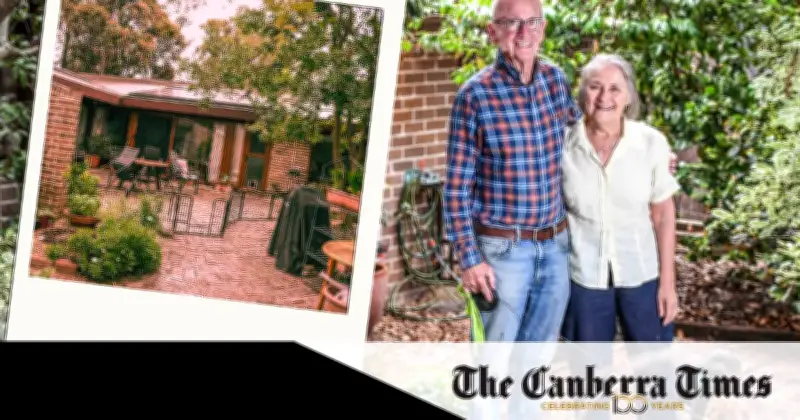
Urambi Village, a bold housing experiment launched in the 1970s on the outskirts of Canberra, has not only survived but thrived, offering lessons in community design and sustainability. Conceived as a radical departure from conventional suburbia, the village was built around principles of shared spaces, energy efficiency, and social interaction.
Origins of the Experiment
In 1975, the Australian government funded the construction of Urambi Village as a pilot project for alternative housing. Located in the suburb of Kambah, the village comprised 53 homes arranged in clusters around communal courtyards. The design emphasized pedestrian pathways, car-free zones, and passive solar heating. According to architect John Lee, who was involved in the project, the goal was to create a 'village within a city' that fostered neighborly connections.
Design and Features
Each home in Urambi Village was oriented to maximize northern sunlight, with large windows and thermal mass walls to regulate temperature. Rainwater tanks and composting toilets were standard, making the village a precursor to modern eco-living. The layout included shared gardens, a community hall, and a children's play area. Residents were encouraged to participate in maintenance and decision-making through a cooperative management model.

Challenges and Adaptations
Despite its innovative design, Urambi Village faced early challenges. Some residents struggled with the lack of privacy and the demands of communal living. By the 1980s, maintenance issues and financial strains led to the dissolution of the cooperative. However, the village adapted over time. Individual homes were sold to private owners, and the community evolved into a mix of original and new residents who valued its unique character.
Enduring Legacy
Today, Urambi Village is a sought-after address, with homes often selling above market rates. According to a 2023 study by the Australian National University, the village has lower energy consumption and higher resident satisfaction compared to neighboring suburbs. 'It's a testament to the foresight of the original planners,' said Dr. Sarah Thompson, an urban sociologist. 'The principles of Urambi Village are now being rediscovered by modern eco-developments.'
Lessons for the Future
As Canberra grapples with growth and sustainability, Urambi Village offers a blueprint. The village's success has inspired similar projects, such as the Christie Walk eco-housing in Adelaide. With climate change driving demand for energy-efficient homes, the 1970s experiment is more relevant than ever. 'Urambi Village shows that good design can create lasting communities,' added Thompson.