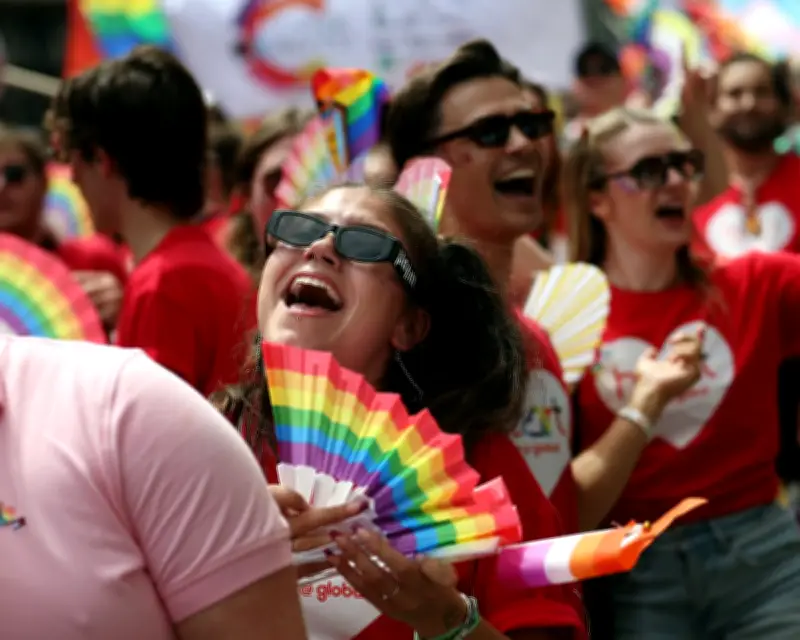
More than 35,000 people from about 600 groups marched through central London on Saturday for the annual LGBT+ Pride parade, proceeding from Hyde Park Corner to Whitehall via Piccadilly. London Mayor Sadiq Khan joined the crowd as they made their way through the capital, many carrying rainbow flags.
Protest and celebration at the heart of Pride
The activist Julian Hows, 70, who was at the front of the parade, told journalists: “Pride is important because it needs to have an underlying level of protest, and you can see the freedoms that we have can so easily be taken away. We also always need to push further because there’s always somewhere where our rights are being taken away.”
Organisers confirmed that Madonna would not be attending the event, contrary to rumours. Pride in London posted on social media: “In response to the rumours, we can confirm that Madonna will not be appearing or performing at Pride in London. We have two fantastic headliners at Trafalgar Square to conclude a brilliant day of protest and celebration.”

Urgent issues facing the LGBTQ+ community
Speaking prior to the event, a Pride spokesperson highlighted pressing concerns: “The urgency is clear: NHS gender-affirming care waiting lists now exceed four years in some regions while a comprehensive trans-inclusive ban on conversion therapy remains uncodified into law despite a 2018 government pledge. At the same time, the community infrastructure LGBTQ+ people rely on is shrinking – since 2006, 58% of London’s LGBTQ+ venues have closed. Together, these gaps in care, protection and safe spaces are unfolding amid continued hostility, with Home Office figures showing that more than 18,000 hate crimes motivated by sexual orientation were reported to police in 2025.”
Historical context and calls for inclusivity
Britain’s first official Pride march took place in London in July 1972, inspired by the Stonewall uprising in New York three years earlier, when police raided the Stonewall Inn, leading to a week of demonstrations against harassment and discrimination. Rebecca Paisis, the event’s interim chief executive, said she wanted to oversee “the most inclusive Pride in London event yet”. She added: “Our movement has always been built on many voices becoming one united front – from the people who marched in 1972 to those joining us for the first time this year. That’s where our power lies. As LGBTQ+ people, we’ve never been strangers to adversity, but neither are we strangers to collective action. This year’s campaign is a reminder that while the community often faces challenges in isolation, it is by coming together that we can change history.”
Criticism and controversies
However, in recent years, the London event has been criticised by some LGBTQ+ activists who no longer feel represented by it. It has faced accusations of “pinkwashing” by allegedly allowing some corporations to profit from their involvement without any real commitment to LGBTQ+ equality. Some activists have also suggested the event is not diverse enough. Since 2024, a number of LGBTQ+ groups have tried to distance themselves from the London march due to concerns about sponsors’ connections to the arms trade and the war in Gaza.