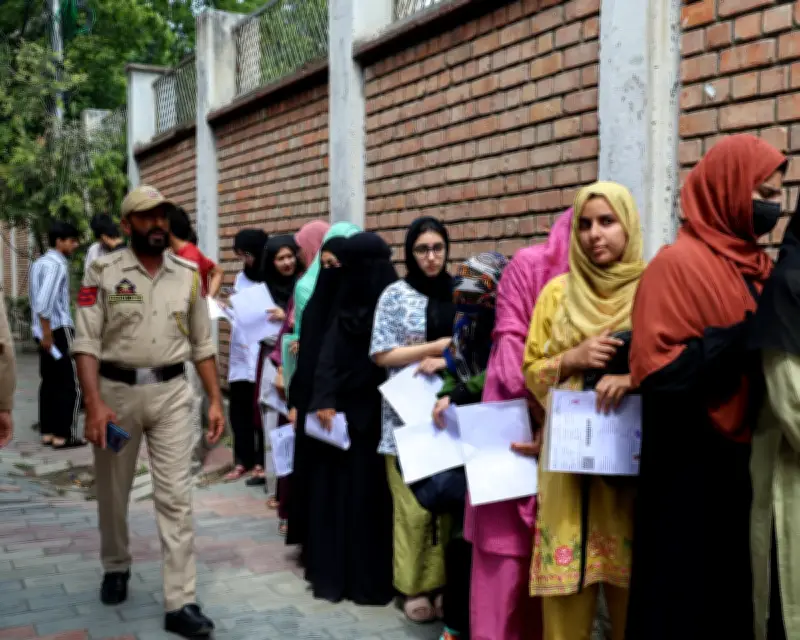
More than 2 million aspiring Indian doctors have sat one of the world's toughest entrance exams for a second time after an alleged question paper leak forced authorities to scrap the original test results. The retest, held on 21 June 2026, saw students subjected to airport-style security, including frisking, biometric checks, and metal detectors, with police and paramilitary personnel guarding test centres.
Emotional Toll on Students
For many students, the retest turned an already gruelling ordeal into a nightmare. News anchor Rajdeep Sardesai posted on X: "One can only imagine the trauma each of you have gone through in the past few months." One student said: "Thousands of students are emotionally exhausted after this long process. We are trying our best, but many of us are struggling mentally."
The High Stakes of India's Medical Entrance Exam
The test, known as NEET (National Eligibility cum Entrance Test), is the gateway to India's medical colleges, where only about 5-6% of candidates secure a coveted seat. Many spend years preparing, attending expensive coaching classes and studying for long hours in the hope of making the cut. India's education minister, Dharmendra Pradhan, promised a "fair and transparent" re-test, while the government has launched a sweeping investigation into the alleged questions leak last month.

Government Response and Controversy
One candidate, Tarun, posted on X: "I did well but let's see. The exam was tougher than last time." The scandal led the government last week to temporarily suspend access to Telegram, one of India's most popular messaging apps, after reports that leaked questions for the fresh exam were being sold on the platform. The ban drew criticism from internet free-speech advocates, but on Friday the company lost a court challenge when judges ruled the ban was justified.
Broader Examination System Crisis
The medical test scandal is one of a long list of examination controversies that have shaken confidence in India's vast testing machinery, which determines access to universities and government jobs for tens of millions of people each year and holds the promise of upward mobility for many. Earlier this month, more than 400,000 Indian students applied for copies of their test papers amid an outcry over marking errors in the country's most important school-leaving exam after the introduction of a new digital scoring system. Teachers said when they were marking the exams, they were often still figuring out the software.
Cost and Protests
The Indian Express newspaper asked why authorities "spend heavily on damage control instead of planning for prevention," pointing to the costs of re-evaluations, reruns and the anxiety caused to students. A new Indian satirical group calling itself the Cockroach Janata Party (CPJ), a play on the ruling Bharatiya Janata party's name, has stepped into the row. The CJP has become a lightning rod for frustration among students over exam glitches and lack of jobs for youth. "This failure cannot go ignored. There must be consequences," said social media creator and CJP founder Abhijeet Dipke. The movement has quickly amassed more than 22 million Instagram followers while, at demonstrations, protesters have demanded the education minister's resignation.