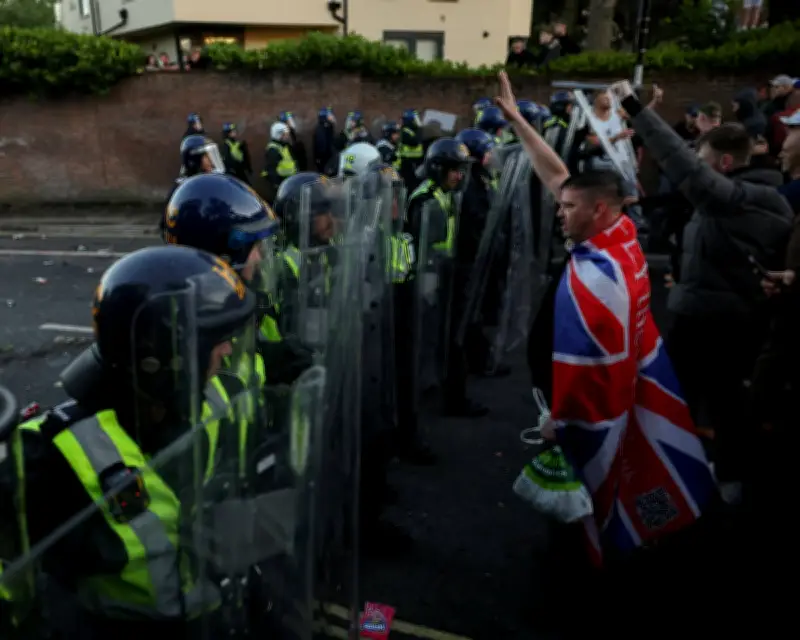
Claims of two-tier policing have resurfaced following the murder of Henry Nowak in Southampton, with critics alleging that police treat white people more harshly than other ethnic groups. The term gained traction after far-right figures like Tommy Robinson and politicians such as Suella Braverman used it to accuse police of double standards. However, data and historical analysis discredit these claims.
Origins of the Term
The concept of two-tier policing first emerged from far-right circles. Tommy Robinson, founder of the English Defence League, complained in 2012 of a system where Muslims were treated more favorably than non-Muslims. He repeated this during child sex grooming scandals involving Muslim men.
Mainstream Adoption
Suella Braverman, as home secretary, accused police of double standards in 2023 for allowing a pro-Palestine march on Armistice Day. The term gained widespread attention in 2024 after far-right riots in Southport, where white protesters claimed they were treated more harshly due to their race. Nigel Farage and Elon Musk amplified these claims, comparing the police response to Black Lives Matter protests.

Lack of Evidence
Comparisons between the Southport riots and BLM or pro-Palestine protests are flawed. As Priti Patel noted, there is a difference between blocking streets and burning down buildings. Police used mounted units at BLM protests, and pro-Palestine organizers faced restrictions, leading to convictions for breaching conditions. The policing inspectorate criticized Braverman's comments as unfair.
Police Failures and Grooming Gangs
While serious police failures occurred in grooming gang cases, the claim that fear of racism allegations drove these failures is contested. Victim blaming has also been cited as a factor.
Data on Racial Disparities
In England and Wales, black people are three times more likely than white people to have police force used against them. They are twice as likely to be arrested and 3.8 times more likely to be stopped and searched. Even after adjusting for arrest rates, black people are 1.7 times as likely to face force. This likely understates the disparity, as only 70% of force reports lead to arrest.
For Asian people, the picture is mixed: they are slightly less likely than white people to face force or arrest but more likely to be stopped and searched.
Historical Context
The 1999 Macpherson report, following Stephen Lawrence's murder, promised changes in policing racism. However, lawyers and campaigners say few promises were met. The Lawrence case took 19 years for convictions, while Henry Nowak's killer was convicted within six months, highlighting improvements in some areas but persistent disparities in police powers.