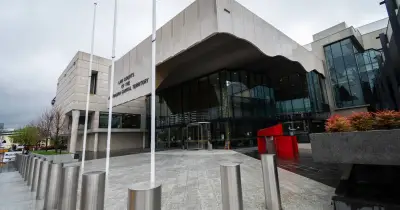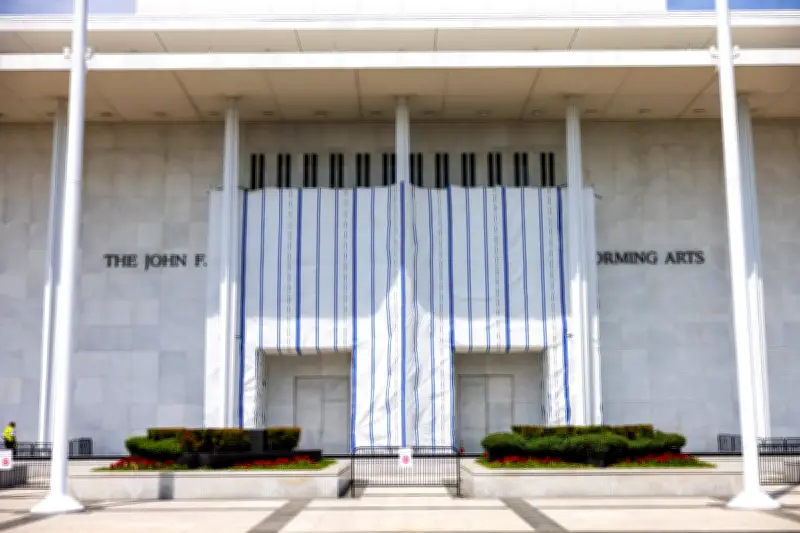
A federal judge has issued a temporary restraining order blocking the John F. Kennedy Center for the Performing Arts from installing a large protective tarp over its iconic facade, handing a victory to preservationists who argued the covering would damage the building's aesthetic and historical integrity.
Legal Challenge and Ruling
U.S. District Judge Timothy J. Kelly granted the order late Wednesday after a group called the Committee to Save the Kennedy Center filed a lawsuit claiming the tarp installation violated federal preservation laws. The group argued that the tarp, intended to protect the building during renovations, would obscure the structure's distinctive white marble exterior for up to two years.
Judge Kelly wrote in his ruling that the plaintiffs had shown a likelihood of success on the merits, noting that the Kennedy Center is listed on the National Register of Historic Places and that federal agencies must consider the impact of such projects on historic properties. The restraining order will remain in effect until a hearing scheduled for July 10.

Background and Rationale
The Kennedy Center, which opened in 1971, is a major cultural venue in Washington, D.C., hosting performances by the National Symphony Orchestra, the Washington National Opera, and other artists. The planned renovations include repairs to the building's roof and mechanical systems, with the tarp intended to protect the facade from construction debris and weather.
Center officials said the tarp was necessary to prevent damage to the marble and to ensure the safety of workers and visitors. However, preservationists countered that the covering would be an eyesore and could trap moisture against the stone, potentially causing long-term damage. The committee's lawsuit cited the National Historic Preservation Act, which requires federal agencies to consult with preservation offices before undertaking projects that could affect historic sites.
Reactions and Next Steps
"We are thrilled that the court recognized the irreparable harm that would be done to this national treasure," said Sarah Johnson, president of the Committee to Save the Kennedy Center, in a statement. "The tarp is not just a temporary inconvenience; it is a violation of our commitment to preserving America's cultural landmarks."
Kennedy Center spokesperson Mark Thompson expressed disappointment with the ruling, saying, "The center has followed all necessary procedures and consulted with preservation experts. The tarp is a standard construction measure that has been used at other historic sites without issue. We look forward to presenting our case at the hearing."
The case highlights ongoing tensions between the need for infrastructure upgrades at historic venues and the desire to maintain their original appearance. Similar disputes have arisen at other landmarks, including the Lincoln Memorial and the Smithsonian museums.
Broader Implications
If the court ultimately sides with the preservationists, the Kennedy Center may be forced to explore alternative construction methods, such as scaffolding with netting, which could increase costs and extend the renovation timeline. The center had already budgeted $12 million for the tarp and related safety measures.
The ruling also sets a precedent for how federal courts interpret the National Historic Preservation Act in cases involving temporary structures. Legal experts say the decision could influence future disputes over protective coverings at other historic sites.
The Kennedy Center renovations are part of a broader $40 million infrastructure upgrade funded by federal grants and private donations. Delays could impact scheduled performances, though center officials said they are working to minimize disruptions.