Abubakr Annour remembers the phone call with haunting clarity. It was mid-morning on Monday, 30 April 2018, and on the other end of the line was his daughter, Safa. Three weeks shy of her third birthday, Safa was living in Canberra with her mother and older brother. Her father was 500km away, working as a fruit picker in Shepparton in regional Victoria.
"She was asking me, 'When are you coming to pick us up?'" Annour recalls of the conversation. The pair never spoke again. The toddler – whose family arrived as refugees in Australia just eight months earlier – was pronounced dead after she was rushed to Canberra hospital about 1.50pm that afternoon.
Autopsy Revealed Fatal Blunt-Force Trauma
An autopsy concluded that she had died of internal bleeding caused by blunt-force trauma. Australian Capital Territory police, who waited six months to inform the public about the case, suspected Safa was the victim of an "absolutely horrendous" murder. More than eight years later, police have still made no arrests, laid charges or named suspects, despite CCTV footage showing Safa in public, seemingly happy and healthy, on the morning she died. There has been no coronial inquest or other public inquiry.

No one from the family, Canberra's small Sudanese diaspora or the wider community ever came forward to appeal for answers and justice, which helps explain why, after an initial burst of interest, the tragedy disappeared from public consciousness.
Father Breaks Silence After Eight Years of Waiting
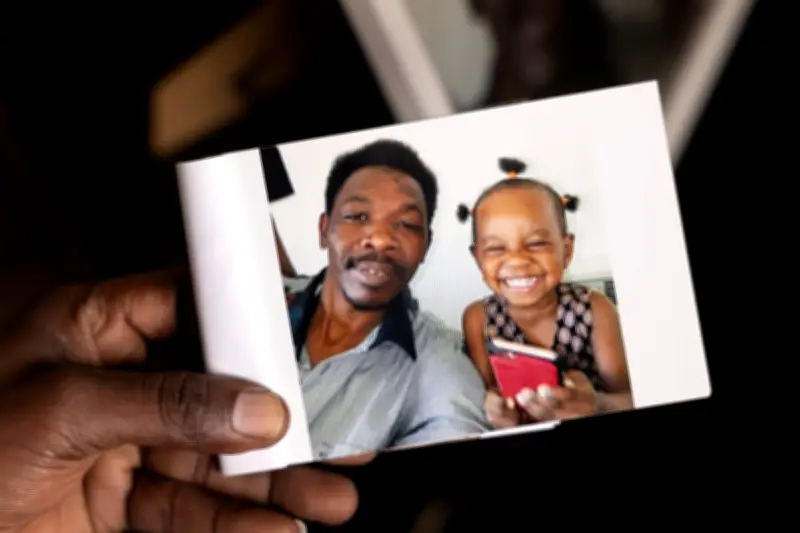
Annour is sitting on a couch in his dimly lit unit in Canberra's western suburbs, flicking through an album of family photos. In one picture of the father and daughter, taken a few months before Safa's death, the toddler's face is scrunched into a wide and joyful smile. "Sometimes I feel she is still with us and sometimes I realise she is not and I get really angry," Annour tells Guardian Australia through a translator. "I have never forgotten what happened to Safa. I never forget it and it always [is] in my mind."
The 42-year-old has spent eight years waiting for a breakthrough from police that has never come. So, after learning of media coverage about his daughter's death, he has decided to come forward and break the silence that has hung over the case. Annour wants a coronial inquest and justice to be served to whoever caused her fatal wounds.
Criticism of Police Investigation
He is critical of police, adamant that mistakes were made and more resources could have been deployed in the early weeks of the investigation. "Justice for me, even after 100 years, it must come," he says. "At the end of the day I want justice for my daughter and whoever did this should be punished."
Annour was born in south Darfur, a region of western Sudan known internationally as the scene of devastating conflict and humanitarian crisis. He moved to the capital, Khartoum, after the first Darfur war erupted in 2003, where he met his future wife, Huda Yagoub, and the couple had their first child. Fearful of raising children in a strife-torn country, the young family fled north-eastern Africa for Indonesia. Safa Abubakr Annour was born on 19 May 2015 in the port city of Makassar on Sulawesi.
The family were granted refugee visas by the Australian government and shortly after Safa's second birthday arrived to live in the nation's capital. "She was unlike other kids," Annour says of his daughter. "She was always very happy, always smiling. She always sought out knowledge, she always asked questions. She loved music and every time we played a song she sat beside me and she heard me singing and repeated after me and danced."
Circumstances Surrounding Safa's Death
The family were welcomed by members of Canberra's small Sudanese community but struggled for money and in accessing services and overcoming language and cultural barriers. The parents separated after their relationship deteriorated and Annour left town in search of work. Yagoub, Safa and her brother moved into a home for women, which is where the toddler was living in the days before she died. At 8.40am on 30 April 2018, the three of them were seen stepping off a bus in Griffith in Canberra's inner-south, a short drive from Parliament House. By that afternoon, Safa was dead.

Details of the suspected murder were revealed six months later in a public appeal for information by ACT police, who believed there were people in Canberra with knowledge of the case who were choosing not to come forward. The force released a photo of the toddler along with footage that showed her walking off the bus. A fortnight later, a second clip was circulated showing Safa the day before she died, walking with her brother and a different woman that police stressed was not a suspect.
Key Individuals Identified
Police said two people were responsible for the toddler's care at the time she suffered her fatal injuries but refused to name them or disclose their relationship to the child. They did not refer to them as suspects. Guardian Australia has established that one of the people was Yagoub. The other was a Sudanese-born man named Luay Shaor, who had befriended Yagoub in Canberra.
After Annour received news of his daughter's fatal injuries, friends of the shell-shocked young father rushed him back to Canberra and straight to the hospital. By the time he arrived, Safa's body had already been taken for an autopsy. Her death wasn't treated as a possible murder until the postmortem results prompted police to ramp up their investigation. "This was a crime," Annour tells Guardian Australia. "No sane person would have done something like that to a kid."
The father and mother remained in Canberra amid the fallout from their daughter's death, which included the removal of Safa's brother by child protection workers. Shaor returned to Sudan in the months after the death and Guardian Australia understands that he remains overseas. A lawyer for Yagoub declined to comment when contacted by Guardian Australia. Shaor could not be reached for comment.
Police Response and Call for Inquest
Reflecting on the weeks and months after his daughter's death, Annour believes police did not dedicate enough resources to the case and questions why Shaor was allowed to leave the country with the investigation ongoing. "The police output of resources don't match what had happened," he says. "Police did not do their jobs."
In a statement to Guardian Australia, ACT police said Safa's death was still being treated as an open homicide investigation and the force remained determined to identify the person or people responsible. "A thorough, dedicated and comprehensive investigation was conducted into the death of Safa Annour," police said. "This work has continued in the eight years since, including enquiries being made this year in support of the investigation." The force said it was working with the ACT coroner but the timing of a formal or public inquest was up to the coroner.
Guardian Australia asked the ACT attorney general, Tara Cheyne, and the ACT police minister, Marisa Paterson, if the territory government would support an inquest but was told it was a matter for the independent ACT coroner. The coroner did not respond to questions from Guardian Australia, including whether a possible inquest was on hold due to the active police investigation. Under the territory's coronial process, the coroner must refer a case to the director of public prosecutions if it believes a criminal offence has been committed. The coroner must pause its investigation until the matter is finalised.
Community Calls for Justice
A member of Canberra's Sudanese community, who asked not to be named, says a coronial inquest would be an important step to answer unresolved questions and reassure the public. "No parent should have to endure not knowing what happened to their child," they said. "While nothing can bring Safa back, justice matters because it can provide the truth, accountability, and a measure of closure for a father who continues to carry this pain every day. Safa deserves to be treated like any other Australian child. Her life had the same value as every other child's life. I often ask myself whether the public conversation would have been different if this tragedy had affected a family with greater resources, stronger networks, or a better understanding of the legal system."
For roughly a year after she was buried at Gungahlin cemetery in Canberra's northern suburbs, Safa's plot was identifiable only by a white tag that misspelt her name "Safia". It was eventually replaced with a purple plaque, paid for by her father, showing a butterfly bursting into the sky. Asked if he ever visits the grave, Annour shakes his head. "I will never go to the grave until whoever committed the crime [is found]," he says.