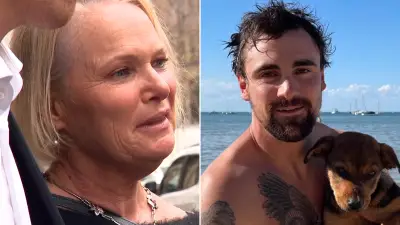
A man who was shot during an armed robbery has described his harrowing experience of bleeding out on the way to hospital, gripped by the fear that medical staff would abandon him to die because of his criminal past.
Attack and Immediate Aftermath
The incident occurred on the evening of July 3, 2026, in a suburban street in Melbourne. The victim, a 34-year-old man who asked to remain anonymous, was walking home when he was approached by an armed robber demanding his wallet. When he hesitated, the robber fired a single shot, striking him in the abdomen.
“I fell to the ground, and the pain was instant, like being stabbed with a hot knife,” he recalled. “The robber grabbed my wallet and ran off. I was lying there, bleeding, and all I could think was that I needed to get to a hospital, but I was terrified of what would happen when I got there.”

Fear of Discrimination in Healthcare
As bystanders called an ambulance, the victim’s mind raced with memories of past encounters with the justice system. He had a prior conviction for drug possession and had spent time in prison. “I’ve heard stories of people with criminal records being treated differently, being left to suffer,” he said. “I was convinced that when the doctors saw my record, they’d let me die.”
The ambulance arrived within ten minutes, and paramedics worked to stabilize him. During the 15-minute ride to the Royal Melbourne Hospital, he lost consciousness twice from blood loss. “I remember thinking, ‘This is it. They’re going to let me bleed out because I’m a criminal.’ It was a terrifying feeling.”
Hospital Response and Surgery
Upon arrival, the victim was rushed into emergency surgery. According to hospital records, he had lost nearly two liters of blood and was in critical condition. Surgeons operated for three hours to repair a damaged artery and remove the bullet.
Lead surgeon Dr. Sarah Chen said the team was unaware of the patient’s background until after the operation. “Our priority is always to save lives, regardless of a patient’s history. We treat everyone with the same level of care,” she stated. “It’s unfortunate that this man felt afraid, but I want to assure the public that we do not discriminate.”
Recovery and Lingering Trauma
The victim is now recovering at home but says the psychological scars remain. “Physically, I’m healing, but mentally, I’m still haunted by that fear. I know now that the doctors didn’t let me down, but the fear was real.”
He has since spoken with a hospital social worker who reassured him that his medical records are confidential and not shared with law enforcement without consent. “They told me that my past doesn’t matter when I’m on the operating table. That helped, but it’s hard to shake the feeling.”
Broader Implications
The case has sparked discussion about trust in healthcare among people with criminal records. A 2025 study by the Australian Institute of Criminology found that 23% of former prisoners avoid seeking medical help due to fear of discrimination. Health advocates say more needs to be done to build trust.
“This man’s story is not unique,” said Dr. Mark Thompson, a health policy researcher at the University of Sydney. “There is a real perception among marginalized groups that they will be treated differently. Hospitals need to actively communicate that patient confidentiality is paramount and that care is provided without judgment.”
The victim, now recovering, hopes his story will encourage others to seek help when needed. “I almost died because I was scared of the people who could save me. No one should have to go through that.”