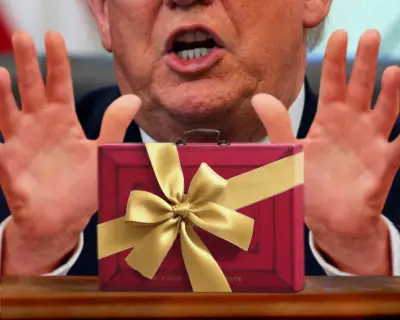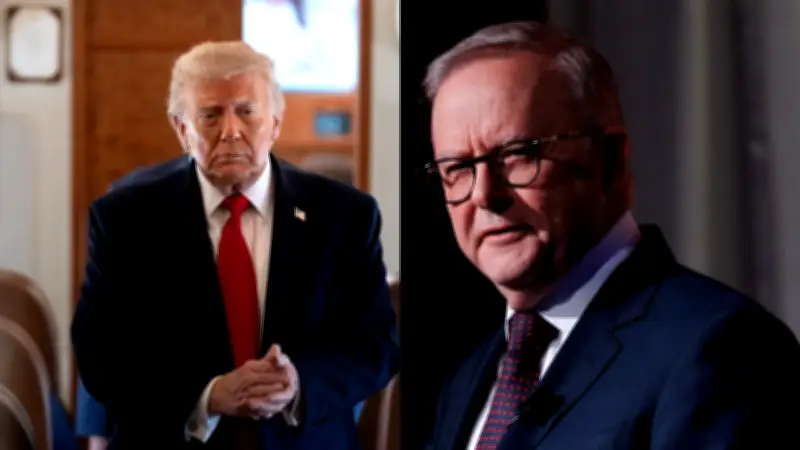
Australia's risk of becoming a "dumping ground" for slave-made goods has been exposed by Washington's "cynical" tariff threats, an expert says. The United States has signalled it could impose tariffs of 12.5 per cent on exports from more than 50 countries over alleged failures to address forced labour in global supply chains.
Expert criticises Albanese's claims
Australian Human Rights Institute director Justine Nolan said the US move had the traces of pure trade politics, but could not be dismissed entirely. Australia's modern slavery framework, introduced in 2018, has not kept pace with international developments and was no longer sufficient to deal with the scale of the problem, she said.
"Perhaps the motivation here isn't exactly pure, and... I think that the trade laws are being arguably used in a cynical sort of cover way in relation to this," she told Sky News Australia. "But it does put a spotlight on what we can do, and we know we can do more. What (the US is) really looking for is to have something similar to what they've got, which is a forced labour import ban."

Call for forced labour import ban
She said such a ban would complement the slavery act and appease the Americans. "What (a ban) would do is it would mean that goods that are tainted with forced labour, that are coming through supply chains, coming into Australia, this would stop those at the border," Ms Nolan said. "The US has a law like this, the EU is phasing in a law like this, other countries like Mexico, Canada, are also bringing in these types of laws. What we have at the moment with Australia without that law is we're really at risk of being a dumping ground for goods that are being made on the backs of slaves and they're coming into Australia."
On Wednesday, the US announced its plans to hit Australia with a 12.5 per cent tariff after determining Australia had failed to prevent the importation of goods made using forced labour. US trade representative Jamieson Greer said the alleged failure was "unacceptable". Mr Greer said the new tariffs were justified as US workers were forced to compete "on an unlevel playing field" internationally.
Albanese's claims rebutted
Prime Minister Anthony Albanese last week pushed back against Mr Greer's claim and insisted Australia has "world-leading legislation" to address modern slavery. Ms Nolan, however, said the legislation was no longer ahead of the pack. "We had world-leading legislation when we established it in 2018, but we're eight years on from that now and other countries around the world have moved on," she said. "Our legislation, our laws were really a starting point," Nolan said, adding that the system had been designed more to improve corporate awareness than to force compliance or enforcement. "The fact is that our current modern slavery law isn't really fit for purpose. It doesn't have any enforcements built into it. It's essentially voluntary for many companies and it's really loosely sort of quality control if you like," she said. "I think it's fair to say it's a sort of a cynical move using trade law in this way, but in this case there's some substance behind it, but it's definitely more about trade than labour and about raising revenue."
Ms Nolan said accurate modern slavery statistics were difficult to find though estimates suggested about 41,000 people were in some form of forced labour or other forms of modern slavery in Australia. Australia was one of several dozen countries accused by the Americans of failures to stop importing goods made with forced labour.