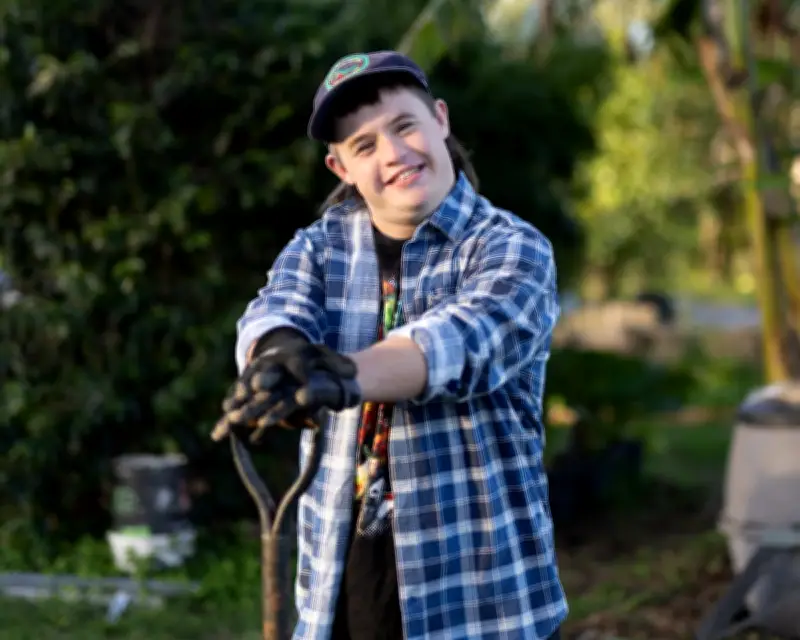
Joe Barham, a 22-year-old with Down syndrome living on the Gold Coast, has found purpose and independence through National Disability Insurance Scheme (NDIS) programs. He spends his days learning barista skills, working in a community garden, and recycling cans—activities that build social connections and essential life skills. But these programs, funded under social and community participation budgets, face a proposed 50% cut by the federal government, threatening to dismantle his routine and progress.
A Lifeline for Independence
Joe’s mother, Kerry, describes the NDIS as transformative. “It’s like hiding medicine in a teaspoon of honey,” she says. “Joe goes to his programs feeling like he’s going to a job.” The programs teach money management, communication, and independence—skills Joe resists learning from his mother. For over four years, these activities have provided structure and social time, crucial for a young adult with Down syndrome.
However, the government’s plan to halve social and community participation budgets from July 2024 aims to save $13.2 billion by 2030. Minister Mark Butler argues the cuts protect core supports like showering and meal preparation. Yet, for families like Joe’s, the impact is devastating. “If that disappears, everything disappears,” Kerry warns.

Widespread Concern
The proposed cuts have drawn sharp criticism from disability advocates, human rights groups, and participants. The Disability Discrimination Commissioner Rosemary Kayess warned they could “promote segregation and institutionalisation.” A Senate inquiry is scrutinising the changes, with many arguing that providers who exploited the system should be targeted instead of slashing vital services.
Kylie, mother of 15-year-old Felix who also has Down syndrome, echoes these fears. Living in rural South Australia, Felix travels 2.5 hours to Adelaide for programs. “It’s really life-changing,” she says. “He sees kids his age riding bikes and feels left out. These programs give him confidence and independence.” Felix uses about 86% of his allocated budget, but limited workers mean he can’t access full support.
Financial Strain and Uncertainty
The NDIS, costing $50 billion this financial year, is projected to reach $117 billion by 2036-37 if unchanged. Social and community participation accounts for a quarter of the budget. For Joe, whose annual support costs around $28,900, the cuts would force Kerry to choose which programs he can continue. Before the NDIS, the family paid out-of-pocket, but the scheme provided consistency.
Kerry wishes the government would crack down on rorts rather than cut services. “People have taken advantage and abused it, and now we’re paying the price,” she says. “They don’t care about the impact on people like Joe.”
Looking Ahead
Joe’s story highlights the human cost of policy changes. As the Senate inquiry continues, families await a decision that could reshape lives. For Joe, the programs are not just activities—they are his path to a fulfilling life. “He’s very social,” Kerry says. “Without that network, I don’t know how we’d do life for him.”