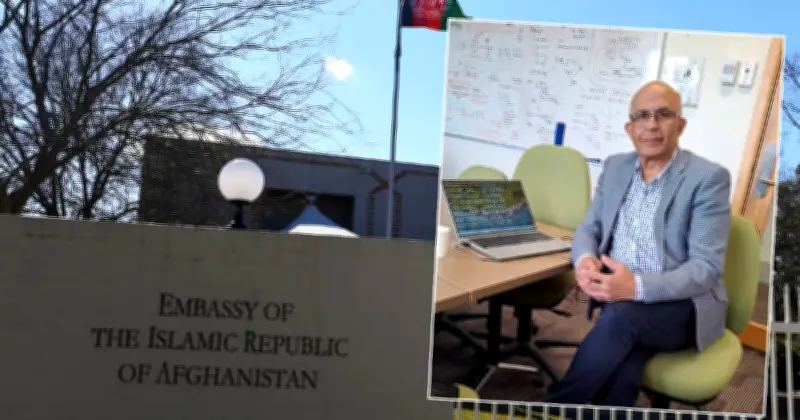
The sudden closure of Afghanistan's embassy in Canberra has left the city's Afghan community reeling, with many expressing shock and uncertainty about the future of consular services and bilateral relations.
Embassy Shuts Its Doors
The embassy, which had been operating under the former Afghan government, ceased operations earlier this week, according to a statement from the Department of Foreign Affairs and Trade. The closure comes after the Taliban takeover of Afghanistan in August 2021, which led to the dissolution of the previous government and the suspension of diplomatic missions worldwide.
Afghan nationals in Canberra now face significant challenges in accessing passport renewals, visa applications, and other consular services. Many are left wondering how to handle legal documents and family reunification processes.

Community Reaction
Members of the Afghan-Australian community have expressed deep concern. "We are devastated," said Ahmad Zia, a local community leader. "This embassy was our lifeline for official matters. Now we feel abandoned."
According to community estimates, there are approximately 3,000 Afghans living in the Canberra region. The closure has particularly affected those who fled the conflict and were relying on the embassy for assistance with resettlement paperwork.
Impact on Consular Services
The Australian government has stated that it is working to ensure continued access to consular services through alternative means. However, details remain scarce. A DFAT spokesperson said, "We are engaging with international partners to facilitate emergency consular assistance for Afghan nationals in Australia."
Some community members have reported difficulties in contacting the embassy in recent weeks, with phone lines disconnected and the website going offline. The closure also raises questions about the status of diplomatic property and assets.
Uncertain Future
The closure marks the end of a diplomatic presence that spanned two decades. Many in the community worry about the broader implications. "It's not just about services; it's about recognition," said Fatima Hussaini, a Canberra resident. "Our country's flag no longer flies here. It's a painful reminder of what we've lost."
The Australian government has not officially recognized the Taliban regime, and the closure effectively severs formal diplomatic ties. The future of any representation remains unclear.
Looking for Support
Community organizations are stepping in to provide support. The Afghan Australian Association of Canberra has set up a helpline and is coordinating with other ethnic groups to offer assistance. "We are doing what we can, but we need government help," said organizer Mustafa Rahimi.
The closure has also affected students and businesspeople who relied on the embassy for documentation. Some have expressed fears of being stranded without valid passports.
As the community grapples with this new reality, many are calling for the Australian government to establish a temporary consular office or partner with a third country to provide services.