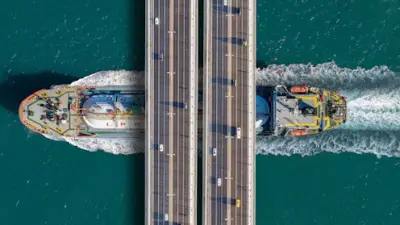
The prolonged closure of the strait of Hormuz, coupled with an impending El Niño, is creating a 'compound shock effect' that threatens millions of tonnes of food production in Southeast Asia, according to United Nations experts.
Strait of Hormuz Closure and Its Impact
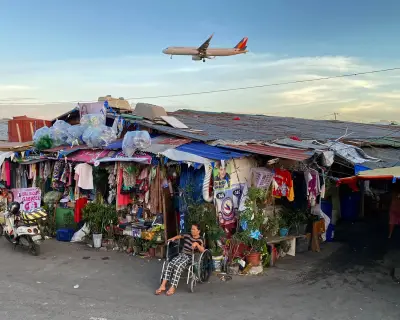
The strait of Hormuz has been largely closed for months following the US-Israeli war on Iran, cutting off supplies of energy and fertiliser to Southeast Asian nations. Governments across the region have implemented emergency measures: the Philippines placed government workers on a four-day week, Vietnam urged employers to allow remote work, and Thailand set air-conditioning units to 27°C.
Iran indicated on Saturday it would close the strait again after Israeli strikes in Lebanon and plans to introduce a system of maritime fees. The International Maritime Organization has said any toll would set a 'dangerous precedent'. Henning Gloystein, managing director for Energy, Climate and Resources at Eurasia Group, said Southeast Asian nations would likely club together with other Asian and European countries to find an alternative route.

Economic Vulnerability Exposed
According to the International Energy Agency (IEA), before the crisis, 60% of Southeast Asia's crude oil imports and a third of its gas imports came from the Middle East. The region's energy import bill is projected to reach $160 billion this year, double the $80 billion in 2024, and could hit $245 billion by 2035.
The region also relies heavily on fertiliser from the Middle East. The UN's Food and Agriculture Organization (FAO) estimated that about 3.3 million tonnes of rice production across Asia and the Pacific are already at risk due to reduced fertiliser use. Higher energy and fertiliser costs are pushing up food prices; in Myanmar, the average cost of a basic food basket has increased by 19% since late February, while tuna prices have surged as fishermen cannot afford fuel.
Steven Okun, CEO of APAC Advisors, warned that any fees on transit through the strait will raise insurance and shipping costs, directly impacting fuel prices and import-dependent economies in Southeast Asia.
El Niño Compounds the Crisis
The US National Oceanic and Atmospheric Administration declared El Niño conditions underway in June, with dire consequences for agriculture. In a report released Wednesday, the FAO stated its 'greatest concern' lies in the interaction between El Niño and market pressures from the Middle East crisis. Under a scenario of partial strait closure, the FAO estimates 7–8 million tonnes of rice production could be at risk in the Asia-Pacific region.
Thailand, with emerging drought and exposure to energy and fertiliser price increases, 'stands out as the clearest example of compound risk', followed by Indonesia, the Philippines, and several Pacific Island countries.
Global Ramifications
Maximo Torero, FAO chief economist, said the effects would not be confined to Asia. 'The impact may not appear as an immediate physical shortage everywhere, but as higher food import bills, tighter supplies, reduced farmer incomes, lower purchasing power and increased pressure on vulnerable households,' he said. 'The shock is global because it moves through energy, fertiliser, freight, food prices and trade channels.'
The crisis also affects international relations. Okun noted that other geographical chokepoints could 'become weaponised'. Meanwhile, Russia has seized the opportunity to boost ties with the region, presenting itself as a 'third power' between China and the US at a summit in Kazan last week. Vladimir Putin secured energy agreements with Laos and provided assurances to Malaysia on oil, gas and diesel supplies.