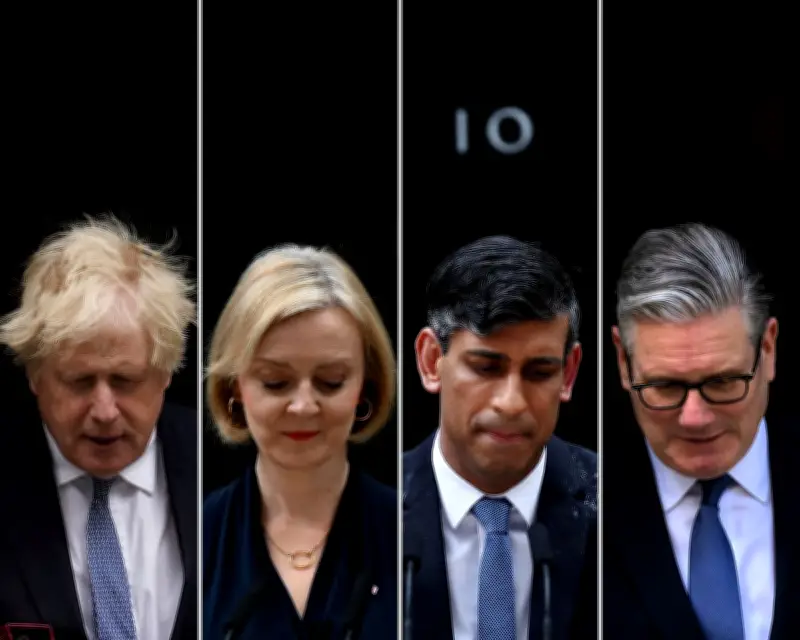
Britain has experienced an unprecedented period of political instability, with six prime ministers since 2016—David Cameron, Theresa May, Boris Johnson, Liz Truss, Rishi Sunak, and Keir Starmer—and a seventh, Andy Burnham, almost certainly on the way. This rapid turnover has been accompanied by eight chancellors and nine foreign secretaries, creating a sense of frenzy that has overshadowed substantive policy achievements. According to Anthony Seldon, author of The Impossible Office?, this period is "unique" in British history when considering the wider churn at the top, despite similar periods in the 18th and 19th centuries.
The Roots of Instability
The current turmoil echoes the French Fourth Republic (1946-1958), which staggered under political paralysis, fiscal wobbles, and populist threats before being replaced by Charles de Gaulle's Fifth Republic. Unlike that era, however, British history offers no precedent for the current situation. Seldon notes that there has "never been a period like the present." The constant turnover of leaders has led to a lack of continuity in policymaking, with big strategic decisions ducked or postponed.
Gus O'Donnell, former cabinet secretary, recalls that during access talks before the 2010 election, David Cameron asked what he could give Whitehall. O'Donnell's reply was simple: "Ministers who stay in the same job for as long as possible, so they've got some sort of chance to get on top of their brief." This advice has been ignored, with one example being nine pension ministers over five years, making long-term planning impossible.

The Cost of Chaos
Economist Paul Johnson highlights the financial consequences: "The sad truth is we are in hock to the bond markets … We are already paying many billions more in debt interest than we would be if markets were charging us the same as they are charging other countries. And it is notable that the premium really began at that moment of maximum instability – the Truss premiership." This instability has also undermined Labour's promise of "Change," with Starmer's vow to "end the chaos" now a sour joke.
Cath Haddon of the Institute for Government thinktank warns that while ineffective PMs must go, denying them "the time needed to learn, govern and see projects through" renders the office itself ineffective. As "the conversion rate from prime ministers under pressure to prime ministers out the door" increases, the value of time becomes "underpriced."
The Impact on Governance
The threat of removal can be as disruptive as the fact of it. Damian Green, a close ally of Theresa May, recalls that after the 2017 election lost her majority, "it became much more difficult to do anything long term." May's focus narrowed to Brexit, and Green was shuffled to a made-up role as first secretary of state to handle domestic policy, but progress on big challenges like social care stalled.
Jill Rutter, a former civil servant in John Major's No 10 policy unit, describes the environment after Black Wednesday in 1992 as "very embattled, super suspicious with enemies at every corner. Often, the only concern was getting back on track." Smart solutions are harder to achieve when "walking on eggshells all the time." Good delegation breaks down when PMs are too uncertain or ministers regard themselves as working for a temporary boss.
Underlying Causes
The paralysis on substance and froth on politics stems from economic stagnation since the financial crisis, but earlier generations also faced severe economic challenges. For instance, when Winston Churchill returned to power in 1951, newspapers screamed about the overwhelming "prime ministerial in-tray" from rationing and the Korean war. Yet politics was stable, with 97% of votes split between Labour and the Tories.
Today, the simple class divide has been replaced by multiple cleavages: cultural divides like Brexit, values divides such as Gaza, and generational divides between older homeowners and younger tenants. Historian Sudhir Hazareesingh notes that the French Fourth Republic's woes were similar—too many separate schisms drawn through politics at once.

The Way Forward
Margaret MacMillan, a historian who studies leadership, argues that the need is to "appeal to people's better natures" and level with the public about the need for effort, sacrifice, and time. She sees Mark Carney doing this in Canada with sustained popularity. In France, the Fifth Republic proved effective despite its imperious nature, slowing political frenzy and getting infrastructure built.
The key to unlocking far-sighted policies is not taking the politics out of everything but doing politics properly. Andy Burnham, the likely next prime minister, should take that lesson to heart.