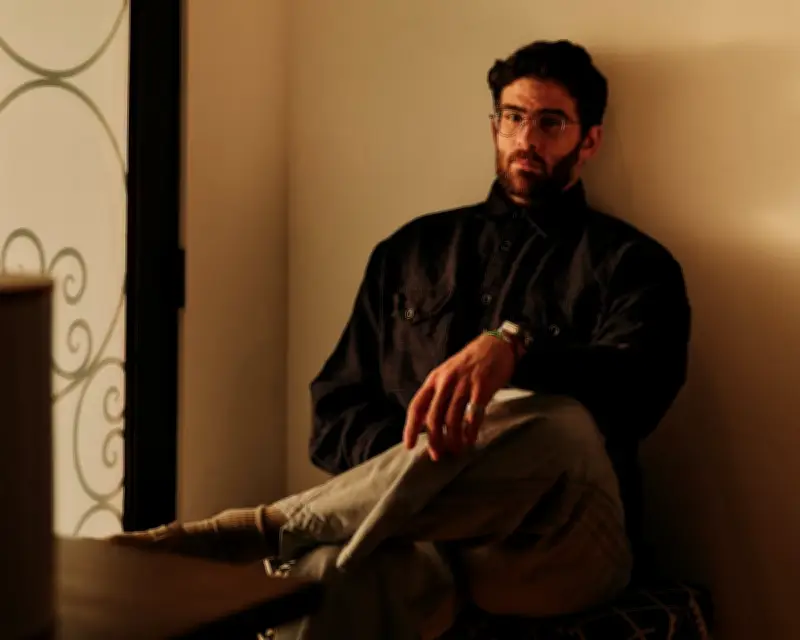
The British government has barred left-wing US commentators Hasan Piker and Cenk Uygur from entering the United Kingdom, citing their presence as 'not conducive to the public good.' While the Home Office did not elaborate on this vague rationale, both commentators have accused the UK of punishing them for their outspoken criticism of Israel. Some detractors have labeled their remarks as antisemitic, a charge they deny.
The Ban and Its Implications
Hasan Piker, a popular streamer with millions of followers, and Cenk Uygur, co-founder of The Young Turks, have been vocal in their condemnation of Israel's actions in Gaza. The UK government's decision has sparked debate about the limits of free speech and the criteria for defining what harms the public good. Critics argue that the ban selectively targets voices that challenge Israeli policies while allowing other controversial figures to enter the country.
For instance, conservative commentator Ben Shapiro has made inflammatory remarks about Arabs, yet he has never faced a similar ban. This double standard suggests that the objectionable nature of speech is not the sole factor; rather, the political stance of the speaker plays a significant role.

Moral Clarity vs. Political Expediency
At its core, the Piker-Uygur ban highlights a troubling trend: the manipulation of moral concepts to serve geopolitical interests. The UK, along with the US and Israel, appears to be redefining what is 'good' for the public. While basic moral principles—such as the innocence of children, the protection of healthcare systems, and the prohibition of collective punishment—are universally acknowledged, they are often sidelined in discussions about Israel-Palestine.
Rachel Corrie, an American peace activist killed by an Israeli bulldozer in 2003, wrote about the horror of witnessing a 'chronic, insidious genocide' in Gaza. Her words resonate today as Gaza faces widespread destruction. The international community's failure to act on these moral truths underscores a deeper crisis of conscience.
Media Complicity and Dehumanization
The media plays a crucial role in shaping public perception. According to the Committee to Protect Journalists, Israel has killed more journalists than any other government since 1992, with at least 235 media workers dead in Gaza. Foreign journalists are denied free access to the region, limiting independent reporting. Instead, the narrative is controlled through propaganda and dehumanizing language.
Adam Johnson's book How to Sell a Genocide reveals how US media frames Israel as inherently good and Palestinians as inherently bad. Terms like 'massacre' and 'barbaric' are reserved for Israeli deaths, while Palestinian suffering is described in clinical terms. This linguistic bias reinforces the idea that Palestinian lives are less valuable.
The Chilling Effect on Speech
The UK ban is part of a broader crackdown on pro-Palestine voices. Since October 7, 2023, pro-Palestine marches have been demonized, students deported, and events by Pulitzer-winning authors canceled. Israel has quintupled its PR budget to $730 million to control the narrative. Criticizing Israel can now jeopardize US green cards and UK visas.
Piker told The Times that the ban is an attempt to create a 'chilling effect on speech,' making examples of prominent critics. When the British government refuses to define 'public good,' it becomes clear that the term is used to silence dissent rather than uphold moral standards. The message is that Israel is allowed to act with impunity, and the real crime is speaking out against it.