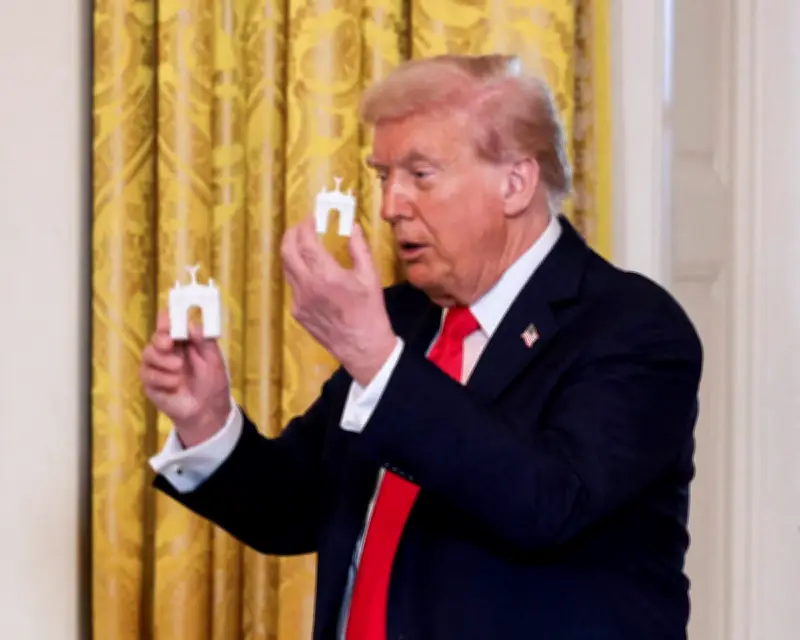
As the United States approaches its 250th birthday, disputes over public monuments, flags, and symbols are intensifying, with none as contentious as those proposed by President Donald Trump. Among his recent projects are a Garden of Heroes, a monumental “Freedom” arch, a massive ballroom, and plans to turn the reflecting pool at the Washington Monument the color of a Bahamian luxury hotel pool.
Controversy Over Consultation
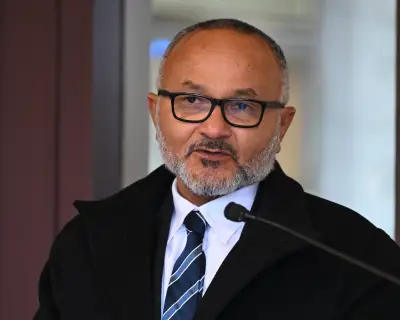
Paul Farber, director of Monuments Lab, a Philadelphia-based nonprofit, notes that Trump’s proposals are controversial not only for their content but also for the lack of public consultation. “The relationship between our symbols and systems of democracy are entangled – and have been since the very beginning of the American experiment,” Farber said.
Trump’s Authoritarian Approach
Trump has pushed his agenda aggressively, fueling fears of authoritarian behavior. Last week alone, he threatened “Death and Destruction” for anyone stalling construction of his ballroom and warned he would walk away from the Kennedy Center if his name was not added.

Broader Monument Battles
But Trump is not alone in sparking contentious memorial debates. In New York, Mayor Zohran Mamdani wants former Mayor Ed Koch’s name removed from the 59th Street Bridge. Meanwhile, a New York Times investigation revealed that Cesar Chavez, the Latin labor leader, was a serial sexual abuser, prompting questions about libraries, schools, and streets named after him.
These fights are not new. In July 1776, residents of lower Manhattan toppled a statue of George III and melted it down for revolutionary war bullets. The 2017 Unite the Right rally in Charlottesville, Virginia, was organized against removing a statue of Confederate General Robert E. Lee. Following the Black Lives Matter protests of 2020, about 400 Confederate symbols were removed or renamed nationwide.
Trump’s Garden of Heroes
Trump has described the Garden of Heroes as “a response answer to this reckless attempt to erase our heroes, values, and entire way of life,” featuring statues of the “greatest Americans to ever live.” Farber comments, “In American history, the debate about our future is channeled across who gets to write the narrative of the past, and we are in the throes of that right now.”
Monuments Lab’s Work
Monuments Lab, founded in 2012, has been parsing the meaning of monuments. Earlier this year, it staged “Rising Up: Rocky and the Making of Monuments,” moving a statue of Sylvester Stallone as Rocky Balboa from the Philadelphia Museum of Art steps into the museum, replacing it with a statue of Joe Frazier.
Full Circle: Confederate and Columbus Statues
Six years after the BLM protests, battles over statues have come full circle. Italian-American groups have filed a lawsuit to restore a statue of Christopher Columbus in Columbus, Ohio. The Trump administration erected a statue of Columbus near the White House, and the Interior Department put up a statue of Caesar Rodney, a Declaration of Independence signer and enslaver that was taken down in 2020. A highway marker honoring Lee has been returned to a public square in Charleston, South Carolina.
Trump has also erected a statue of himself at his Doral golf course in Florida. The U.S. Treasury is reportedly preparing to print a new $250 bill that could feature Trump’s portrait, despite legislation barring living persons on currency.
The White House Ballroom
Trump told Fox News’ Jesse Watters he is building a privately funded 90,000 sq ft White House ballroom as a “monument” to himself, four times larger than the house itself. Some reports put its capacity at 900; others at 1,350. Farber sees this as politically symbolic: “Part of Trump’s project has been to move power from Congress to the executive branch.”
Garden of Heroes Inscriptions
The Garden of Heroes, proposed in Trump’s first term, is being rushed for Independence Day. Inscriptions will generate argument. Farber points out, “To say that Martin Luther King Jr had a can do spirit, or he fought for justice, but to not name the injustice he was fighting against, is itself revealing. It’s a kind of Faustian bargain.”

Presidential Libraries and Self-Memorialization
All U.S. presidents tend to memorialize themselves through presidential libraries. Trump has proposed his own library within a Miami hotel complex large enough to fit an Air Force One Boeing 747. Farber says Trump is intent on memorializing himself in unprecedented ways: “When someone shows you who they are, believe them. He put his name on a memorial to President Kennedy. There’s no precedent in American culture where memorializing a president happens during their term and by their own administration.”
“It stretches from statuary to infrastructure and is consistent with the way branding has played out through this administration. The victories are being tallied, and monuments proposed at frenetic speed, before history can tell us what the legacy of this administration truly is,” Farber added.