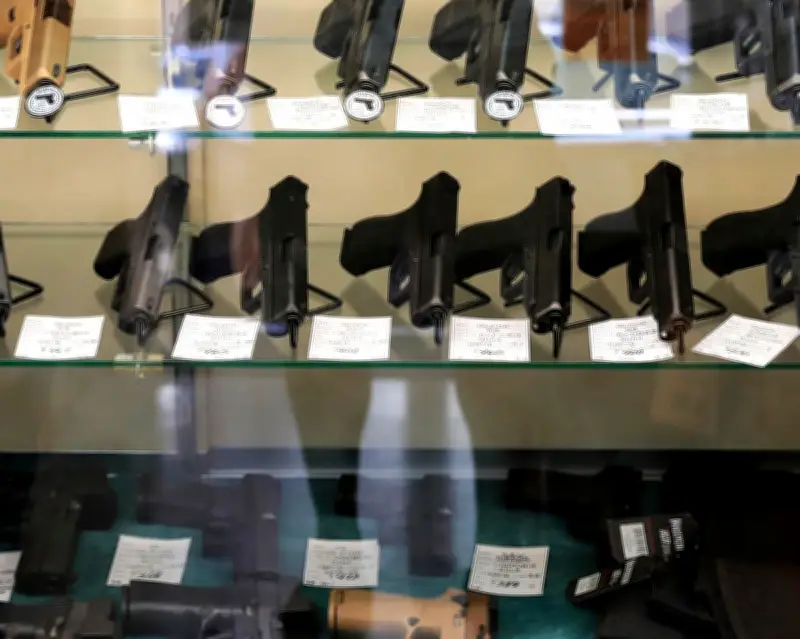
The United States Supreme Court delivered a significant ruling on Thursday, upholding Hawaii's stringent gun control law that requires individuals to obtain a permit to carry firearms in public. The 6-3 decision marks a pivotal moment in the ongoing national debate over gun rights and public safety, with the court's conservative majority siding with the state's regulations.
Details of the Ruling
Justice Samuel Alito, writing for the majority, stated that the law does not violate the Second Amendment, emphasizing that the right to bear arms is not unlimited and that states have the authority to impose reasonable restrictions to ensure public safety. The court found that Hawaii's requirement for a permit, which involves a background check and a demonstrated need for self-defense, is consistent with historical traditions of firearm regulation.
According to the ruling, the law is a permissible exercise of the state's police powers to protect its citizens. The decision overturned a lower court's ruling that had struck down the law as unconstitutional.

Dissent and Reactions
Justice Clarence Thomas, joined by Justices Neil Gorsuch and Amy Coney Barrett, dissented, arguing that the law infringes on the fundamental right to self-defense outside the home. Thomas wrote that the majority's decision "waters down the Second Amendment" and sets a dangerous precedent for future gun control measures.
Hawaii Governor Josh Green praised the decision, saying, "This ruling affirms our commitment to keeping our communities safe through reasonable gun laws. We will continue to prioritize public safety over the interests of gun lobbyists." Conversely, the National Rifle Association (NRA) criticized the ruling, with spokesperson Amy Hunter stating, "This is a dark day for law-abiding citizens who have the right to defend themselves. The court has failed to protect that right."
Impact and Context
The decision has immediate implications for Hawaii, where gun ownership rates are among the lowest in the nation. In 2023, Hawaii had a firearm mortality rate of 3.4 per 100,000 people, significantly below the national average of 14.2 per 100,000. The law, enacted in 2022, was challenged by gun rights advocates who argued it placed an undue burden on individuals seeking to carry firearms for self-defense.
Legal experts note that the ruling may influence similar cases in other states with strict gun laws, such as California and New York. However, the court's narrow focus on Hawaii's specific permit system leaves room for future challenges to other types of restrictions.
Broader Legal Landscape
The Supreme Court's decision comes amid a series of high-profile gun cases. In 2022, the court expanded gun rights in New York State Rifle & Pistol Association v. Bruen, striking down a New York law that required a special need to carry a concealed weapon. Thursday's ruling clarifies that states can still impose permit requirements as long as they are consistent with historical tradition.
"This decision provides much-needed clarity for lower courts grappling with how to apply the Bruen standard," said Professor Emily Johnson of Harvard Law School. "It reaffirms that states have leeway to regulate firearms, but the door remains open for further litigation."
What's Next
Gun control advocates are cautiously optimistic that the ruling will embolden other states to enact similar measures. Meanwhile, gun rights groups are already planning to challenge the decision through legislative avenues or future cases. The Biden administration, which filed a brief in support of Hawaii's law, welcomed the ruling, with White House Press Secretary Karine Jean-Pierre saying, "The president believes that commonsense gun laws save lives, and we will continue to take action to reduce gun violence."