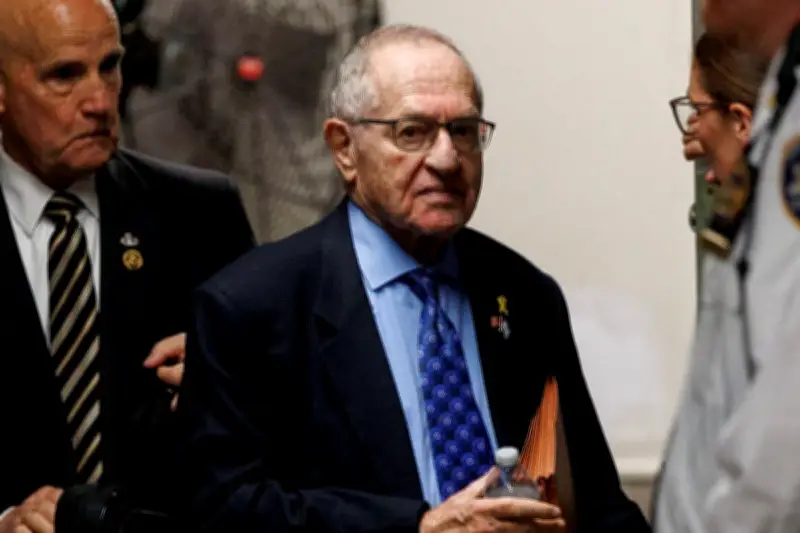
The United States Supreme Court has declined to hear an appeal from prominent attorney Alan Dershowitz, effectively ending his long-running defamation lawsuit against CNN. The decision, handed down on Monday, leaves in place a lower court ruling that dismissed Dershowitz's claims.
Background of the Case
Dershowitz, a Harvard Law professor emeritus and former defense attorney for Donald Trump, sued CNN in 2021 over a segment that he argued falsely portrayed him as having made misleading statements about the 2020 presidential election. The network had aired a panel discussion in which a commentator claimed Dershowitz had said something he did not. Dershowitz maintained that the segment damaged his reputation and sought damages.
The case was initially dismissed by a federal district court, which found that Dershowitz, as a public figure, had failed to show actual malice by CNN. The U.S. Court of Appeals for the 11th Circuit affirmed that ruling in 2025.

Supreme Court's Decision
The Supreme Court's denial of certiorari means it will not review the case, and the appeals court decision stands. The order was issued without comment, as is typical for such denials. According to court records, no justices dissented from the decision.
Dershowitz had argued that the lower courts applied an overly strict standard for public figures and that the case raised important First Amendment questions. In his petition, he stated, "The decision below protects false and defamatory statements as long as they are not made with knowing falsity or reckless disregard for the truth."
Reaction from Parties
Dershowitz expressed disappointment with the outcome. In a statement, he said, "While I respect the Supreme Court, I believe they missed an opportunity to clarify the standards for defamation in an era of rampant media misinformation. This case was about holding CNN accountable for knowingly broadcasting falsehoods."
CNN declined to comment on the Supreme Court's decision but previously maintained that its reporting was accurate and protected under the First Amendment. The network has consistently denied any wrongdoing.
Implications
The denial marks the final chapter in a legal battle that has been closely watched by media law experts. The case underscores the high bar public figures face in proving defamation, particularly against news organizations. Legal analysts note that the Supreme Court's refusal to hear the appeal does not set a precedent but reinforces existing standards.
According to the Reporters Committee for Freedom of the Press, the ruling aligns with decades of Supreme Court precedent requiring public figures to prove actual malice, a standard set in the 1964 case New York Times Co. v. Sullivan.