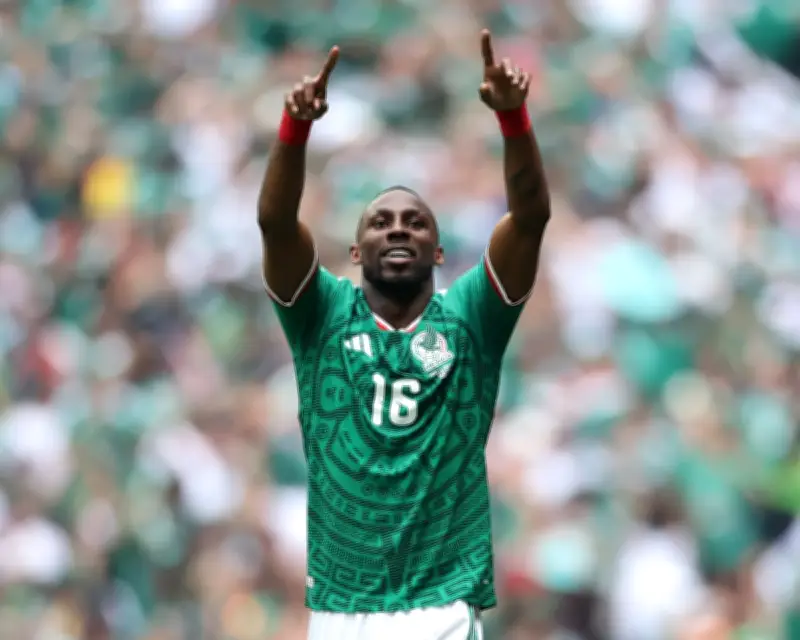
Julián Quiñones scored Mexico's first goal of the 2026 World Cup on 11 June, igniting celebrations across the nation. Less than two years earlier, in March 2024, the same player was subjected to racist chants and monkey noises during a Liga MX match in Guadalajara. The contrast highlights deep contradictions in Mexico's grappling with race and national identity.
From Racial Slurs to National Hero
On 11 June, Quiñones scored the opening goal in Mexico's World Cup triumph, played on home soil for the first time in two decades. Tens of thousands rose to their feet, commentators chanted his name, and images of the striker draped in the Mexican flag flooded social media. The same culture that had publicly denigrated him now hailed him as a national hero.
This week, Quiñones returned to Guadalajara, where the racist incident occurred in 2024. Before Mexico's second group-stage game against South Korea on Thursday, crowds gathered outside the team hotel, shouting: ¡Quiñones, hermano, ya eres Mexicano! (Quiñones, brother, now you are Mexican.) The chant, usually reserved for foreigners who show affinity with Mexico, was directed at a Mexican passport holder.

Challenging Expectations of Mexican Identity
Karma Frierson, who teaches Black studies at the University of Rochester and has written about Black culture in Mexico, said the surprise over Quiñones's goal and his Blackness reflects lingering expectations. “This surprise speaks to the expectations people still have about what a Mexican person looks like. So, you have this dissonance,” she said. “You know that the player, by virtue of wearing the jersey is of that nationality, but you never imagined that person would look a certain way.”
Quiñones, 29, was born in Colombia, arrived in Mexico in 2015, and became a naturalized citizen in 2023. His inclusion on the World Cup squad raises the question: who has the right to be Mexican?
Transnational Talent Pool
For much of the 20th century, the national team was primarily comprised of players developed within Mexico. Today, the pool extends across a transnational landscape. The most important recruiting ground may be California or Texas, where a new generation of Mexican-American players, including more Black players, is emerging. Antonio Leone and Da'vian Kimbrough, both born in California to Mexican mothers and African American fathers, have represented Mexico's youth teams. Other stars like Giovani and Jonathan dos Santos, sons of Afro-Brazilian footballer Zizinho and a Mexican mother, and Melvin Brown of Jamaican descent, have also played for Mexico.
Mestizaje and the Myth of Racial Harmony
“Historically, Mexican society doesn’t talk about race,” Frierson said. “The promise of mestizaje was that there is no race because we are all one race.” The concept of mestizaje—the fusion of Indigenous and European peoples—became a founding myth after the Mexican revolution, emphasizing mixing over difference. While offering a contrast to US segregation, it obscured persistent discrimination.
Discrimination against Black people remains prevalent but often dismissed. In 2010, Televisa featured blackface characters during World Cup coverage; in 2018, TV Azteca reporter Carlos Guerrero appeared in blackface. Black players like Darwin Quintero and Felipe Baloy have accused rivals of racist insults. In 2021, Ecuadorian Félix Torres left the field in tears after alleged racist insults from Germán Berterame; no disciplinary action was taken.
Quiñones's Response
Quiñones mostly shrugged off the 2024 incident. In an Instagram statement, he said: “you can say whatever you want to me, but don’t mess with my daughters,” adding he was “mentally strong enough to handle any kind of insult, especially when it’s about my skin color, which is the most frequent type of message I receive.”

Broader Implications
Having a Black player excel at a home World Cup may bring race to the forefront of Mexican culture, Frierson said. Mexican players in MLS also bring new perspectives. Jonathan dos Santos, in a 2020 interview, said he felt comfortable in the US because he didn't receive racist taunts. “It’s truly sad to hear the insults, the racism. I’ll never understand it,” he said. “I think many countries have to learn from the United States regarding the respect shown to athletes.”
Opening discussion about race in soccer could lead to broader exploration of Mexico's African roots. Hundreds of thousands of enslaved Africans were brought to New Spain; their descendants built communities in Veracruz and along the Costa Chica. Heroes of independence like Vicente Guerrero and José María Morelos had Afro-Mexican roots, though this heritage is often unmentioned.
“Blackness is incorporated into the very fabric of the nation,” Frierson said.
Mexico's Changing Face
Mexico is changing: digital nomads from Europe and the US, migrants from Haiti, Cuba, and South America, and returning Mexicans from the US are reshaping demographics. The World Cup squad includes players born in Spain (Álvaro Fidalgo), Alaska (Obed Vargas), Argentina (Santiago Giménez), and Colombia (Quiñones).
Quiñones is challenging expectations of what a Mexican looks like. “Mexican diversity has always existed, but soccer possesses a unique ability to bring that reality to light,” the article notes. A goal, a crowd rising, cameras searching for a face—for an instant, a nation contemplates itself, not as it imagined, but as it has been all along.