Iran has emerged undefeated after nearly four months of war against a nuclear-armed regional rival (Israel) and the world’s most powerful military (the United States). The regime is still in control of its population and territory. Though its economy is suffering, Iran’s industrial base is still churning out missiles, drones and rockets. Many of Tehran’s top leaders have been killed, but the survivors remain determined to drive negotiations to an advantageous outcome.
Australia is obviously very different from Iran in many respects. And war here is not imminent. But that doesn’t mean we can’t learn anything from Iran’s experience – in addition to Ukraine’s. Here are a few lessons to consider about the way war is changing and how middle powers like Australia can better prepare to defend itself.
Unconventional Deterrence
Before the war, Iran’s “axis of resistance” – the Houthis in Yemen, Hezbollah in Lebanon, Hamas in Gaza, and Shia militias in Iraq – gave it strategic depth. Specifically, this network of proxy groups created asymmetric deterrence – it prevented more powerful adversaries from directly attacking it for decades. Yes, the US and Israel did eventually attack Iran in last year’s 12-day war and this year’s conflict. But they did so knowing Iran’s proxies might retaliate by striking their bases, sabotaging their infrastructure or subverting their alliances – all of which ended up happening.

Australia would never sponsor terrorism. However, adopting an unconventional deterrence strategy is still possible, if it adheres to ethical and legal norms. For instance, Australia could use irregular warfare capabilities, such as small, well-armed, amphibious teams or air, sea-surface and undersea drones – to influence an adversary’s calculus in deciding whether and how to attack us.
Keep Deterring, Even During War
Deterrence is sometimes seen as solely a pre-war strategy. If war breaks out, it has failed by definition. More sophisticated analysts, however, talk about “intra-war deterrence”, or the ability to keep deterring once war starts. Think of Iran using drones and mines to keep US ships out of the Persian Gulf and making it harder for US forces to raid Iran’s oil terminal at Kharg Island.
For Australia, this means continuing to demonstrate the ability to prevent an enemy from achieving its goals after war breaks out. This can be hugely valuable if it stops the enemy from using certain weapons or taking specific actions against us.
Build Regional Relationships
Although Iran attacked many of its Persian Gulf neighbours, its relationships with Pakistan and Oman paid off. Both countries hosted negotiations to try to end the war and played restraining roles during the conflict. Likewise, before the war started, many regional countries were reluctant to allow Israeli or American aircraft to use their bases or fly over their territories, partly as a result of Iran’s diplomatic efforts.
For Australia, which sometimes has a blind spot for its neighbourhood, regional relationships can be a source of support in war.
Hold at Risk Something Your Enemy Needs
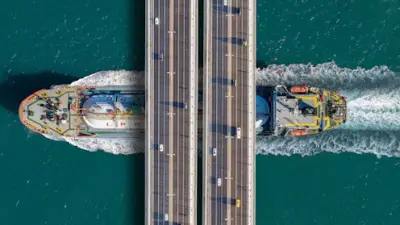
Within a week of the war breaking out, Iran closed the Strait of Hormuz. The US and Israel responded by escalating their air campaign and establishing a counter-blockade of Iranian ports. US warships also began escorting tankers through the chokepoint. But Iran still held at risk a chunk of global energy sea traffic, creating leverage for peace talks.
In Australia’s case, our adversaries also need things we can control, such as raw materials, sea lanes, supply chains, financial resources or data links. Again, Australia is not Iran. We would act in accordance with legal and ethical norms and only in the extreme case of a war for national survival. But in those circumstances, we could exert leverage over these things.
Decentralise for Resilience
The Israeli-US “decapitation strikes” killed Iranian Supreme Leader Ali Khamenei on the war’s first day, but Iran fought on with barely a break. This is largely due to its “mosaic defence” strategy. Military authority was automatically delegated to 31 regional commanders who had the freedom to strike targets identified before the war. This made Iran’s regime much harder to topple.

Given Australia’s vast size and dispersed population, a decentralised command-and-control strategy makes sense. Australia’s traditional structure of military districts offers a precedent, alongside our decentralised civil defence and emergency services. Recently, our preference has been centrally coordinated command from Canberra and the Joint Operations Command at Bungendore, NSW. This kind of system is appropriate for managing operations outside our territory, but it might need rethinking in the event of a major attack on Australia.
Build a Mobilisation Base and Resilient Defence Industry
Iran has a very large fighting force, including 340,000 regular armed forces, around 120,000 members of the Iranian Revolutionary Guard Corps, and about 600,000 members of its Basij militia. This provided a large mobilisation base after the initial US and Israeli strikes. Likewise, Iran’s defence industry is decentralised and was able to continue producing missiles and drones in hardened, concealed and dispersed facilities, despite heavy air attack.
Australia could learn from this by decentralising its own defence industry, particularly dual-use facilities and small and medium enterprises, and stockpiling our critical manufacturing inputs, such as minerals, fuel, advanced electronics and other hard-to-source components. This was routine during the second world war and needs to return to our thinking. Likewise, Australian Defence Force reserves are far smaller than needed for wartime mobilisation, something successive governments have failed to remedy.
Extended Range Weapons and Magazine Depth
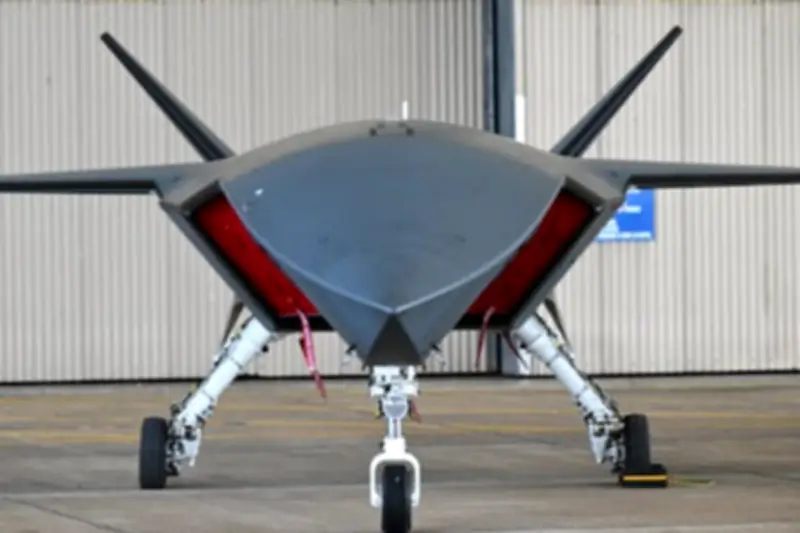
Finally, Iran has demonstrated an impressive variety of long-range, low-cost, rapidly manufactured rockets, missiles and drones. The lesson is that quantity counts as much as quality. Australia has historically had a high-tech military with advanced capabilities, but limited capacity. For example, the most recent Defence Strategic Review cut the army’s armoured forces to the point where we can probably sustain only one limited combat deployment.
For future conflicts, we need greater “magazine depth”. This means investing more in low-cost drones, rockets and missiles and stockpiling the right kinds of ammunition in the right places. And crucially, we need the ability to keep producing weapons during extended conflict.