By the time you finish reading this article, one million illegal cigarettes will have been smuggled into Australia. While vigilant Border Force officers may intercept some shipments, overwhelming evidence suggests the majority slip through due to finite resources being stretched by record-breaking illegal tobacco imports at ports.
Staggering Scale of the Tobacco Crime Crisis
The size and scope of the crime crisis surrounding the tobacco war are staggering. Record amounts of rolled cigarettes and loose-leaf tobacco arrive daily. Tim Fitzgerald, Deputy Commissioner of the Australian Border Force, became emotional when discussing the enormity of the crisis.
Currently, Sydney's Port Botany is the primary target, as criminal syndicates deliberately overwhelm one port at a time. Last year, Melbourne was the focus, and the strategy will shift again as tobacco kingpins seek weak links in border security.

Shocking Statistics
In just the first five months of this year, 982 million illicit cigarettes were seized entering Australia. Border Force also intercepted 395 tonnes of illicit tobacco and 5.5 million vapes. The second half of last year was equally out of control, with 2.13 billion cigarettes seized, along with 568 tonnes of loose-leaf tobacco and 11 million vapes.
In dollar terms, the second half of last year and the first five months of this year represent approximately $7 billion in lost tax excise due to illegal imports. Criminal enterprises behind illicit tobacco are making billions—an estimated $6 billion annually from black-market sales of cheap smokes and vapes.
Fueling Ruthless Crime
Billions of dollars in black-market sales fuel an explosion of ruthless crime across Australia. Almost daily firebombings, kidnappings, bashings, and extortion—the insidious tobacco wars in suburbs—are now common on the evening news. Law enforcement experts are also confident that black-market tobacco feeds profits into other crimes, including heroin distribution and child exploitation.
Brendan Thomas, CEO of AUSTRAC, the government's financial crime-fighting agency, says criminals pushing illicit tobacco should be treated like drug dealers. "People selling heroin and cocaine don't have a shop front on every corner, but these people do," he said. "The people moving money and illicit tobacco are the same people moving illicit drugs. It's hardened organised crime."
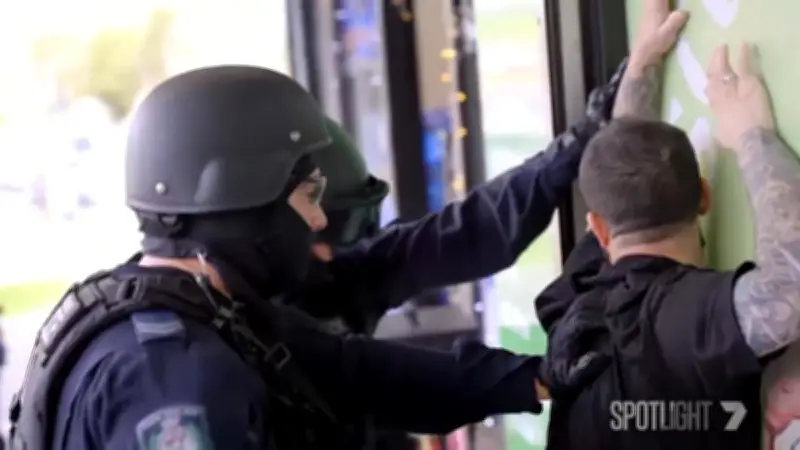
It is estimated that 14,000 tobacconists and convenience stores across the country deal in illicit tobacco. The author spent time with NSW Police on a raid at one such shop in western Sydney, a convenience and tobacco store under surveillance for months by the Financial Crimes Squad's Arson Unit. Police arrested a young man who pleaded innocence but was charged with large-scale tobacco possession and dealing with proceeds of crime.
Just one shop in one suburb. Are police cutting off the head of the snake? Probably not. It is a localized example of a nationwide crime crisis, but it is a start.
A Government-Created Crisis
The bigger fix would require a bold and controversial backflip by the government. A chorus of experts in economics and crime say this ruthless black market is entirely government-caused. Hiking tobacco excise since 2019 has made legitimate cigarettes so expensive—to force smokers to quit—that it opened the door for crime networks to flood the market with cheap smokes. At $15 for a packet of illegally imported cigarettes versus $55 for legitimate ones, smokers choose the cheaper option. Many say it is not their problem to fix.
Since 2015, multiple submissions to government have argued that excise increases tipped from good to bad policy. Rather than using price to force smokers to quit, it plateaued, driving remaining addicted smokers to cheaper illegal cigarettes that exploded onto the market. Combined with an almost prohibitionist-style vapes policy introduced in 2024, based on pharmacy approval and supply, smokers and vapers turned to illicit products.
Leading economist Chris Richardson, who has made government submissions on tobacco excise, puts it bluntly: "We are failing on health. We are failing in terms of tax policy, and we are failing in terms of fighting organised crime. That's not a fail, it's an epic fail."

Adding pressure on the government to act urgently, Scott Weber from the Police Federation of Australia says his 60,000 members cannot police the problem to a level that would smash the illicit tobacco trade. "Police are stretched to the absolute limit, and we just actually can't arrest our way out of this," he said.
As noted at the start, container loads of illicit tobacco hit ports in the time it takes to read this article. Criminals hope the vast majority slips through undetected, and even if they lose a few million cigarettes on any day, millions more head for illegal distribution. While smokers crave cheap cigarettes and the government sticks to its health policy, law enforcement agencies are outnumbered in this tobacco war, taking pot shots at an enemy that seems unstoppable.