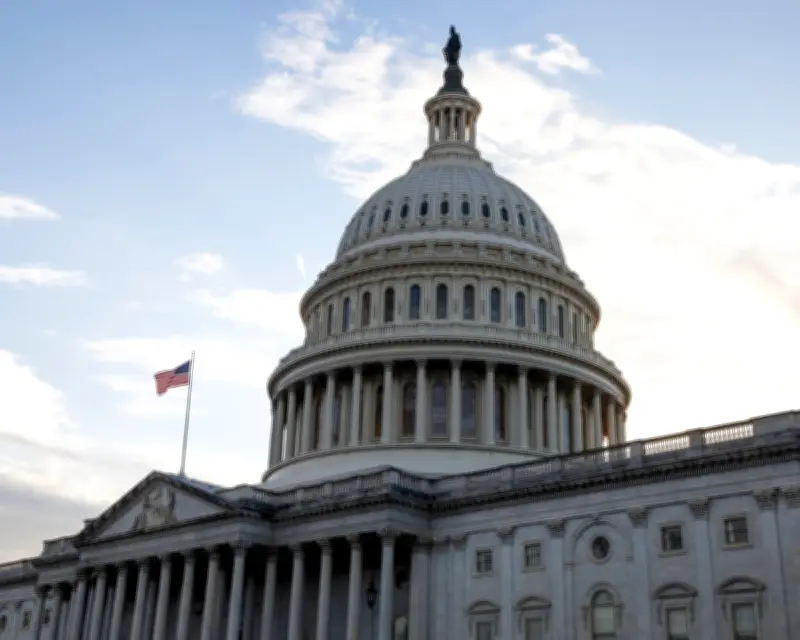
The irony is unmistakable. President Donald Trump, who campaigned on a promise to end endless wars and focus on domestic issues, now finds himself facing opposition from his own party over a military conflict in Iran. On Wednesday, the House of Representatives passed a measure under the 1973 War Powers Resolution, directing the White House to remove all US forces from hostilities against Iran. This came weeks after the Senate voted 50-47 to advance a similar bill, with a final vote still pending. Unlike previous attempts, both votes garnered support from some Republican lawmakers.
Trump's Reaction and Previous Defections
Trump reacted with fury, posting on Truth Social that the House vote was a meaningless act by four bad Republicans and all Democrats, undermining his negotiations to end the war with Iran. This is not the first time he has lashed out at Republican rebels on foreign policy. In January, when five GOP senators supported a motion to limit his authority for military strikes in Venezuela, he threatened them, saying they should never be elected again. That pressure succeeded in flipping two senators, but this time his tactics are unlikely to work. Unlike the brief Venezuelan operation, the Iran war has been a costly disaster.
The Cost of War
Despite initial military strikes against Iran, Trump failed to anticipate Iran's resilience. Tehran responded by attacking US bases and allies in the Gulf and closing the Strait of Hormuz, a critical chokepoint for global oil and gas supplies. Thirteen American troops have been killed, and the war has emboldened Iran's hardline leadership. Energy prices and other commodities like fertilizer, jet fuel, and helium have soared, with the IMF warning of a global recession if the conflict continues. A majority of Americans now oppose the war, with 68% favoring a quick deal to end the fighting, according to a June 4 Economist/YouGov poll.

Congressional Concerns and Historical Context
The House vote reflects lawmakers' fears of a voter backlash in the November midterms. Even supporters of the war have complained about the administration's lack of transparency and worries over depleted munitions and air defense systems. Historically, presidents like Ronald Reagan, George H.W. Bush, and George W. Bush sought congressional approval before major military actions, while others like Bill Clinton and Barack Obama sidestepped the War Powers Resolution. However, the House resolution is a concurrent resolution, which lacks the force of law and merely expresses congressional sentiment. Yet its political significance is profound.
Political Implications
Even congressional Republicans are breaking with Trump over Iran. Four joined Democrats in the House, likely driven by the war's unpopularity and Trump's declining poll numbers. If the Senate passes similar legislation, more Republican defections are expected. Although Trump claims public disapproval does not bother him, he knows that a prolonged war and Republican losses in the midterms will erode his political power. This pressure may force him to seek an exit from the Iran quagmire, but Tehran, aware of his predicament, will demand significant concessions.
The change in Trump's domestic political fortunes and Tehran's advantage are more consequential than the legal impact of the war powers vote. Even if the Senate passes the resolution, Trump can ignore it. But he cannot ignore the political message: his standing at home is diminished, and his leverage over Iran is lost as he scrambles to end a disastrous war. The irony is palpable: the president who vowed to avoid Middle East quagmires now faces bipartisan opposition for blundering into one.
Rajan Menon is a professor emeritus of international relations at the City College of New York and a senior research scholar at Columbia University's Saltzman Institute of War and Peace Studies. Daniel R DePetris is a fellow at Defense Priorities and a syndicated foreign affairs columnist at the Chicago Tribune.