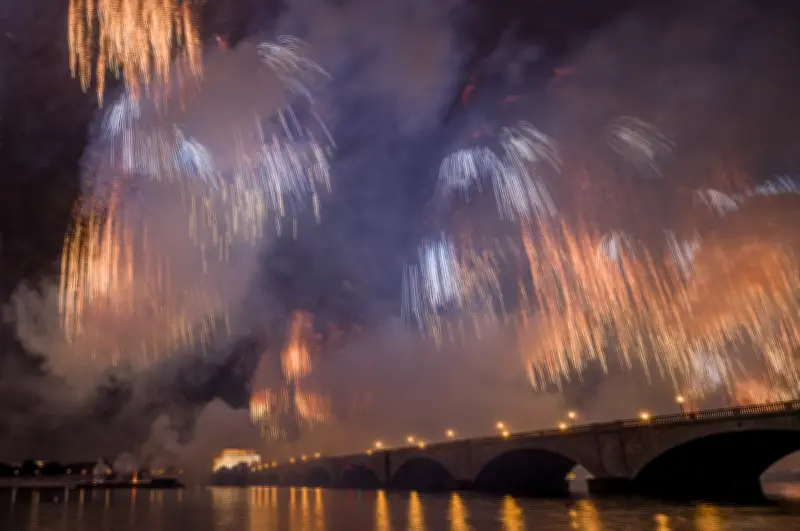
Air quality in Washington DC deteriorated sharply after Independence Day fireworks displays, with fine particulate matter levels spiking to unhealthy levels, according to data from the US Environmental Protection Agency.
PM2.5 Levels Surge
Monitoring stations across the capital recorded PM2.5 concentrations exceeding 150 micrograms per cubic meter in the hours following the July 4 celebrations, more than 10 times the safe limit set by the World Health Organization. The EPA's Air Quality Index for the region reached 155, classified as 'unhealthy for sensitive groups'.
Dr. Sarah Johnson, an environmental health specialist at George Washington University, said: 'The fireworks generate a massive amount of fine particulate matter that can linger for hours, posing risks to people with respiratory conditions.'

Health Advisory Issued
The District Department of Energy and Environment issued a health advisory urging residents, especially those with heart or lung disease, older adults, and children, to limit outdoor exertion. The advisory remained in effect until the following morning when winds dispersed the pollution.
Data from the EPA showed that PM2.5 levels peaked at 11 p.m. on July 4, reaching 175 micrograms per cubic meter at the McMillan Reservoir monitoring station. Levels remained above 100 until 3 a.m. on July 5.
Comparison to Previous Years
The 2026 Independence Day pollution event was comparable to that of 2023, when similar spikes were recorded. However, officials noted that weather conditions this year—calm winds and a temperature inversion—trapped pollutants closer to the ground, exacerbating the impact.
Fireworks have long been known to cause temporary air quality deterioration. A study by the National Oceanic and Atmospheric Administration found that July 4 fireworks can increase PM2.5 levels by up to 42% in urban areas.