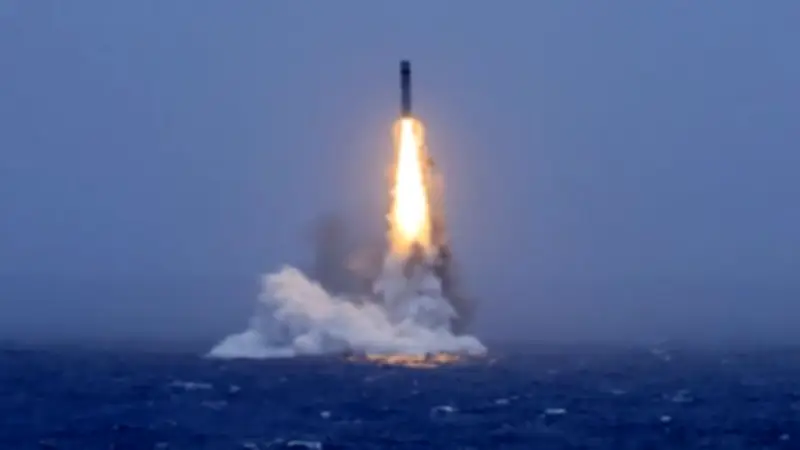
On Monday, a Chinese navy submarine fired a long-range ballistic missile into international waters in the South Pacific. The nuclear-capable missile, launched from underwater and carrying an inert dummy warhead, is believed to have splashed down near Tuvalu. The Chinese government described the event as “a routine part of China’s annual military training program” and “not directed against any specific country or target,” adding that other countries had been notified and urged not to “over-interpret it.”
Immediate Regional Backlash
Reactions from Australia, New Zealand, Taiwan, and Japan were swift and pointed. Australian Foreign Minister Penny Wong called the test “destabilising.” Commentators quickly linked the test to a new defence pact between Australia and Fiji signed earlier that day, suggesting Beijing intended the launch as an intimidating reminder that its missiles can reach throughout the Pacific.
Routine Testing Among Nuclear Powers
Every nuclear power that operates strategic ballistic missiles—whether submarine-launched or land-based—periodically test-fires unarmed missiles to confirm the weapons still work, retain their range, and can hit targets accurately. In recent years, similar tests have been conducted by the United States, the United Kingdom, Russia, France, and India. The Chinese test itself is nothing new or particularly alarming; it is part of basic maintenance of a nuclear arsenal. The test coincided with the beginning of China’s annual naval exercises with Russia, and it is not clear that the timing was intended as intimidation.

Purpose of Submarine-Launched Missiles
China maintains a declared no-first-use policy regarding nuclear weapons, meaning it will only use them in retaliation to a nuclear attack by another nation. Submarine-launched ballistic missiles exist specifically to provide a “second strike” capability—they would survive a nuclear attack on the Chinese mainland, most likely from a major power such as the US, and could be used to respond. Testing a strategic second-strike capability to intimidate middle and small powers such as Australia, Fiji, and other Pacific nations makes little sense. Chinese land-based intercontinental ballistic missiles can already reach as far as Australia and Pacific Island nations. Submarine-launched missiles like the one tested are deterrents aimed at other nuclear powers, ensuring credibility even in the event of an overwhelming first strike that destroys land-based arsenals. If China wanted to intimidate Fiji, it would be cheaper and more effective to fly a strategic bomber through or near Fijian airspace, or sail an aircraft carrier battle-group nearby.
Poor Handling of Notification
None of this means China handled the test well. The Australian government complained it received notice only hours beforehand, which it says is “not consistent” with The Hague convention on ballistic missile testing. This is a legitimate concern, as even an unarmed missile poses significant risks to aircraft and shipping in the area, and it is worth China addressing. However, a scramble on notice timing is a different problem from whether the test itself was provocative.
The Asymmetry in Perception
The deeper issue is the asymmetry in how these tests are received. If the US had tested a submarine-launched missile in the Pacific, it is unlikely Australia or any other US ally would have blinked. So perhaps what has really provoked the response is not the missile itself or the short notice, but the prospect of a potential future adversary demonstrating a capability every other nuclear power already possesses and regularly exercises.
A Question of Perspective
A political dimension to China’s motivation for the test and its timing cannot be ruled out, but we cannot know it from the available evidence. It is inarguable that the test shows a nuclear-armed China continuing to build and rehearse the same kind of deterrent architecture other nuclear powers rely on. Whether that reads as a routine technical milestone or a geopolitical warning shot may depend less on the missile itself than on who is watching it.