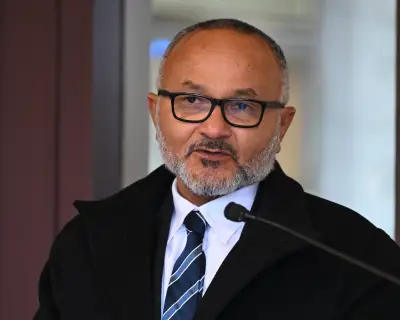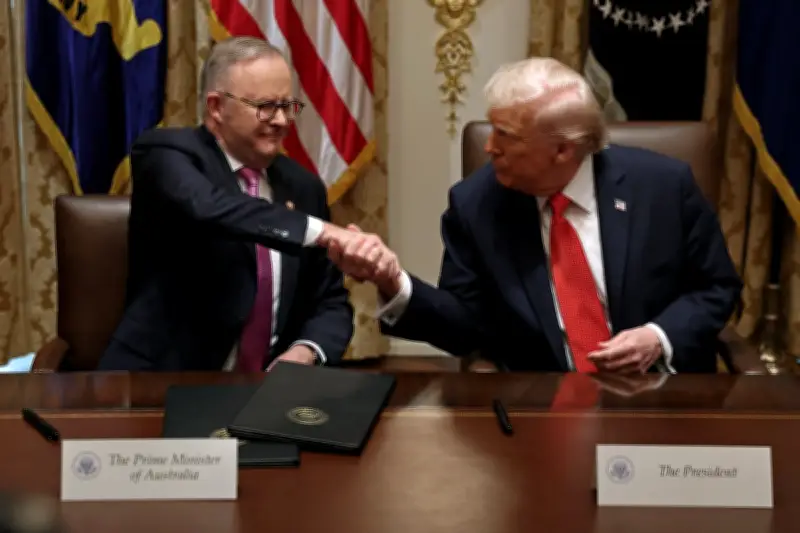
Concerns about the Aukus pact are growing amid renewed debate about Australia’s moves to more closely tie its defence to an increasingly unpredictable partner: Donald Trump’s America. The sensitivity around the issue was highlighted this week when Vice Adm Mark Hammond, chief of the navy, revealed he had been “directed” to speak at an Aukus conference organised by former minister Christopher Pyne, now a lobbyist for the $368bn agreement. Hammond later clarified that his address had been “approved” by the defence minister’s office.
Secondhand Submarines and Changing Plans
Last weekend, Defence Minister Richard Marles announced that Australia would no longer receive two Virginia-class submarines already in service and one new vessel. Instead, Australia will take three secondhand boats. Marles argued that streamlining the plan would make operations more effective, as running two different models of American submarines would be inefficient. The Pentagon noted cost efficiencies in workforce, maintenance and supply chains. While Labor is sensitive about the term “secondhand”, the submarines are expected to operate at peak condition after about six years in the water and their first major service, with a lifespan of at least 25 years.
Internal and External Pressures
In the ALP caucus meeting on Tuesday, former cabinet minister Ed Husic questioned the merits of Aukus, especially given the “transactional” nature of Trump’s decision-making. Husic’s concerns were validated when Trump’s administration included Australia among dozens of countries at risk of a new 12.5% trade tariff for allegedly failing to prevent slave labour. Trade Minister Don Farrell pushed back, reminding the US of Australia’s robust anti-slavery laws.

Despite internal dissent, Labor ministers dismissed Husic’s comments as “disingenuous”, emphasising that Labor supported Aukus before the optimal pathway was agreed in 2023. Lowy Institute polling shows public support for nuclear submarines remains firm, with two-thirds of Australians in favour in 2025, roughly steady from 2022.
Community Inquiry and International Scrutiny
A community-led inquiry, launched this week with former environment minister Peter Garrett as lead commissioner, will test confidence over the coming months. Organised by Aukus sceptics and opponents, it received more than $85,000 in public donations in four days and 100 written submissions. The inquiry’s first hearings will be held in Melbourne next week.
Other allies and partners are watching closely. Countries relying on Australia as a middle power in the Indo-Pacific have noted political uncertainty around Aukus. If the submarines are to help keep the peace against an assertive China, distant powers want assurance they will materialise and be reliable.
Trump’s Unpredictability
If the first 18 months of his second term are any guide, Trump’s unpopularity and erratic behaviour could test social licence for Aukus. While he has supported the deal and praised Prime Minister Anthony Albanese, Trump could reverse course at any time. His mistreatment of allies might convince others that sending billions to the US for submarines is a bad idea. Maintaining the “optimal pathway” ahead could be anything but straightforward.
With increasingly choppy waters, it is little wonder that Hammond and the government are sensitive around talk about Aukus.