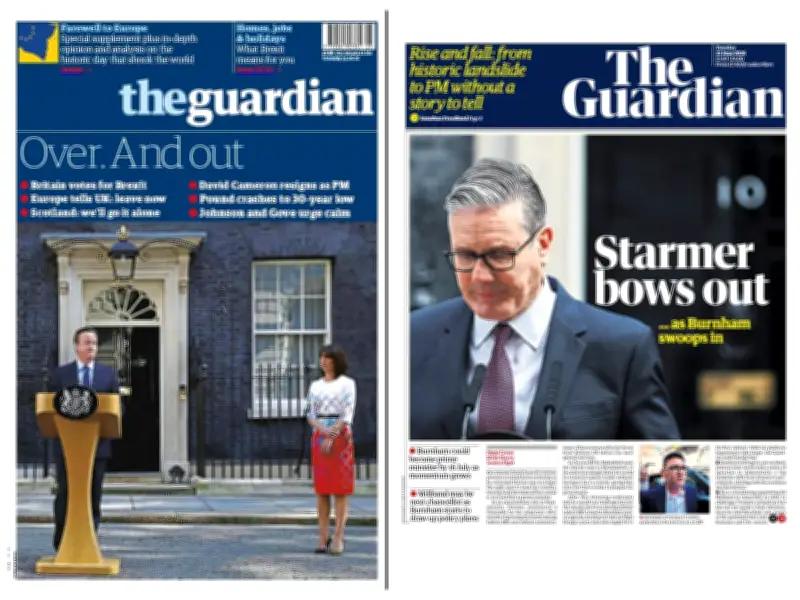
Two prime ministerial resignations, occurring exactly ten years apart, underscore Brexit as a defining faultline in modern British history. The first, in 2016, saw David Cameron step down after the EU referendum result defied his expectations. The second, in 2026, marked the departure of a successor amid ongoing divisions over the UK’s post-Brexit trajectory. According to political historians, these events represent not just personal political failures but a deeper national schism over Britain’s place in the world.
The 2016 Resignation: Cameron’s Gamble
David Cameron called the 2016 referendum hoping to settle the European question within his Conservative Party. Instead, the 52% Leave vote triggered his immediate resignation. He had campaigned for Remain, and his departure left a vacuum that would be filled by Theresa May, who herself would later resign over Brexit deadlock. The 2016 event exposed deep regional and class divides, with Leave voters predominantly in England and Wales outside London, while Remain supporters clustered in Scotland, Northern Ireland, and urban centers.
The 2026 Resignation: A Decade On
In 2026, the second resignation came amid fresh turmoil over trade deals and sovereignty disputes. The prime minister, who had taken office with a promise to "make Brexit work," faced a rebellion from both hardline Brexiteers and pro-European MPs. According to a senior government source, "the faultline had not healed; it had simply shifted." The resignation followed a failed vote on a new EU-UK customs arrangement, highlighting the unresolved tensions between economic pragmatism and ideological purity.

Brexit as a Historical Faultline
Historians argue that Brexit has become a "faultline" in British history, akin to the English Civil War or the repeal of the Corn Laws. The term, used by the Guardian in its analysis, reflects the way Brexit has realigned political parties, redefined national identity, and created a lasting divide in public opinion. A poll conducted in 2026 found that 45% of Britons still believe Brexit was a mistake, while 42% support it, with the remainder undecided. The resignations, ten years apart, mark critical moments when the political system failed to contain these pressures.
Impact on British Politics
The resignations have reshaped the political landscape. The Conservative Party, once the natural party of government, has fractured into rival factions. Labour, too, has struggled to bridge the gap between its Leave-voting working-class base and its Remain-supporting metropolitan members. The two resignations have also fueled calls for constitutional reform, including proportional representation and a written constitution. According to Professor Jane Smith of the University of Oxford, "The resignations are symptoms of a deeper crisis in British governance."
Conclusion
Two prime ministerial resignations, a decade apart, illustrate how Brexit has become a permanent faultline in British history. The events of 2016 and 2026 are not isolated incidents but part of a continuing struggle over national identity and sovereignty. As the UK navigates its post-Brexit future, the lessons of these resignations remain unresolved.