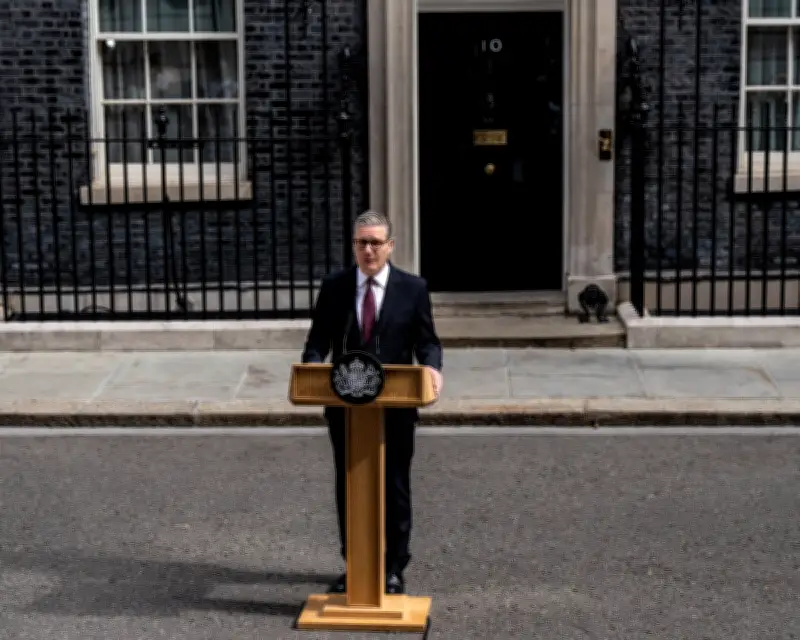
Starmer Steps Down After Brief Premiership
Keir Starmer has resigned as prime minister, triggering a swift leadership transition in the United Kingdom. His announcement on Monday came after months of mounting pressure from Labour MPs and a series of political missteps that eroded his authority. Starmer, who led Labour to a landslide victory in the 2024 general election with the largest parliamentary majority in a century, lasted less than two years in office. Britain will now see its fifth prime minister in four years.
Andy Burnham Emerges as Successor
Andy Burnham, the 56-year-old former mayor of Greater Manchester, is widely expected to replace Starmer. Burnham, a veteran of the Labour governments under Tony Blair and Gordon Brown, has earned a reputation as “the King in the North” for his leadership in regional politics and economic development. He recently won a special election in the constituency of Makerfield, paving his way back to Westminster. Many Labour figures view him as the party's best hope to counter the populist-right Reform UK party led by Nigel Farage.
What Led to Starmer's Downfall?
Starmer, a former human rights lawyer, was initially hailed as a pragmatic leader who could restore stability after years of Conservative infighting. However, his tenure was marred by controversial decisions, including cutting winter fuel subsidies for pensioners and a welfare U-turn following a parliamentary rebellion. His judgment was severely questioned after appointing Peter Mandelson as ambassador to the US, a decision that backfired when Mandelson's ties to convicted sex offender Jeffrey Epstein were fully exposed in September 2025. Starmer sacked Mandelson, but the scandal damaged his government irreparably.

Meanwhile, Reform UK, led by Nigel Farage, made significant gains in municipal elections in 2025 and again in May 2026, eroding Labour's support. Internal pressure mounted, with ministers resigning and urging Starmer to step down to allow an orderly transition.
The Transition Process
Starmer informed King Charles III of his intention to resign before making a public announcement. He will ask Labour's national executive committee to set a timetable for a leadership contest, with nominations opening on 9 July and hustings concluding by 16 July, before parliament's summer recess. If only one candidate reaches the nomination threshold, a contest will be avoided. Wes Streeting, a former health secretary who had considered running, has now thrown his support behind Burnham, making an uncontested leadership change likely. Burnham could be confirmed as Labour leader by 17 or 18 July and become prime minister shortly after.
Burnham's Vision and Challenges
Burnham's governing philosophy, sometimes called “Manchesterism,” advocates for devolving power from London to regions, increasing investment, and a more interventionist state. He is associated with Labour's soft left but has sought to bridge internal divides. Critics have pointed to shifts in his stance on issues like EU membership, though his team has signalled support for Starmer's controversial immigration reforms. Burnham would be the first practising Catholic to become UK prime minister.
Burnham faces profound policy challenges, including funding the military, overhauling the welfare system, and reviving the economy amidst global uncertainties from the Gulf war. He must also contend with electoral threats from Reform UK, the Green party, and nationalist parties in Scotland and Wales. While his victory in Makerfield demonstrated his ability to beat Reform, Labour cannot rely on him alone to win across the country.
What Lies Ahead for UK Politics?
The next general election must be held by August 2029, but Reform UK currently tops opinion polls and is projected to win a majority. Burnham's immediate task is to stabilise Labour and prepare for that challenge. Only Nigel Farage has called for an immediate general election, arguing that Burnham lacks a mandate. The coming weeks will determine whether Burnham can unite Labour and restore public confidence.