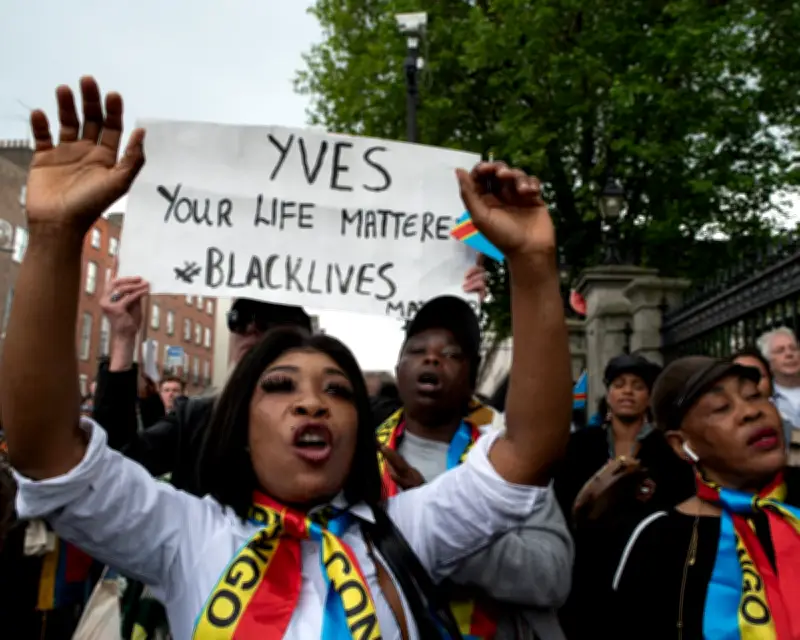
A protest in Dublin followed the death of Yves Sakila, a Congolese man suspected of shoplifting who died after being restrained by security guards outside a department store. The incident has raised fears among Africans in Ireland about rising hostility and racism.
Changing Times for Congolese Community
Kembetia Bissa, who fled the Democratic Republic of the Congo and moved to Ireland in 2003, initially found sanctuary and a welcoming home. He settled in Bandon, west Cork, working as a landscaper and opening an African dance school. However, times have changed. During a recent tram ride in Dublin, a white man moved away from him, a small sign of growing unease. 'We are actually scared now,' said Bissa, who runs the Congolese Community in Ireland Facebook group. 'We are scared that they should start to target us in our homes, on the street. If this thing is not controlled the number of deaths will be worse.'
The Incident and Its Aftermath
On 15 May, department store security guards chased and caught Yves Sakila, 35, a Congolese man suspected of shoplifting. Video footage showed him pinned to the pavement on Henry Street for about five minutes, with one man kneeling on his neck. Police arrived, handcuffed Sakila briefly, then realized he was unresponsive and took him to hospital, where he was pronounced dead. Police are investigating, and Sakila's family has requested a second postmortem. Protesters believe race played a part in his death, drawing parallels to George Floyd.

Adding context, days before Sakila's death, former taoiseach Bertie Ahern was secretly filmed saying, 'The ones I worry about are the Africans. We can't be taking in people from the Congo and all these places.' Ahern was canvassing in a Dublin byelection that focused on hostility to Black immigrants and Muslims, who are blamed for crime, housing shortages, and the cost of living crisis. Far-right agitators have amplified this narrative, with mobs attacking refugee shelters and targeting foreigners.
A Facebook page requesting justice for Sakila was flooded with scornful comments citing his criminal convictions and homelessness. Stallholders near the scene expressed resentment, claiming the media overlooks violence by Black perpetrators against white people. 'It's all about that, this crowd marching every week,' said Martina Farrell, 66, a fruit seller. 'A white fella can be killed and there's nothing about that.'
Broader Context of Racism in Ireland
Bissa attributes xenophobia to rapid demographic change and a failure to integrate newcomers. The Congolese community has more than doubled to about 8,000 since the 2022 census, part of a wider influx. Between 2012 and 2022, 401,433 people arrived from abroad, and a fifth of Ireland's 5.1 million population were born elsewhere.
Leon Diop, founder of the advocacy group Black and Irish, said Ireland's experience of colonialism and discrimination does not guarantee empathy. 'People are being pulled into racist mindsets,' he said. Bulelani Mfaco, a former spokesperson for the Movement of Asylum Seekers in Ireland, said rhetoric with racialised undertones, imported from the UK, has eroded tolerance. 'It comes from politicians and then people see it as an opportunity to commit acts of violence.'
Despite the fear, there are signs of hope. On Achill Island in County Mayo, asylum seekers engaged directly with Irish people and received a warm response. 'It gives me hope,' said Mfaco. On Henry Street, rain extinguished candles at a memorial for Sakila, but some stallholders expressed sorrow. 'No matter what he stole or didn't steal, it wasn't right,' said Caroline, 56. 'Doesn't matter what colour he is, it's still a life.'