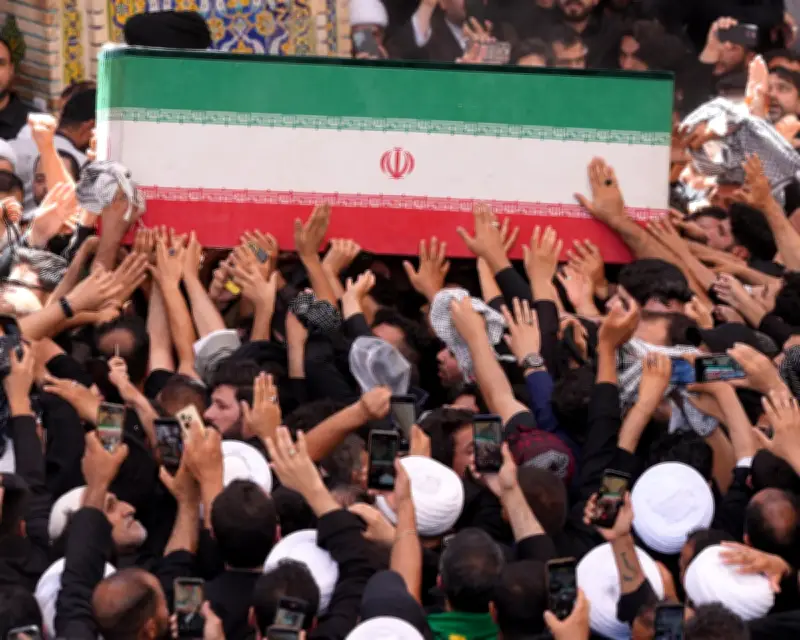
Iran plunged into mourning on Thursday as news of Supreme Leader Ayatollah Ali Khamenei's death spread across the country, triggering a complex mix of grief, defiance, and anxiety. While the nation has united in condemnation of U.S. President Donald Trump's perceived opportunism, a profound uncertainty hangs over the Islamic Republic's political future.
Massive Outpouring of Grief
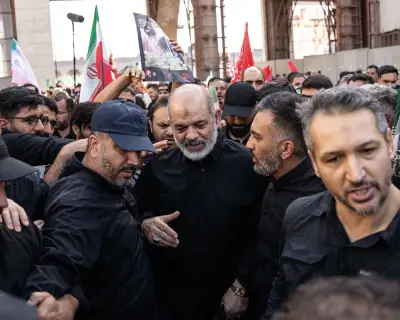
Millions of Iranians took to the streets in cities including Tehran, Mashhad, and Isfahan, waving black flags and beating their chests in traditional displays of mourning. State television broadcast images of mourners flooding the streets around the shrine of Imam Reza in Mashhad, where Khamenei's body is expected to be taken for burial. The government declared five days of national mourning, with schools and businesses closed.
"He was our leader, our father," said Mohammad Rezaei, a 45-year-old shopkeeper in Tehran, tears streaming down his face. "Under his guidance, we stood tall against the arrogance of the West. Now we are orphans." The sentiment was echoed across social media, with hashtags like #KhameneiEternal and #LeaderOfTheUmmah trending.

Defiance Against Trump
The mourning has been accompanied by a surge of anti-American rhetoric, particularly aimed at President Trump, who recently threatened to intensify sanctions and support regime change. "Trump thinks he can exploit this moment to break our will," said Hossein Salami, commander of the Islamic Revolutionary Guard Corps, in a televised address. "But the blood of our leader will only strengthen our resolve. We will never bow to the Great Satan."
According to a statement from the Foreign Ministry, Iran has rejected offers of condolence from the United States, calling them "hypocritical." The ministry accused Washington of "celebrating the death of a man who dedicated his life to fighting American imperialism."
Uncertain Succession
Behind the public unity, however, a fierce power struggle is underway. The Assembly of Experts, the body responsible for selecting a new supreme leader, convened an emergency session on Thursday. The frontrunner is widely believed to be President Ebrahim Raisi, a hardliner and Khamenei protégé. However, analysts say the process could be contentious, with factions within the clerical establishment backing different candidates.
"The succession is the most critical issue Iran has faced in decades," said Dr. Fatemeh Sadeghi, a political analyst at the University of Tehran. "Khamenei's authority was absolute. His successor will inherit a country battered by sanctions, protests, and international isolation. The transition could be smooth, or it could trigger a destabilizing power struggle."
The uncertainty extends to the nuclear deal and Iran's regional policies. Khamenei was the ultimate arbiter on matters of state, and his death leaves a vacuum that could embolden hardliners or open the door to moderates seeking engagement with the West.
International Reactions
World leaders offered condolences, with notable exceptions. The European Union expressed "deep sadness" and called for restraint. Russia and China praised Khamenei as a "great leader" and emphasized the importance of stability. Saudi Arabia and the United Arab Emirates remained silent, reflecting deep regional rifts. Israel, which had long viewed Khamenei as an existential threat, made no official comment.
In the United States, President Trump tweeted: "The world is a safer place without Khamenei. The Iranian people deserve freedom. We stand with them." The tweet sparked outrage in Iran, where many saw it as a provocation.
Looking Ahead
As Iran enters a period of mourning and transition, the path forward remains unclear. The country faces immense challenges: a crippled economy, widespread public discontent, and a volatile geopolitical environment. Khamenei's death has removed a central pillar of the Islamic Republic, and the coming weeks will reveal whether the system can adapt or fracture.
For now, Iranians are united in grief and defiance. But beneath the surface, the question of who will lead them into the future looms large.