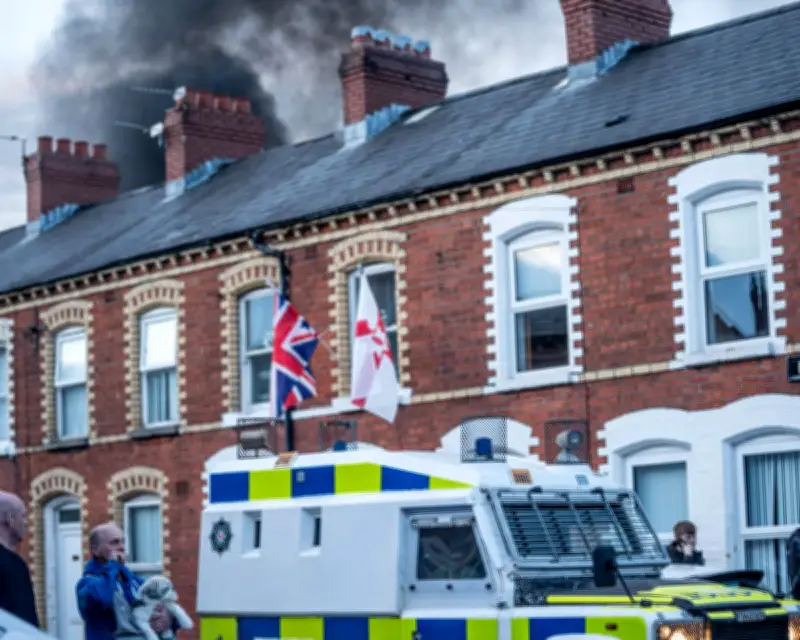
Renewed violence in Belfast has brought the influence of loyalist paramilitaries under intense scrutiny, as political leaders in Northern Ireland grapple with the aftermath of the worst rioting in years. The unrest, which erupted in loyalist areas of the city, has left dozens of police officers injured and raised fears of a return to the sectarian conflict that plagued the region for decades.
Background of the Riots
The riots began following a disputed parade by the Orange Order, a Protestant fraternal organization, which was banned from marching through a predominantly Catholic area. The decision by the Parades Commission sparked anger among loyalists, leading to clashes with police and the targeting of Catholic homes and businesses. Over several nights, masked youths threw petrol bombs, bricks, and fireworks at police lines, while vehicles were hijacked and set alight.
Paramilitary Influence
Police and political leaders have pointed to the involvement of loyalist paramilitary groups, such as the Ulster Defence Association (UDA) and the Ulster Volunteer Force (UVF), in orchestrating the violence. These groups, which were responsible for many deaths during the Troubles, have maintained a presence in working-class loyalist communities, often involved in organized crime and drug dealing. The recent riots have highlighted their ability to mobilize young people and exert control over their neighborhoods.

Political Reaction
Northern Ireland's First Minister and Deputy First Minister have condemned the violence and called for calm. The UK government has also expressed concern, with the Northern Ireland Secretary stating that there is no place for paramilitary activity in a democratic society. Opposition parties have urged the government to take stronger action against these groups, including increased funding for community initiatives and a crackdown on their criminal activities.
Community Impact
The violence has deepened divisions in Belfast, with many residents feeling fearful and abandoned by authorities. Community leaders have called for dialogue and reconciliation, but there is skepticism about whether the underlying issues of deprivation, sectarianism, and paramilitary control can be addressed. The riots have also damaged Northern Ireland's international reputation, coming just years after the Good Friday Agreement brought an end to large-scale conflict.
Looking Ahead
In response to the unrest, the Police Service of Northern Ireland (PSNI) has launched an investigation into the role of paramilitaries, and additional resources have been deployed to prevent further outbreaks of violence. However, long-term solutions remain elusive, as the region continues to grapple with the legacy of its troubled past. The coming weeks will be crucial in determining whether the peace process can withstand this latest challenge.