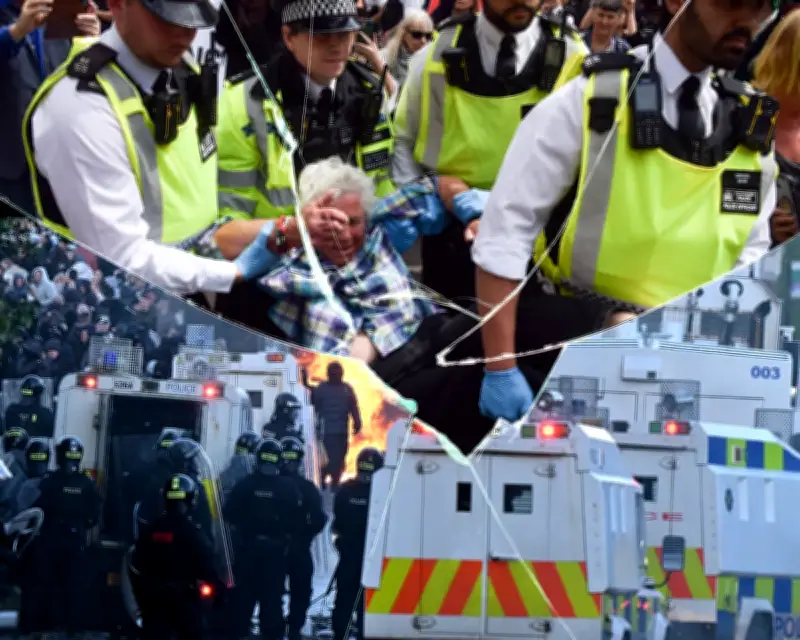
The recent unrest in Belfast has once again brought to the fore the contentious issue of how protests, particularly those in support of Palestine, are characterized by authorities and media. The riots, which erupted following a pro-Palestine demonstration, have been described by some as acts of terrorism, a label that critics argue is both inaccurate and dangerous.
Context of the Belfast Riots
The violence in Belfast occurred after a peaceful protest calling for an end to the conflict in Gaza. What began as a lawful assembly quickly descended into chaos when a small group of individuals clashed with police, leading to injuries and property damage. In the aftermath, several politicians and commentators were quick to label the entire event as terrorism, a move that has sparked widespread debate.
The Misuse of the Term 'Terrorism'
The term 'terrorism' carries immense weight and is often used to delegitimize political dissent. By branding the Belfast riots as terrorism, authorities risk conflating legitimate protest with violent extremism. This not only undermines the cause of those peacefully advocating for Palestinian rights but also sets a dangerous precedent for how dissent is handled in the future.

Critics argue that the application of the terrorism label to the Belfast riots is a form of political rhetoric designed to silence opposition. They point out that the vast majority of protesters were exercising their democratic right to free assembly, and that the actions of a few should not tarnish the entire movement.
Broader Implications for Palestine Solidarity
The situation in Belfast is not isolated. Across Europe and beyond, pro-Palestine protests have often been met with accusations of extremism. This trend has been particularly pronounced in countries with strong ties to Israel, where criticism of Israeli policy is sometimes conflated with anti-Semitism or support for terrorism.
Human rights organizations have warned that such labeling can have a chilling effect on free speech. When peaceful protest is equated with terrorism, individuals may be deterred from participating in demonstrations for fear of being branded as extremists. This, in turn, can stifle public debate on critical issues such as the Israeli-Palestinian conflict.
The Role of Media and Political Rhetoric
Media coverage plays a crucial role in shaping public perception. In the case of the Belfast riots, some outlets have focused disproportionately on the violent aspects, while downplaying the peaceful nature of the majority of the protest. This selective reporting can create a distorted picture, leading to public support for harsh measures against protesters.
Political leaders have also been accused of exploiting the situation for their own ends. By framing the protests as a security threat, they can justify increased surveillance and policing powers, as well as divert attention from the underlying causes of the unrest.
Conclusion: Protecting the Right to Protest
The Belfast riots serve as a stark reminder of the need to protect the right to peaceful protest, even when such protests are controversial. Labeling dissent as terrorism is a dangerous path that undermines democratic values and fuels further division. Instead, authorities must distinguish between criminal acts and legitimate political expression.
As the debate over Palestine continues to intensify, it is essential that the public and policymakers alike resist the temptation to use inflammatory language. Only by upholding the principles of free speech and assembly can we ensure that all voices are heard, and that justice is served for all parties involved.