A recently rediscovered baptism record at Manchester Cathedral provides a rare glimpse into the life of an enslaved African teenager in Georgian-era Manchester, shedding light on the Black Mancunian experience and the abolitionist movement.
Discovery of the Baptism Record
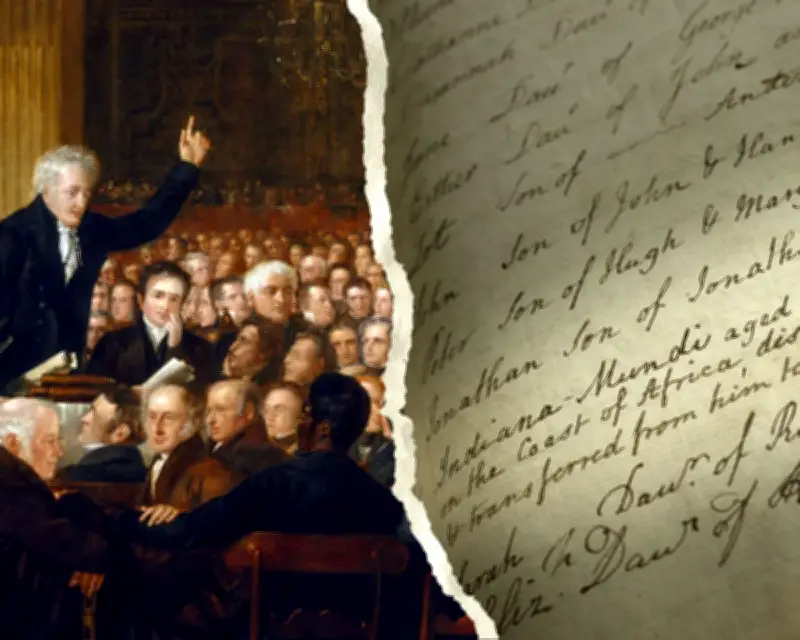
Dated 26 December 1798, the handwritten entry states: “Indiana Mundi, aged 14. A negro girl from Congo on the coast of Africa, disposed of to Mr Paton at St Kitts & transferred from him to Arch.d Paton MD baptised this day.” Cathedral research officer Cathy Hirst rediscovered the original entry by chance while working through 18th-century ledgers.
Indiana is believed to have been a servant in the household of Archibald Paton, a Liverpool doctor who married Sarah Burton at the cathedral in November 1797. Black servants were a status symbol at the time, and “exotic” names like Mundi—meaning “of the world” in Latin—were fashionable.

Significance for Abolitionism
Baptism during enslavement held political as well as spiritual significance. Malik Al Nasir, a Cambridge University academic and author of Searching For My Slave Roots, explained that plantation owners feared Christian teaching would encourage literacy and resistance. There was also a widespread belief that baptism conferred legal freedom. “The argument was that you can’t baptise a thing, you can only baptise a person—and because he’s a person, you cannot treat him as property,” Al Nasir said.
This argument proved pivotal in the 1771 Somerset v Stewart case in London, where an enslaved Black man named James Somerset was baptised and later refused to work. The judge ruled that no master had the right to detain an enslaved person for transport and sale abroad, declaring slavery “so odious, that nothing can be suffered to support it, but positive law”.
Indiana Mundi’s Legacy
Indiana, along with others enslaved in Manchester, is expected to be honoured with a memorial at the cathedral, supported by Heritage Lottery funding. It will be unveiled on Clarkson Day, the cathedral’s annual 28 October event confronting the legacies of slavery.
When abolitionist Thomas Clarkson gave a sermon at Manchester Cathedral in 1787, he saw a “great crowd of black people standing round the pulpit”. At that time, an estimated 20,000 Black people lived in England. Clarkson’s visit led to 10,500 Mancunians—one in five—signing a petition against the slave trade.
Broader Context of Black Lives in Manchester
Parish records offer further glimpses into Black lives in the 17th, 18th and 19th centuries. On 20 May 1757, “Philip a Negro from Mr John Mosse” was buried at Manchester Cathedral, while Eliza Alburn, “a brown girl from Upper Germany”, was buried on 26 August 1831. At Cross Street Chapel in 1771, “Immy and Fanny, two West Indian girls, one about 15, the other about 13 years of age, natural children of Mr Campbell of Scotland”, were baptised.
Despite Manchester’s central role in the cotton trade built on enslaved African workers, Clarkson’s signature in the cathedral’s “book of strange preachers” and Indiana’s baptism record are among only a handful of visible links in the cathedral building. Others include a memorial to Rev Richard Assheton, who inherited 244 enslaved workers, and a memorial to Dauntessy Hulme, who signed a petition opposing abolition in 1806.
“As an institution we have to deal with this history—we can’t just keep celebrating the fact that we were important to the abolitionist movement,” Hirst said.