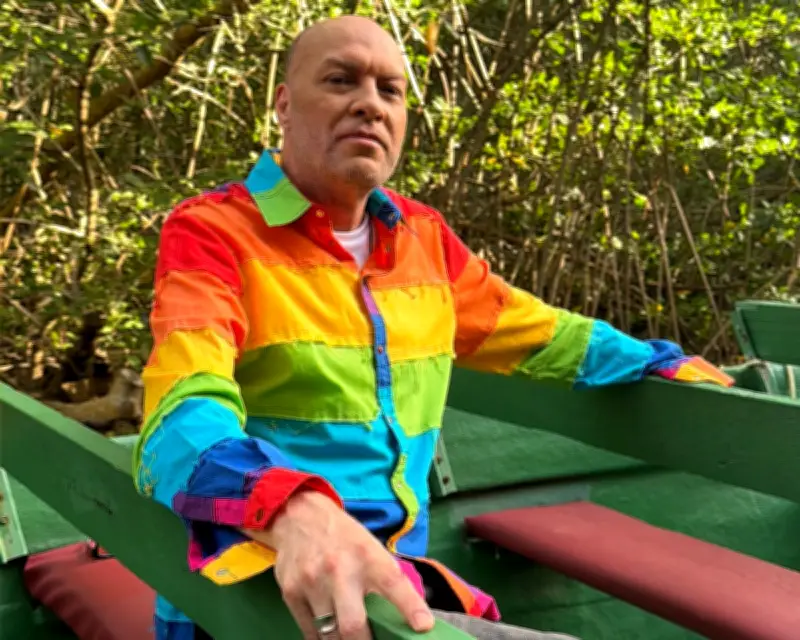
After an 11-year legal struggle, LGBTQ activist Jason Jones is on the verge of overturning Trinidad and Tobago's colonial-era laws that criminalize homosexuality. The final hurdle is a ruling from the Judicial Committee of the Privy Council, the country's highest court of appeal, which heard the case in London on July 7, 2026.
The Laws in Question
The laws, inherited from British colonial rule, prohibit buggery and gross indecency between consenting adults, carrying sentences of up to 10 years in prison. Jones, a 52-year-old human rights activist, has argued that these laws violate the constitutional rights to privacy, freedom of expression, and protection from discrimination.
Jones's Legal Journey
Jones first launched his challenge in 2015, after being arrested for protesting the laws. The case has wound through Trinidad's courts, with the High Court ruling in his favor in 2018, only to have that decision overturned by the Court of Appeal in 2021. The Privy Council now has the final say.

“This is not just about me,” Jones said in a statement. “It’s about the thousands of LGBTQ Trinidadians who live in fear of arrest, blackmail, and violence. We are one step away from justice.”
Impact on the LGBTQ Community
If the Privy Council upholds Jones's appeal, it would mark a historic victory for LGBTQ rights in the Caribbean, where many countries still maintain anti-sodomy laws. According to a 2023 report by the International Lesbian, Gay, Bisexual, Trans and Intersex Association (ILGA), 11 Caribbean nations criminalize same-sex acts.
Activists say the laws fuel stigma and discrimination, making it difficult for LGBTQ people to access healthcare, housing, and employment. A 2022 study by the University of the West Indies found that 68% of LGBTQ respondents had experienced verbal abuse, and 22% had been physically attacked.
The Government's Position
The Trinidad and Tobago government has defended the laws, arguing that they reflect the moral values of the society. However, Prime Minister Keith Rowley has said the government will abide by the Privy Council's decision. “We are a democracy governed by the rule of law,” Rowley told parliament in 2025.
Regional and International Significance
The case has drawn international attention, with human rights groups and foreign governments urging Trinidad to repeal the laws. In 2024, the United Nations Human Rights Committee found that the laws violated the International Covenant on Civil and Political Rights. The Biden administration has also voiced support for Jones's challenge.
“A win here would send a powerful message across the Caribbean and beyond,” said Téa Braun, director of the Caribbean Equality Project. “It would show that love is not a crime and that colonial laws have no place in modern democracies.”
What Happens Next
The Privy Council is expected to deliver its ruling within six months. If Jones prevails, the laws will be struck down immediately, and parliament will be required to amend the legislation. Activists plan to celebrate with a rally in Port of Spain, the capital.
Jones, who has faced death threats and harassment during his campaign, remains optimistic. “We have come too far to turn back now,” he said. “The arc of history bends toward justice.”