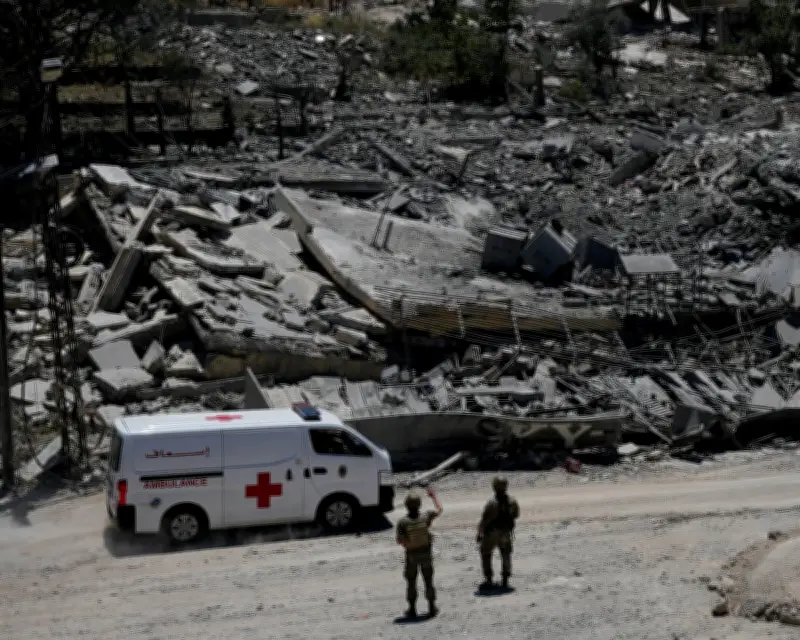
Israeli forces carried out airstrikes across southern Lebanon on Friday after issuing forced evacuation orders for nine villages, prompting thousands of residents to flee their homes. The strikes killed six people, a day after Hezbollah rejected a US-brokered ceasefire agreement between Israel and Lebanon.
Mass Displacement from Anqoun
Hundreds of families left Anqoun, a village hosting at least 2,500 displaced people, after the Israeli military warned it would soon operate against what it said were Hezbollah targets there. Roads leading to Sidon, the nearest major city, were clogged with cars as families sought shelter. The Israeli military conducted airstrikes across wide areas of south Lebanon, including Anqoun, while drone strikes hit cars in the Nabatieh area. Airstrikes and artillery also pounded the town of Kfar Tebnit, adjacent to Beaufort Castle, which Israeli troops seized this week.
Expanding Invasion
Israel has issued evacuation orders for Nabatieh and surrounding towns as its forces advance further into the city, now largely deserted. Prime Minister Benjamin Netanyahu ordered troops to deepen their invasion after capturing the medieval Beaufort Crusader castle on Sunday. Hezbollah responded by attacking Israeli troops near the castle with rocket barrages, according to a statement from the group.

Ceasefire Rejected
The fighting followed the rejection of a US-brokered ceasefire by Hezbollah, which called the deal tantamount to surrender. Under the proposal, Hezbollah would have stopped firing but Israel would have been allowed to continue airstrikes. Lebanese Prime Minister Nawaf Salam stated on Friday: "Lebanon can no longer be a field for wars fought for others, nor can the south and its people continue to pay the price for decisions they did not make."
Hezbollah is not directly involved in negotiations between Israel and the Lebanese government, instead channeling its positions through parliament speaker Nabih Berri. Berri had previously indicated Hezbollah would stop firing in return for a cessation of hostilities. On Friday, he said Hezbollah would withdraw from the area south of the Litani River only if Israeli troops left Lebanon and a ceasefire was unconditional.
Israeli Withdrawal from Dibbin
On Thursday, Israeli forces withdrew from the town of Dibbin in southern Lebanon, marking the first such pullout since the war began on March 2. Lebanese troops and UN peacekeepers entered the town on Friday, reopening roads and clearing rubble for residents. It remains unclear whether the withdrawal was linked to the proposed "pilot zones" in the ceasefire plan.
Diplomatic Efforts
Lebanon and Israel have been engaged in dual-track negotiations in Washington, but the prospects for success without Hezbollah's buy-in are in doubt. US President Donald Trump is invested in the talks, as Iran has linked a Lebanon ceasefire to its own negotiations with Washington. Trump has reportedly grown frustrated with Netanyahu's campaign in Lebanon, which has complicated talks with Iran.
Netanyahu told ministers during a cabinet meeting on Thursday night that he would not seek government approval for the ceasefire proposal unless Hezbollah first agreed to its terms. Several ministers opposed the fragile truce and urged Netanyahu to submit it for a formal vote, but he refused, stating: "At the moment, there is no deal. Hezbollah is opposed, and therefore I am not making a decision."
Casualties and Background
Fighting between Hezbollah and Israel began on March 2 after Hezbollah launched rockets at Israel in retaliation for the killing of Iranian Supreme Leader Ayatollah Ali Khamenei, triggering an Israeli invasion. More than 3,500 people have been killed by Israeli strikes in Lebanon, while Hezbollah has killed at least 29 Israeli soldiers and three Israeli civilians.