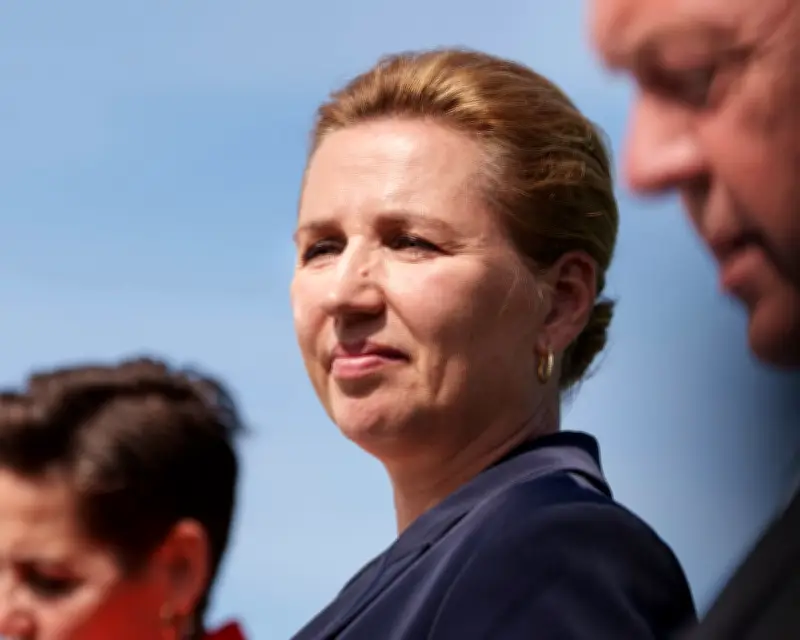
Denmark's incoming prime minister, Mette Frederiksen, presented the platform for a new Danish government on 2 June, vowing to resist pressure from the United States over Greenland and tackle the rising cost of living. Frederiksen, who returns for a third consecutive term as prime minister, leads a four-party minority coalition that includes her Social Democrats, the Social Liberals, the Green Left, and the centrist Moderates.
"We present a government that will help improve the everyday lives of Danes," Frederiksen said on Tuesday. "We want to provide targeted support to those Danes who have been hit hard by rising petrol and diesel prices." The measures announced include halving VAT on food, removing VAT on fruit and vegetables, offering free public transport to individuals under 22, and providing an extra DKr1,000 (£115) per month to less well-off pensioners.
The coalition agreement, announced late on Monday, ended two months of uncertainty following March elections in which 12 parties won seats in parliament. The new government marks a shift to the left for Frederiksen, who previously headed an unlikely left-right alliance for four years. With only 82 of the 179 seats in parliament, the coalition will rely mainly on the support of the left-wing Red-Green Alliance for a parliamentary majority.

Greenland and Defence
The government's immediate priorities include ongoing diplomatic talks with the US and Nato over Greenland, a Danish near-autonomous territory that former US President Donald Trump has insisted Washington needs to control for national security reasons. "The government will stand firm on the kingdom's sovereignty, territorial integrity and right to self-determination," the programme stated. Denmark's military will be further expanded amid concerns about US commitment to European security.
Domestic Policies
To secure the support of the Red-Green Alliance and other left-leaning parties, Frederiksen has also undertaken to provide free dental care for Danes within 10 years. The programme does not include a wealth tax, which Frederiksen proposed during the campaign but was heavily criticised by business leaders, including the CEO of Lego and the chair of Maersk's board of directors.
The measures aim to address a cost of living crisis that affected Frederiksen's popularity before the 24 March election, where the Social Democrats finished first but recorded their lowest score since 1903. Lars Løkke Rasmussen, the outgoing foreign minister and Moderates leader, said the new government was aiming for "redistribution based on solidarity" and "guarantees a steady hand on the tiller in the turbulent times we live in."
Immigration and Agriculture
Frederiksen stated that her administration would maintain Denmark's hardline immigration policy. "That is absolutely crucial for the cohesion of our society, and therefore we want to deport more foreign criminals," she told reporters. The government will continue working on establishing reception centres outside the EU, a plan heavily criticised by rights groups, where asylum seekers would be housed while their requests are processed.
Other measures include a ban on extreme breeding practices in pig farming, a move towards bigger stalls, and an end to automatic tail-docking, following public anger over Denmark's booming and heavily polluting pig farming industry. A government commission involving NGOs, farmers' organisations, and local municipalities will be established to "comprehensively restructure" the sector.
Background and Challenges
Frederiksen, born into a working-class family of longstanding Social Democrats, entered parliament in 2001 at age 24 and became leader of the Social Democrats in 2015. She has tightened Denmark's migration policy to counter rising support for the far right, while advocating stronger international commitments, including staunch support for Ukraine and a significant increase in defence spending.

The new coalition was formed at the third attempt after Frederiksen failed to cobble together a left-leaning alliance immediately after the election, and Troels Lund Poulsen of the liberal Venstre party also fell short in forming a right-wing alliance. The coalition talks were the longest in Denmark's history, and analysts suggest that the difficulty in forming the government, along with a series of scandals that have weakened Frederiksen since 2019, may mean it does not survive its full term.