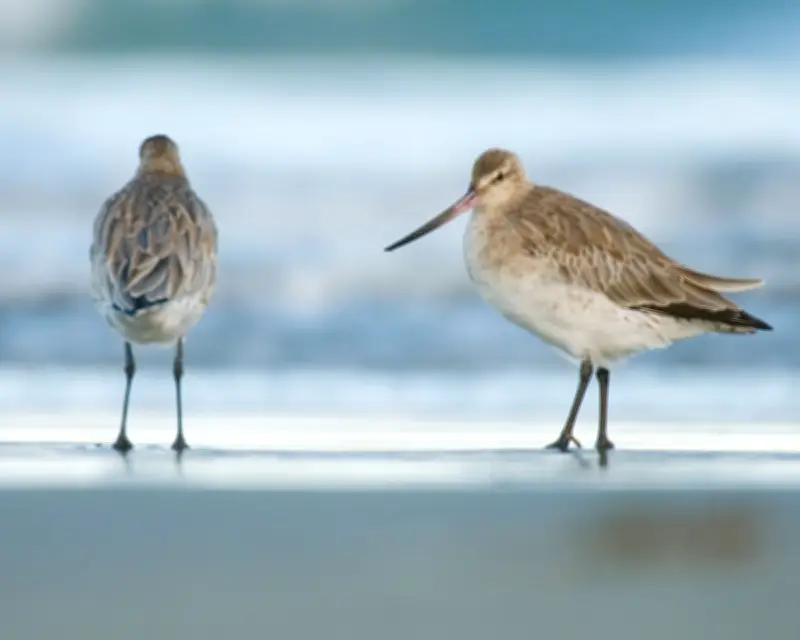
New research has shed light on the profound effects of a rapidly changing Arctic on migrant wader birds that spend their winters in the UK. The study, published in the journal Science, reveals that warming summers in the Arctic are causing significant population declines in several species of waders, including the knot, dunlin, and sanderling.
Arctic Warming and Its Impact on Waders
The Arctic is warming at a rate twice as fast as the global average, leading to earlier snowmelt and shifts in the availability of insects, which are a crucial food source for wader chicks. The research, led by scientists from the University of East Anglia and the British Trust for Ornithology, found that these changes are causing a mismatch between the timing of chick hatching and the peak abundance of their insect prey.
This mismatch, known as a trophic mismatch, has been linked to reduced chick survival and subsequent population declines. The study analyzed data from 13 species of Arctic-breeding waders over a 30-year period, tracking their population trends in the UK and the Arctic.

Key Findings
- Seven out of 13 wader species studied showed significant population declines in the UK, with the most severe declines observed in species that breed in the high Arctic.
- The knot population has declined by 80% since the 1990s, while the dunlin population has fallen by 50%.
- The study found a strong correlation between rising Arctic temperatures and the timing of snowmelt, which in turn affects the emergence of insects.
Conservation Implications
The findings have significant implications for the conservation of these species. The UK is an important wintering ground for many Arctic-breeding waders, and the declines observed are a cause for concern. The researchers emphasize that while local conservation efforts in the UK, such as habitat protection and management, are important, they may not be sufficient to counteract the effects of climate change in the Arctic.
Dr. Jennifer Smith, lead author of the study, said: 'Our research highlights the need for international cooperation to address the impacts of climate change on migratory birds. The Arctic is changing rapidly, and we are already seeing the consequences for species that rely on this unique environment.'
Future Outlook
The study predicts that if Arctic warming continues at its current pace, many wader species could face further population declines, with some potentially becoming extinct in the UK within the next few decades. The researchers call for urgent action to reduce greenhouse gas emissions and mitigate the effects of climate change on Arctic ecosystems.
In the meantime, conservationists are exploring ways to help waders adapt, such as creating more resilient habitats in the UK and working with Arctic nations to protect key breeding sites. However, the long-term survival of these species may ultimately depend on global efforts to curb climate change.