Scientists have warned that the Trump administration's plan to dismantle a vital ocean observation system will severely degrade the accuracy of weather predictions and El Niño forecasts, with significant economic consequences for the United States and globally.
Ocean Observatories Initiative at Risk
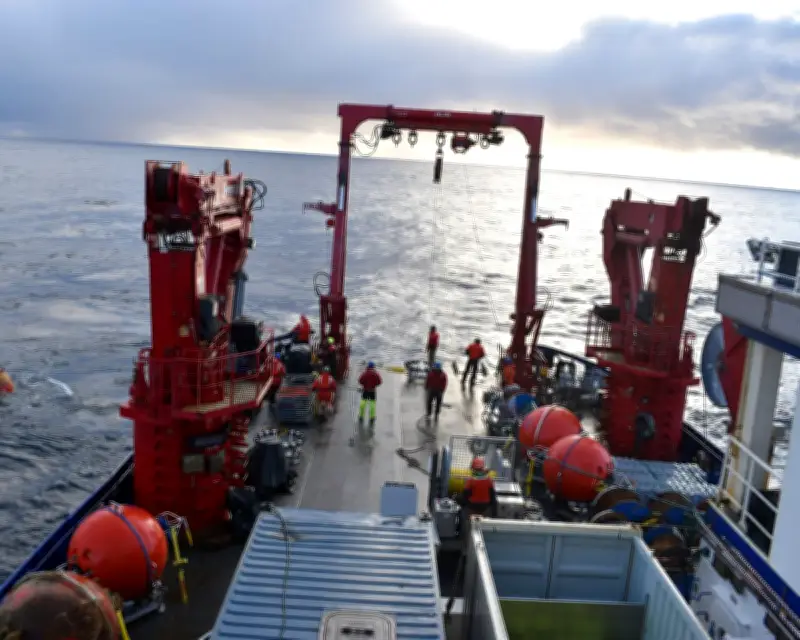
The Ocean Observatories Initiative (OOI), funded by the US National Science Foundation, is a vast network of seafloor systems, underwater gliders, and moored surface platforms that provides critical data to researchers, policymakers, and mariners worldwide. Covering both US coastlines and extending into the North Atlantic and Southern Ocean, the system has been used to study marine heatwaves, harmful algal blooms, subduction zone earthquakes, ocean acidification, and fisheries variability. Decommissioning it would remove a major component of the Global Ocean Observing System (GOOS), a network described as the eyes and ears of the ocean.
Impact on Climate and Weather Forecasting
Research published in Nature Climate Change last month shows that data losses from GOOS could degrade ocean heat estimates that underpin weather prediction, El Niño forecasting, and fisheries management. Losing US observations would be worse than randomly losing 80% of all ocean data worldwide, as US-funded platforms span every ocean basin and fill critical gaps no other nation currently covers.

Sabrina Speich, an expert in global ocean monitoring at the Ecole Normale Supérieure in Paris and chair of the ocean expert panel of the Global Climate Observing System, said: 'Ocean heat content is the most robust indicator of climate change we have. Lose them, and you lose your ability to track not just ocean warming but the climate system as a whole.' She added that forecasts would degrade, sometimes dangerously so, and that atmospheric observations alone are insufficient for early warning systems for tropical storms, cyclones, and El Niño.
Economic Consequences
The loss of US observations comes in a year predicted to be an El Niño year with supercharged weather extremes. Farmers in the US and South America rely on El Niño forecasts to decide what to plant and when, making accurate predictions crucial for agriculture. The most recent El Niño in 2023-2024 was one of the five strongest on record and contributed to 2024's record-breaking global temperature increase.
Removing US observations alone would produce a 163% increase in error for annual ocean heating rates, according to the research by Speich and her co-authors. John P Abraham, professor of engineering at the University of St Thomas in Minnesota and co-author of the paper, described the move as 'penny-wise, pound foolish'. He noted that the US suffered more than 400 climate and weather disasters costing $1 billion or more between 1980 and 2024, with 2024 alone costing $177 billion. The observation system is a fraction of these costs.
International Response
On Thursday, the European Union announced a €92 million ($107 million) initiative called OceanEye, more than half of which will go to GOOS. The European Commission stated the announcement was long-planned and not a direct response to the US move. Samantha Burgess, strategic climate lead at the Copernicus Climate Change Service, said ocean observations are irreplaceable because we cannot see the deep ocean from space, and they save lives by warning of severe storms. 'Without ocean observations we are flying blind,' she said.
The National Science Foundation, which funds and oversees the OOI, said the program was not being cancelled entirely but described plans as a 'descope' or reduction of elements, though it remains unclear what data collection capacity would remain.