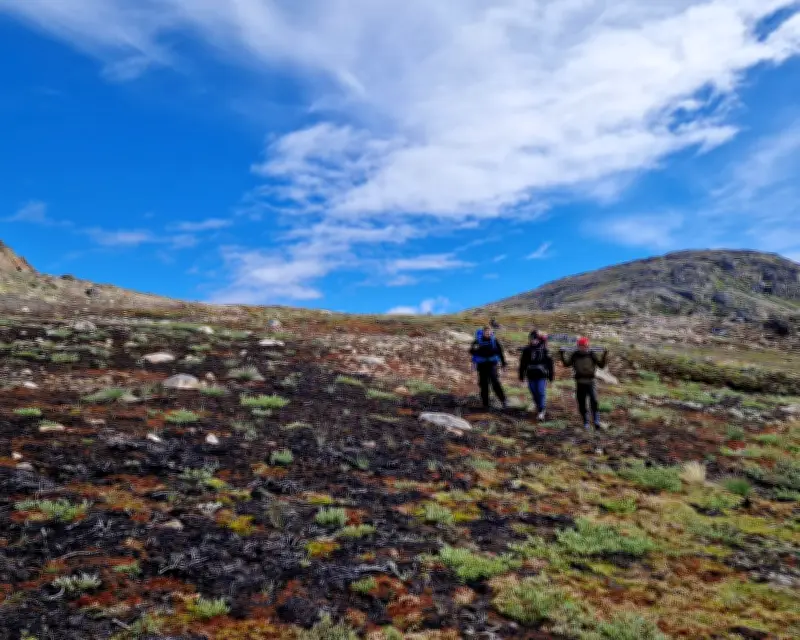
Wildfires have been detected in Greenland for the first time in recorded history, shocking scientists who say the blazes could have profound consequences for the region's ice sheet and global climate.
Unprecedented Fires in the Arctic
Satellite imagery confirmed multiple fires burning in western Greenland near the town of Sisimiut, according to the Danish Meteorological Institute. The fires are believed to have been ignited by lightning strikes, as the region experiences unusually warm and dry conditions.
“This is an alarming development,” said Dr. Ruth Mottram, a climate scientist at the Danish Meteorological Institute. “Greenland has never experienced wildfires like this before. The combination of heat and dryness is creating conditions that we normally associate with boreal forests, not the ice-covered island we know.”

Potential Impacts on Ice Melt
The fires are burning in areas of tundra and shrubland, but scientists are most concerned about their proximity to the Greenland ice sheet. Soot and ash from the fires can darken the ice surface, reducing its albedo and causing it to absorb more solar radiation, thereby accelerating melting.
According to a study published in Nature Communications, black carbon deposits from Arctic wildfires have been linked to a 5-10% increase in ice melt rates in some regions. “Even a small increase in melting can have a big impact on sea level rise,” said Dr. Jason Box, a glaciologist at the Geological Survey of Denmark and Greenland.
Carbon Release Concerns
Greenland's permafrost and peatlands store vast amounts of carbon, and the fires risk releasing that carbon into the atmosphere. The Arctic has already warmed at nearly four times the global average, a phenomenon known as Arctic amplification.
“If these fires spread into peatlands, they could burn for weeks or months, releasing centuries of stored carbon,” warned Dr. Meredith Williams, a wildfire expert at the University of Copenhagen. “That would create a dangerous feedback loop, where more carbon emissions lead to more warming and more fires.”
Global Implications
The Greenland fires come amid a record-breaking heatwave across the Arctic, with temperatures in some areas reaching 30°C (86°F) above normal. Scientists say such extremes are becoming more likely due to human-caused climate change.
“This is a wake-up call,” said Dr. Mottram. “The Arctic is changing faster than we anticipated, and we need to reduce greenhouse gas emissions urgently to prevent further destabilization.”