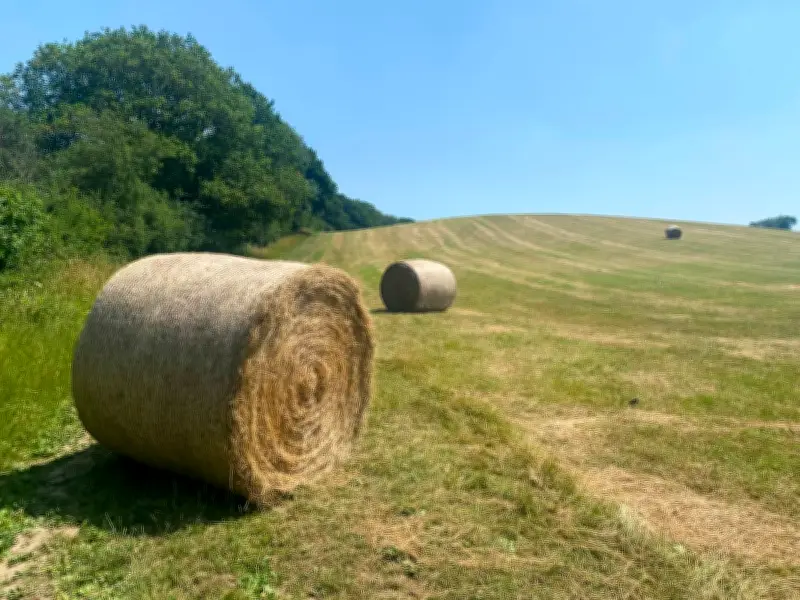
In the midst of a scorching heatwave, haymaking has become a desperate sprint against the clock for farmers across the country. The intense heat accelerates the drying process, but also raises the risk of over-drying and nutrient loss, making timing crucial.
The Challenges of Heatwave Haymaking
Haymaking traditionally relies on a stretch of dry weather, but extreme temperatures introduce new difficulties. According to agronomist Dr. Sarah Jenkins, "When temperatures soar above 35°C, the grass can dry out in just a few hours, reducing the window for optimal cutting and baling." This leaves farmers with little margin for error, as hay left too long in the field can lose its nutritional value and become brittle.
In the UK, a recent heatwave saw temperatures reaching 38°C, forcing farmers to work through the night to avoid the worst of the sun. "We started cutting at 4 a.m.," said dairy farmer Tom Evans. "By midday, it's too hot—the hay is crisp and the leaves shatter." The loss of leaf matter directly impacts the protein content of the hay, which is vital for livestock feed.

Climate Change Intensifies Pressure
Experts link the increasing frequency of heatwaves to climate change, which is altering traditional farming rhythms. The Met Office reports that heatwaves are now 30 times more likely due to human-induced climate change. For haymakers, this means more years with compressed harvest windows and higher risks of weather damage.
"We used to count on a two-week window of settled weather in June," said Evans. "Now, we're lucky to get four days before a storm or extreme heat ruins the crop." The unpredictability forces farmers to invest in better forecasting and more flexible equipment, but costs are rising.
Economic and Environmental Impacts
The race to make hay under extreme conditions has economic ripple effects. Poor-quality hay means farmers must buy supplementary feed, increasing costs. According to the National Farmers' Union, the 2025 heatwave cost the agricultural sector an estimated £120 million in lost forage quality and additional feed purchases.
Environmentally, the stress on grasslands during heatwaves can reduce biodiversity. "Frequent extreme heat events prevent meadows from recovering, favoring drought-tolerant species over traditional hay meadow plants," noted ecologist Dr. Helen Phillips. This shift affects pollinators and soil health.
Adaptation Strategies
Farmers are adapting by adopting new techniques. Some are using mower-conditioners that crimp the stems to speed drying, reducing the time hay lies in the field. Others are experimenting with later cutting dates or alternative forage crops like sorghum. "We're learning to be more flexible," said Evans. "But nothing replaces the old-fashioned race against time."
Despite the challenges, the spirit of haymaking endures. As Evans put it, "When the sun's out, you just have to go for it. The hay won't wait."