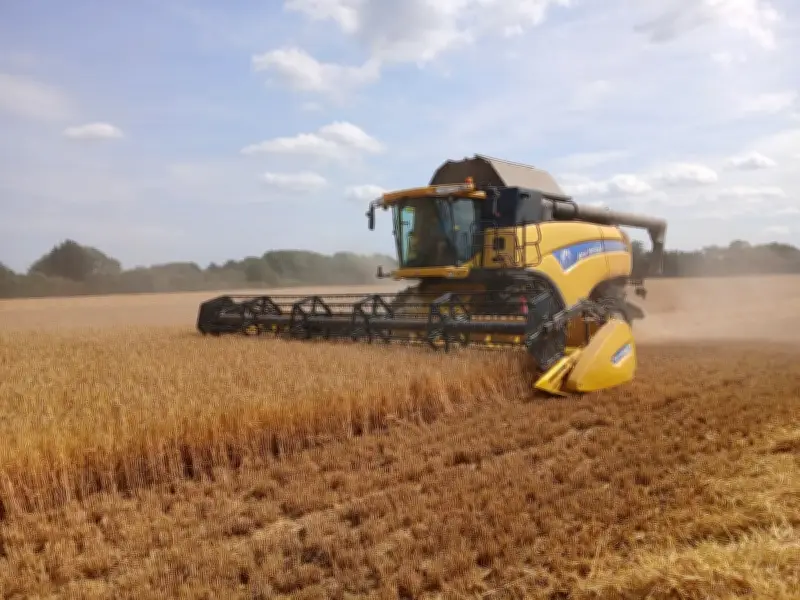
Harvest time has arrived, and it is three weeks earlier than it was 20 years ago, according to a country diary entry that highlights the accelerating impact of climate change on British agriculture. The observation, made by a farmer in the south of England, underscores a dramatic shift in the growing calendar that is reshaping rural life and food production.
Earlier Harvests Across the UK
The diary notes that the first cuts of silage and hay are now being taken in late April rather than mid-May, while winter wheat is being harvested in July instead of August. Fruit trees are blossoming earlier, and blackberries are ripening in July rather than September. These changes are consistent across the UK, with many farmers reporting that the growing season has extended by up to a month over the past two decades.
According to the Met Office, the average temperature in the UK has risen by about 1°C since the mid-20th century, with the most significant warming occurring in spring and summer. This has led to earlier leaf emergence, flowering, and fruiting for many plant species. The trend is particularly pronounced in southern England, where the growing season now starts nearly three weeks earlier than in the 1960s.

Impact on Farming Practices
For farmers, the earlier harvests bring both opportunities and challenges. On the one hand, a longer growing season can allow for multiple cropping cycles or the cultivation of new crop varieties that require warmer conditions. On the other hand, it increases the risk of frost damage to early-blooming plants and disrupts traditional farming calendars. Pests and diseases that were once kept in check by cold winters are now thriving, forcing farmers to adapt their pest management strategies.
“The seasons are definitely shifting,” said a spokesperson for the National Farmers' Union. “Farmers are having to adjust their planting and harvesting schedules, and many are investing in new equipment and techniques to cope with the changes.” The spokesperson also noted that water availability is becoming a growing concern, as earlier springs and hotter summers lead to increased evaporation and soil moisture deficits.
Broader Ecological Consequences
The earlier harvests are not just an agricultural issue; they have profound ecological implications. Many wildlife species rely on the timing of plant growth for food and shelter. For example, caterpillars that feed on oak leaves are emerging earlier, but migratory birds that prey on them may not have adjusted their arrival times, leading to mismatches in food availability. Similarly, pollinators such as bees and butterflies are emerging earlier, but if the flowers they depend on have already bloomed, they may face food shortages.
Conservation groups are calling for more research into how these shifts are affecting ecosystems and for policies that help both agriculture and wildlife adapt. “Climate change is altering the very fabric of our countryside,” said a representative from the Wildlife Trusts. “We need to ensure that our natural habitats are resilient and that species can move or adapt to these rapid changes.”
Adapting to the New Normal
As the climate continues to warm, the trend toward earlier harvests is expected to continue. Farmers are already experimenting with new crop varieties that are more tolerant of heat and drought, and some are shifting to crops that were previously only viable in warmer regions, such as olives and grapes. However, these adaptations come with costs and uncertainties.
The country diary entry concludes with a note of resignation: “We are learning to live with the new seasons, but it feels like we are losing something precious—the rhythm of the year that our ancestors knew.” The earlier harvests are a clear signal that the natural world is responding to a changing climate, and that humans must adapt in turn.