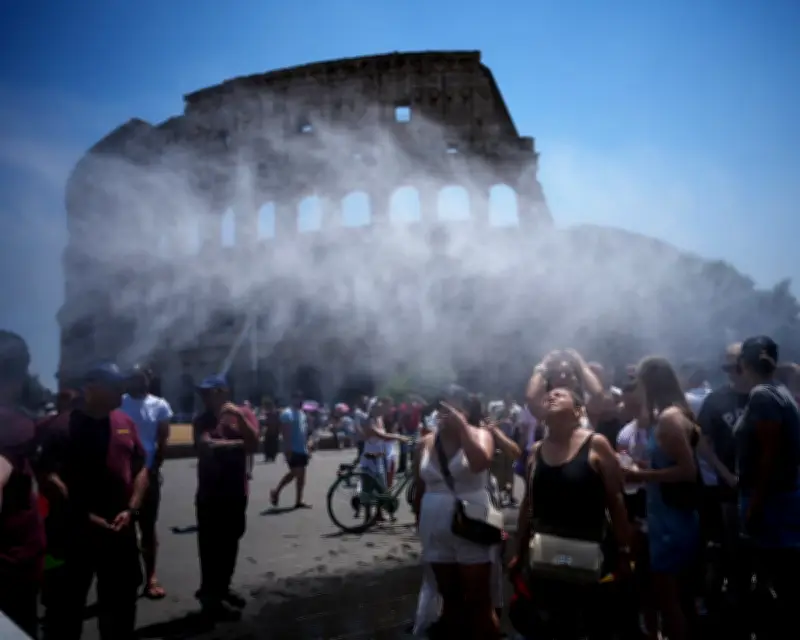
Despite decades of climate warnings from scientists and international bodies, Europe remains critically unprepared for the rising temperatures that are already killing thousands of people each year. A new analysis reveals that heat-related deaths on the continent have increased by 30% over the past two decades, with 2024 being the hottest year on record. Experts point to systemic failures in urban planning, healthcare, and emergency response as key reasons for the lack of preparedness.
Systemic Failures in Adaptation
According to a report by the European Environment Agency, only a handful of EU countries have comprehensive national heat-health action plans. Many cities lack green spaces, cool roofs, and adequate cooling centers. Dr. Elena Garcia, a climate adaptation specialist at the University of Barcelona, said: "We have known for decades that heatwaves would become more frequent and intense, yet we have not invested in the basic infrastructure to protect vulnerable populations." The report notes that 90% of urban areas in Europe have no mandatory requirements for heat-resistant building materials.
Rising Death Toll and Economic Impact
Heat-related mortality in Europe has risen sharply, with over 70,000 excess deaths attributed to heat in 2024 alone. The economic cost is estimated at €1.2 billion annually due to lost productivity and healthcare expenses. The elderly and those with pre-existing conditions are most at risk. In France, a 2025 study found that 60% of heat-related deaths occurred in homes without air conditioning, which remains rare in many northern European countries.

Political and Institutional Barriers
Political inertia and short-term thinking have hampered progress. Many governments prioritize economic growth over climate adaptation. "Politicians are reluctant to implement costly measures that may not yield immediate results," said climate policy analyst Markus Weber of the German Institute for Economic Research. "There is also a lack of coordination between national, regional, and local authorities." The European Commission has proposed a new Heat Resilience Strategy, but it faces opposition from member states concerned about costs.
Urban Planning Failures
Urban heat island effects are exacerbating the problem. Cities like Paris, Madrid, and Berlin have seen temperatures up to 8°C higher than surrounding rural areas. Despite this, many cities have been slow to implement green roofs, reflective surfaces, and tree planting programs. In London, a 2026 audit found that only 15% of buildings meet basic heat resilience standards. Urban planners often prioritize housing density over heat mitigation, leading to dangerously hot living conditions.
Healthcare Systems Under Strain
Healthcare systems are struggling to cope with the surge in heat-related illnesses. Emergency room visits for heatstroke and dehydration have increased by 40% in Southern Europe since 2020. Many hospitals lack adequate cooling systems and staff training for heat emergencies. "We are seeing patients with heat exhaustion who could have been easily treated if they had access to cooling centers or early warning systems," said Dr. Ana Santos, an emergency physician in Lisbon.
Call for Urgent Action
Climate scientists warn that without immediate and large-scale adaptation measures, the death toll will continue to rise. The Intergovernmental Panel on Climate Change (IPCC) projects that by 2050, heatwaves could kill 150,000 Europeans annually. The European Environment Agency recommends mandatory heat risk assessments for all new buildings, increased funding for green infrastructure, and national heat-health action plans in every member state. "We have the knowledge and technology to protect ourselves," said Dr. Garcia. "What we lack is the political will."