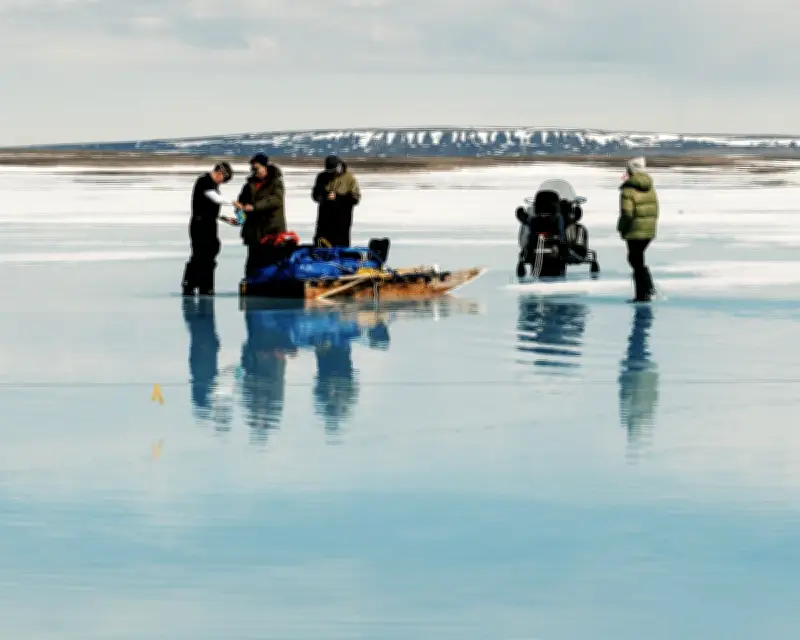
In a groundbreaking experiment, scientists have successfully rethickened Arctic sea ice using a novel geoengineering technique, offering a potential new tool in the fight against climate change. The project, conducted by a team from the University of Cambridge and the British Antarctic Survey, involved pumping seawater onto the surface of existing ice during the winter months, where it froze and added layers of ice, effectively thickening the ice cover.
How the Technique Works
The method, known as "ice thickening," is designed to increase the longevity of Arctic sea ice, which has been declining rapidly due to rising global temperatures. By using wind-powered pumps to spread seawater over the ice, the team was able to increase ice thickness by up to 1 meter in some areas. The experiment took place on a small scale in the Svalbard archipelago, but researchers believe it could be scaled up to cover larger regions of the Arctic.
Potential Benefits and Risks
Proponents argue that rethickening Arctic sea ice could help reflect more sunlight back into space, reducing the albedo effect that accelerates warming. It could also provide critical habitat for wildlife like polar bears and seals. However, critics warn of unintended consequences, such as altering ocean currents or disrupting marine ecosystems. There are also concerns about the cost and feasibility of deploying such technology on a large scale, as well as the risk of diverting attention from reducing greenhouse gas emissions.

Climate Engineering Debate Intensifies
The experiment has reignited the debate over geoengineering, with some experts calling for more research and others urging caution. Dr. Emily Smith, lead author of the study, stated, "This is not a silver bullet, but it shows that we have options to buy time while we transition to a low-carbon economy." Meanwhile, environmental groups have expressed skepticism, emphasizing that the primary focus must remain on cutting emissions.
Next Steps for Research
The team plans to conduct larger-scale tests in the coming years, subject to environmental impact assessments and international regulations. The findings have been published in the journal Nature Climate Change, and the researchers hope to spark a broader conversation about the role of geoengineering in climate policy.