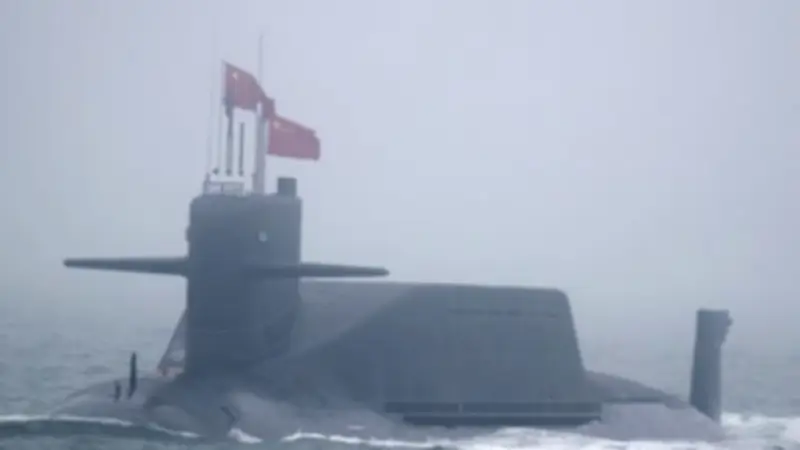
Prime Minister Anthony Albanese has delivered a strong rebuke to China after it conducted an intercontinental ballistic missile test in the Pacific Ocean, describing the action as 'destabilising' and 'provocative'. The test, carried out by a Chinese People’s Liberation Army Navy Type 094A Jin-class nuclear submarine, occurred on the same day Albanese and Fijian Prime Minister Sitiveni Rabuka announced a new alliance in Fiji.
Timing and Reaction
The missile test sparked immediate speculation about whether the timing was deliberate. Defence Minister Richard Marles expressed doubt that the test was intended to coincide with the Prime Minister's Pacific tour, stating, 'I doubt that it’s about the Prime Minister being in the Pacific.' However, China expert John Garnaut countered, 'There is very little in Chinese statecraft that happens by chance.' Australia received minimal notice of the test, with China describing it as routine military training. The Australian government swiftly labelled the action 'destabilising,' a term that featured prominently in ministerial talking points.
Albanese's Response
Speaking at a news conference in the Solomon Islands, Albanese said: 'We have made clear our concerns to China in both Beijing and in Canberra. We don’t want to see any action that is destabilising or which undermines the peace, security and stability of the Pacific and the region. And there is no doubt that this is a provocative act by China which does destabilise the region.' He emphasised Australia's consistent approach: 'We have said consistently that we want to cooperate with China where we can, we’ll disagree where we must and we’ll engage in our national interests. This is one of those occasions where we must disagree with this action.'

Albanese highlighted the lack of standard procedure, noting that such tests typically require 48 hours' notice. 'This was not done on this occasion,' he said. 'Part of our concern here isn’t just the lack of notice that occurred. It is the fact that this was a test of a nuclear capable intercontinental ballistic missile fired from a nuclear-powered submarine. That is of real concern because what we need is less nuclear weapons, certainly not more.'
Broader Relationship Context
The Albanese government has achieved greater success than its Morrison predecessor in normalising trade relations with China, with Beijing progressively lifting restrictions imposed during the Coalition era. The Labor government has also strengthened Australia's Pacific ties, a point reinforced by the alliance with Fiji. However, underlying tensions persist. ASIO chief Mike Burgess has focused heavily on Chinese interference, including alleged spying and attempted penetration of critical infrastructure. At his annual threat assessment speech, he showed a video referencing alleged spying by Chinese nationals, which prompted a sharp response from Chinese Ambassador Xiao Qian. Xiao claimed China had 'no intention of, nor has it ever engaged in, so-called interference in Australia'—a statement that ASIO officials reportedly found incredulous.
Port of Darwin Dispute
Separately, the Chinese-owned company Landbridge is complicating efforts to return the Port of Darwin to Australian hands. Landbridge, which holds a 99-year lease, has initiated arbitration proceedings at the World Bank's International Centre for Settlement of Investment Disputes, claiming the government is breaching its obligations under the free trade agreement. Defence Minister Marles offered few details on progress, stating only: 'We want to see the Port of Darwin return to Australian hands, and that process is being pursued.' When pressed on whether a buyer had been secured, he said: 'We’re confident that this can be put into Australian hands, but there is a process which we need to work through.'

Implications for Regional Stability
The missile test underscores the strategic competition between Australia and China in the Pacific. As Albanese noted, the test of a nuclear-capable missile from a submarine raises serious concerns about nuclear proliferation. The incident also highlights the delicate balance Australia must strike between pursuing positive engagement with China and preparing for potential conflicts. With the United States asserting its own power under the Trump presidency, the Pacific remains a key arena for great power rivalry.