A series of powerful earthquakes striking Venezuela is placing the Trump administration's newly articulated Western Hemisphere policy under intense scrutiny, as severe cuts to the United States Agency for International Development (USAID) have significantly hampered the capacity for disaster response.
Earthquake Details and Impact
The United States Geological Survey (USGS) reported a magnitude 7.3 earthquake centered near the city of Cumaná, in Sucre state, early Monday morning, followed by a magnitude 6.8 aftershock hours later. At least 340 people have been confirmed dead, with more than 1,200 injured, according to Venezuelan civil protection authorities. The quakes have destroyed over 4,000 buildings, including hospitals and schools, and left an estimated 200,000 people homeless.
Venezuela's infrastructure, already fragile due to years of economic crisis and political turmoil, has been further devastated. Power outages and communication blackouts are widespread, complicating rescue and aid operations.

US Policy Shift and Aid Cuts
The disaster unfolds as the Trump administration has implemented a 70% reduction in USAID's budget for Latin America, part of a broader shift in foreign policy emphasizing bilateral trade and security agreements over humanitarian assistance. The new Western Hemisphere policy, unveiled in March, prioritizes countering Chinese influence and curbing migration, with less focus on disaster relief.
Secretary of State Marco Rubio stated, "Our policy is to foster self-reliance among our neighbors. We cannot be the world's first responder for every natural disaster." However, critics argue that the cuts leave the US ill-prepared to respond to crises in its own hemisphere.
Relief Efforts Hampered
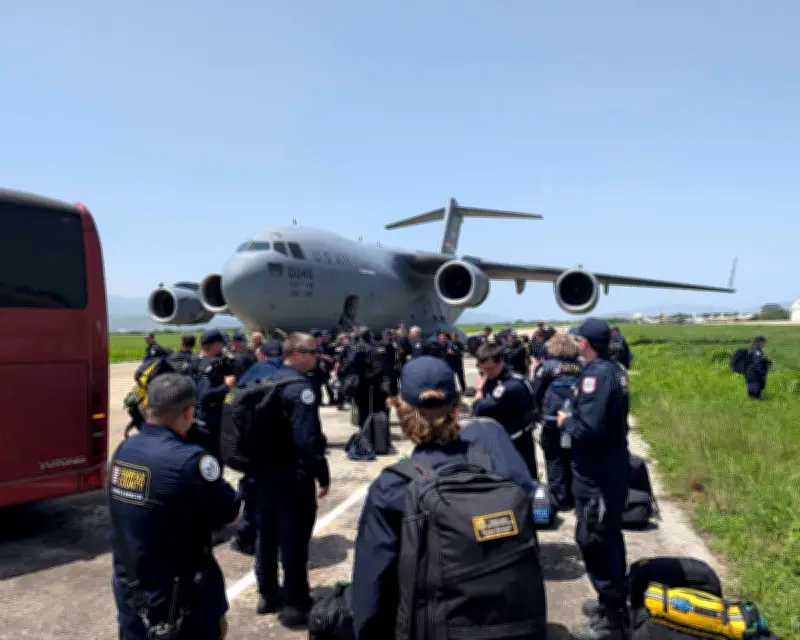
In the immediate aftermath, the US offered $500,000 in emergency assistance through the US Embassy in Caracas, a fraction of the multimillion-dollar packages provided under previous administrations for similar disasters. USAID personnel in the region have been reduced by 60%, limiting the agency's ability to coordinate with local authorities.
"The United States has historically been a leader in humanitarian response, but these cuts have gutted our ability to act quickly and effectively," said a former USAID official who spoke on condition of anonymity. "We are now seeing the real-world consequences of that policy."
International Response and Geopolitical Implications
China and Russia have offered substantial aid packages to Venezuela, including field hospitals and search-and-rescue teams. This has raised concerns in Washington about Beijing and Moscow expanding their influence in the region. The Trump administration's policy explicitly aims to counter such influence, yet the reduced aid capacity may inadvertently accelerate it.
Venezuelan President Nicolás Maduro, who has been under US sanctions, criticized the American response, calling it "insufficient and hypocritical." He has accepted offers of assistance from China, Russia, Cuba, and Iran.
Congressional Reactions
Democratic lawmakers have condemned the administration's approach. Senator Bob Menendez (D-NJ) said, "This administration's shortsighted cuts to USAID have left us unable to respond to a humanitarian catastrophe in our own backyard. It's a failure of leadership and a gift to our adversaries."
Republican Senator Marco Rubio defended the policy, emphasizing the need for Venezuelans to hold their government accountable. "Our assistance should not prop up a dictator. We are focused on long-term solutions that promote democracy and stability."
Humanitarian Needs and Next Steps
The United Nations Office for the Coordination of Humanitarian Affairs (OCHA) estimates that 2.5 million people require immediate assistance, including food, water, shelter, and medical care. The Venezuelan government has declared a state of emergency and requested international aid.
The Trump administration has indicated it will consider additional funding if Venezuela allows independent monitoring of aid distribution. However, aid organizations warn that bureaucratic delays could cost lives.
As rescue efforts continue, the earthquakes have become a critical test of the administration's policy, highlighting the tension between its stated goals and the practical needs of disaster response.