A strong 6.3-magnitude aftershock rattled Venezuela on Tuesday, sending panicked residents fleeing into the streets just days after twin earthquakes devastated parts of the country, killing at least 68 people and injuring more than 1,200.
Latest Aftershock Strikes Near Caracas
The United States Geological Survey reported that the aftershock struck at 3:47 a.m. local time, with its epicenter approximately 25 kilometers northeast of Caracas, at a depth of 10 kilometers. The tremor triggered landslides in mountainous areas and caused cracks in several buildings already weakened by the previous quakes.
“We were all asleep and suddenly the whole building started shaking like it was made of paper. I grabbed my children and ran out. We are terrified,” said Maria Gonzalez, a 34-year-old resident of Caracas. According to the National Civil Protection Institute, at least 12 people were treated for minor injuries during the panic, and two suffered heart attacks.

Death Toll Rises After Twin Quakes
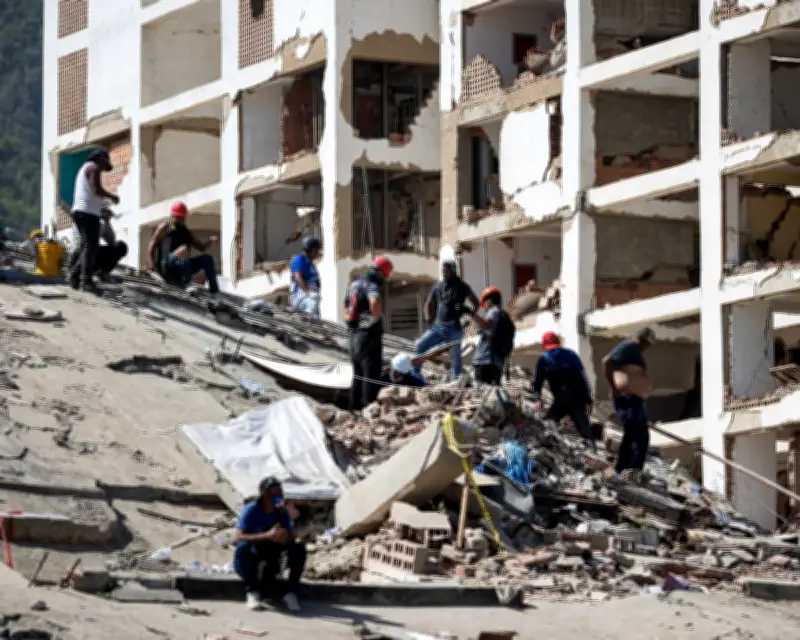
The aftershock comes as rescue workers continue to search for survivors in the rubble of the two major earthquakes that struck on Saturday and Sunday. The first, a magnitude 7.1 earthquake, hit near the coastal city of Puerto Cabello, followed by a magnitude 6.9 tremor centered near Valencia. Combined, the quakes destroyed over 1,500 homes and damaged infrastructure, including hospitals and schools.
“The situation is critical. We have deployed all available resources to the affected areas, but the aftershocks are hampering our efforts,” said Interior Minister Carmelo Mendez in a press conference. He confirmed that the official death toll had risen to 68, with over 1,200 injured, as more bodies were recovered from collapsed structures.
Residents Live in Fear of Further Tremors
In Caracas and other affected cities, thousands of people have been sleeping in parks and open spaces, too afraid to return to their homes. The constant tremors have heightened anxiety, with many reporting symptoms of trauma. “Every time I feel a slight vibration, my heart races. I don’t think I can go back inside for a long time,” said Jose Rodriguez, a 45-year-old shopkeeper from Valencia.
Seismologists warn that more aftershocks are likely in the coming days and weeks. The Venezuelan Foundation for Seismological Research has recorded over 200 aftershocks since the initial quakes, with Tuesday’s being the strongest. “This is a very active seismic sequence. The population must remain vigilant and follow safety protocols,” said Dr. Ana Perez, a seismologist at the foundation.
International Aid Arrives
International aid has begun to arrive, with emergency teams from Mexico, Chile, and Spain joining local responders. The United Nations has pledged $15 million in emergency relief, and the Red Cross is distributing food, water, and medical supplies. However, access to some remote villages remains blocked by landslides.
President Nicolas Maduro declared a state of emergency in five states and called for national unity. “We are facing a tragedy, but we will overcome it together. I ask for patience and solidarity from all Venezuelans,” he said in a televised address.
The economic impact is expected to be severe, as the quakes damaged key oil infrastructure in the region. State-owned PDVSA reported that production at two refineries had been temporarily halted for safety inspections.