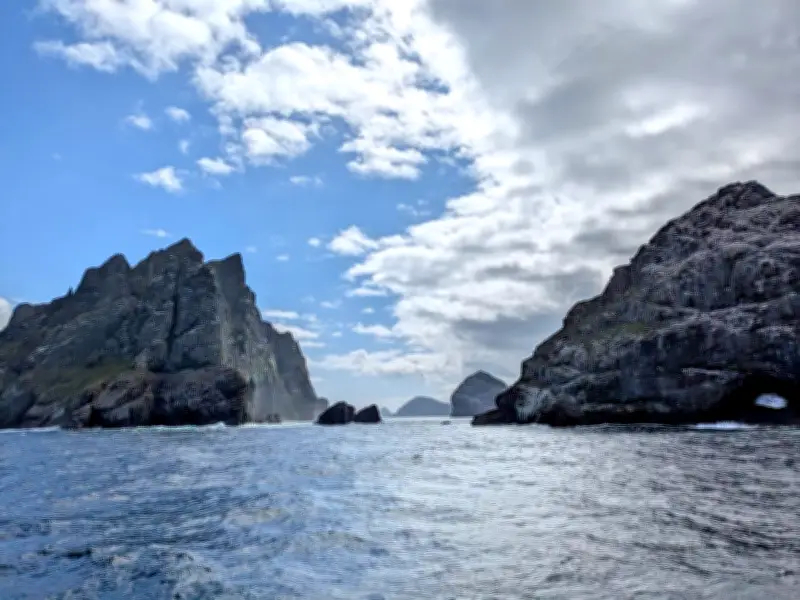
St Kilda, an isolated archipelago 40 miles west of the Outer Hebrides, is as wild and remote as Britain gets. This UNESCO World Heritage site is home to the highest sea cliffs in the UK, reaching 430 meters, and supports one of the largest colonies of seabirds in the North Atlantic, including puffins, gannets, and fulmars.
Journey to the Edge of the World
Reaching St Kilda requires a boat trip from the Isle of Harris or Skye, often taking several hours across unpredictable seas. The journey itself is an adventure, with dolphins and whales occasionally spotted along the way. Upon arrival, visitors are struck by the sheer verticality of the cliffs and the eerie silence of the abandoned village, which was evacuated in 1930 due to harsh living conditions.
The island's human history is as dramatic as its landscape. For centuries, the St Kildans lived in near-total isolation, subsisting on seabirds and their eggs. They developed a unique culture, including the famous 'cleits' – stone storage huts used to preserve birds. Today, the National Trust for Scotland manages the island, and a small military base maintains a presence.

Wildlife Abundance
The seabird population is the main draw for naturalists. According to the National Trust for Scotland, St Kilda hosts over 60,000 pairs of gannets, making it the largest colony in the world. Puffins burrow into the grassy slopes, and great skuas patrol the skies. The surrounding waters are rich with marine life, including seals and basking sharks.
Visitors can hike to the top of Conachair, the highest point, for panoramic views of the archipelago. The descent requires care, as the terrain is steep and often slippery. The abandoned village offers a poignant glimpse into the past, with stone houses now roofless and overgrown.
Practical Considerations
Tours to St Kilda are limited to the summer months due to weather conditions. Day trips from Harris are available, but overnight stays are possible only for researchers or volunteers. The island has no facilities, so visitors must bring all supplies. The weather is notoriously changeable, with strong winds and fog common even in July.
For those seeking true solitude and raw nature, St Kilda offers an unparalleled experience. It is a place where the human footprint is faint, and the natural world dominates. As one visitor remarked, 'This is as wild and remote as Britain gets, and it feels like stepping back in time.'